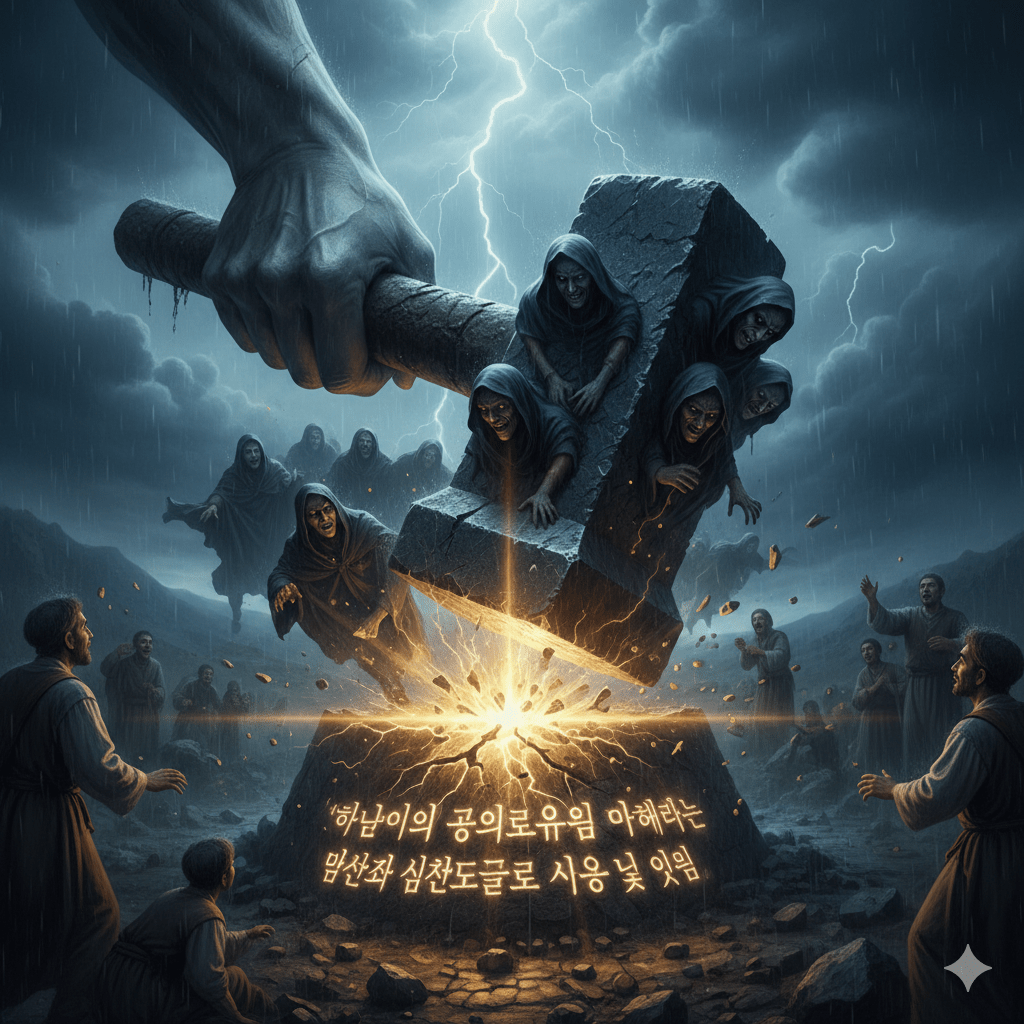
Today I begin meditating on the words of Habakkuk. When the prophet Habakkuk asks, “Why do You stand idly by while the wicked Israelites do evil?”, God answers without delay. His answer is that the ruthless Chaldeans (Babylonians) will invade. This prophecy, beyond human imagination and one of the saddest chapters in Jewish history, leads us to reflect that even the wicked can be used as instruments of judgment before God’s justice.
On the train to the airport after finishing a business trip to Germany, I met a worker who had been laboring on the streets all night. When I mentioned I was from Korea, the conversation naturally turned to North Korea and past history. When I shared the history of the Japanese colonial period, he revealed he was Kurdish and poured out the atrocities he endured under oppression in Turkey. Hearing this real-life story, so closely connected to today’s scripture, from an unexpected source made me deeply contemplate how God brings about justice within the history of one nation oppressing another.
History is written from the victor’s perspective, and the history we learn is often a version processed through the lens of Western powers. What if we viewed history through the eyes of the defeated or the minority? And above all, what if we viewed it from the perspective of God’s justice? Upon looking into it, I found the Kurds were a marginalized minority even within Sunni Islam.
From God’s perspective, even one person returning to Him is paramount. I meditate on whether history itself moves for that one soul. In doing so, I firmly resolve never to be used as an instrument of evil. After successfully completing my business trip, I shared my life with headquarters staff during conversations. I pray that a positive spiritual influence was imparted to them. Especially for an employee preparing for marriage, I advised him to establish sound values when seeking a spouse and recommended C.S. Lewis’s **Mere Christianity**.
 택배기사핸디맨 블로그
댓글 남기기