I started my expatriate life in the U.S. with my family in my early 30s and lived in Torrance, LA, for three years and Cupertino, CA, for five years. Suddenly, the headquarters was acquired by a competitor, and I realized that the position of overseas branch manager would be eliminated, so I applied for a U.S. green card while taking the steps to leave. After eight years in the U.S., my green card application was a bit late, but I was reassured that I would be okay because I was still working for one of the top mobile game companies in Korea and the U.S. branch had high sales due to contracts with global companies. After submitting the necessary documents through an immigration lawyer, all I could do was wait for the results, and after years of being overwhelmed with work and juggling the time difference between Korea and the U.S., the sudden break was a dream come true. I was living in a house leased through my company, so I had to find a place to live with my family until I found a new job, but it wasn’t a big deal. Rather, I planned to spend a few months vacationing with my family on the Hawaiian island of Kona with the opportunity to attend the Discipleship Training School’s (DTS) missions course, something I had always dreamed of doing. However, the sudden news of my father-in-law’s stroke surgery forced me to abandon all plans and return to Korea. However, as I was waiting for my departure date, a chance meeting with a missionary visiting San Jose Onnuri Church in Palestine led me on an ‘unexpected journey’.
After the service, the missionary mentioned that he needed digital cameras to help educate the children of the Bedouin, a nomadic people in the Middle East, so I posted to the church community to get some donations of digital cameras and delivered them to the missionary. Inevitably, the missionary told me about Palestine. Palestine is a very unique region of the world that is cut off from the rest of the civilized world, where innocent citizens are being victimized not by natural barriers to the flow of people and goods, but by discrimination and control due to religious barriers. Children and women were particularly affected because of the war, and poverty and religious discrimination were also severe. After learning about the reality of Palestine, I joined the Korea International Cooperation Agency (KOICA) program, and as one of the market research experts, I spent about 10 days visiting government agencies, startup accelerators, and startups in Palestine, as well as conducting marketing workshops. Looking back, I still wonder what qualifications I had to visit, but it was August 2014, right after the Israel-Gaza conflict, so very few people were allowed to enter the country, so I guess I was given the opportunity. It was one of the most important decisions I ever made, despite my family’s opposition, and as fate would have it, I ended up visiting Palestine. This unexpected journey took my life in an unexpected direction.
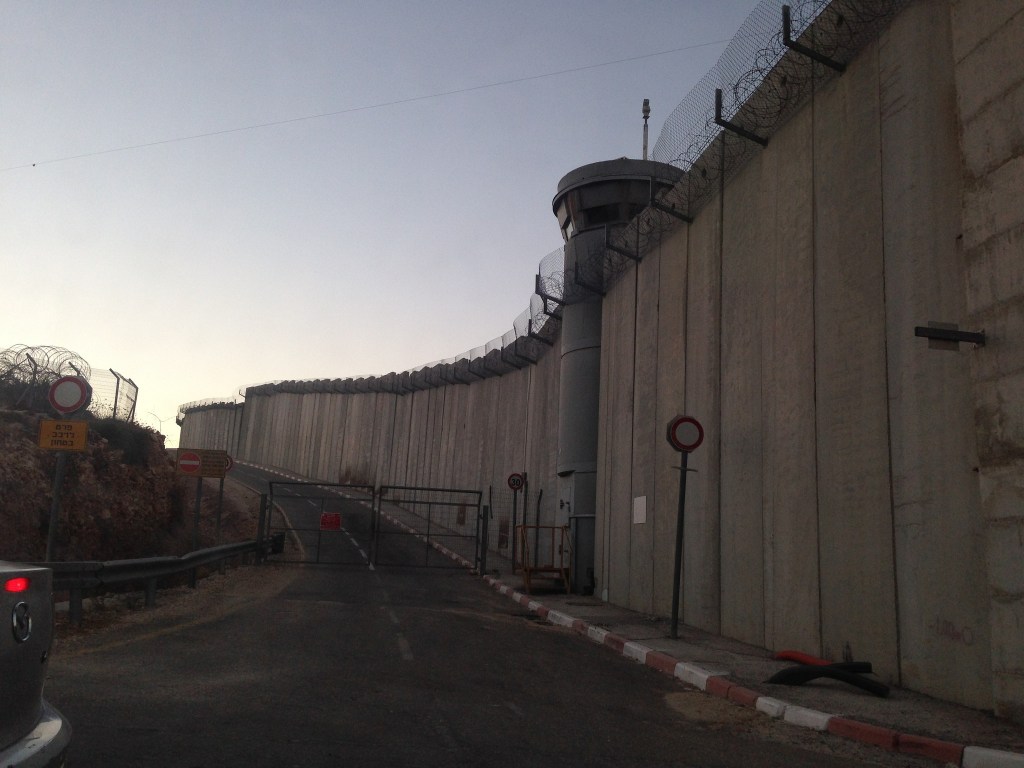
As I touched down at Tel Aviv Airport, I thought of the Iron Dome, an invisible air defense system guarding the beautiful night sky. As I touched down on the ground and heard the applause of the passengers, I felt relieved that I had arrived safely and thanked the many people who made it possible. In Tel Aviv, I received an overview briefing on the Palestinian market from Cisco’s market expert, and then, accompanied by the director of the Korea International Cooperation Agency Palestine, a local project manager, a professor from Handong University, and a representative from Lehobot Business Incubator, I traveled to Palestine through the border checkpoint. Thanks to my diplomatic license plate, the entry into the country was very smooth, but I felt nervous, similar to my visits to the Joint Security Area (JSA) during my military service in Katusa. The question in my head was, “Are there really entrepreneurs and startups in Palestine beyond the Israeli separation barrier?
Once inside the checkpoint, I felt like I had stepped back in time a few decades, and the disparity between what was inside and outside the separation barrier was staggering. The low, old-looking buildings and winding, narrow dirt roads made the city look disorganized, the ground was devoid of greenery, whether due to a lack of water or Israel’s tight control of the water supply, and the entire city had an earthy look, with all the buildings finished with lime. In fact, most of the Palestinian conflict we hear about in the news is in the Gaza Strip, and what I was visiting was the administrative capital of Ramallah in the relatively safe West Bank. From a distance, it looks very peaceful and calm, and I couldn’t even see the checkpoint that separates Ramallah from Jerusalem, but it’s an unstable place where riots could start at any moment and lead to war. I couldn’t help but feel nervous, considering that not so long ago, the two sides were firing rockets and missiles at each other, causing countless casualties.
Under these circumstances, the three-day mobile game marketing workshop was quite successful, with many founders actively participating. The success was due to the fact that we focused on analyzing real-life cases of mobile game marketing rather than theories, based on our experience of launching many successful mobile games in the US market for 8 years. The founders were very active in the workshop, creating mock marketing plans and presenting them to the other teams to critique each other. The founder of Noon Apps said, “It made me think like a game publisher instead of a game developer,” and the founder of Mobistine, a healthcare startup, thanked us for the workshop and gave us a tour of the Old City of Jerusalem. We were able to visit the Via Dolorosa, the Western Wall, and the Dome of the Rock (al-Haram al-Sarif in Arabic) through the Damascus Gate, but unfortunately, the founder of Mobistine was not allowed to enter the Western Wall because he is Muslim. I’m not Muslim, but I wasn’t allowed in either, so after a long argument, an Israeli policeman took a picture for me. The clocks in the Old City of Jerusalem seemed to have been stopped 2000 years ago, and the intricate religious protocols were very important. Seeing Old Jerusalem through the eyes of a Muslim startup founder was very impressive, and hearing it from a different perspective made it all the more interesting and meaningful.
I came from a gaming company, so I was interested in the gaming industry in Palestine, and instead of searching for market reports published by the government or research organizations, I went straight to where people play games: internet PC cafes. The atmosphere was similar to that of South Korea in the late 1990s, when the whole country started playing StarCraft, and next to the internet cafes, there were also playrooms where people could play PlayStation 4 games like FIFA soccer and Counter-Strike FPS. While the hourly rates were relatively higher than in Korea, gamers had no problem getting in to play. As I asked the manager of the Internet PC cafe about the overall business, daily customer visits, and popular PC games, I realized that it was very similar to the early market for PC online gaming in Korea, where friends would play FPS games in a local area network (LAN) environment. Multiplayer PC online games seemed like a good business opportunity in Palestine, along with the PC café business.
One of the most interesting places I visited was Rawabi, Palestine’s first planned new city, which is reminiscent of Songdo, Incheon, South Korea’s iconic planned city, and while it was still under construction, the vision for the city was very clear and promising: a city of more than 10,000 homes, with fiber optic internet access, shopping malls, and other amenities. The officials were very open to foreigners to invest in real estate and asked me to let them know if I was interested, and they had high hopes for the new city. However, I was also worried that the success of Rawabi New Town would be dependent on external factors, as the Israeli authorities control the power and water supply. Still, from the description, it seemed like a great place for Palestinians and foreigners with two passports to live. Also, IT outsourcing companies from global companies are planning to locate there, which shows the Palestinian government’s plan and willingness to create a small startup ecosystem. For a game publisher looking to enter the Middle East market, I thought that Rawabi New Town would be a great place to grow if they could hire the best talent and set up an operations team with low labor costs.
A few months later, my second visit to Palestine as a guest of the Leaders Startup Accelerator confirmed that there were just as many business opportunities in the country. Many of the entrepreneurs in Palestine often had two passports to study abroad and travel freely to other countries, and they were not unlike Silicon Valley entrepreneurs with passion and expertise in their respective fields of business. My one-on-one mentoring with many of the entrepreneurs helped me understand their business challenges and constraints in detail. Most of the business plans were already proven in other developed markets and Palestinian founders could easily execute them with the lowest labor costs, but the challenge was to avoid Israeli government sanctions. It was almost impossible to bring most outside materials and production facilities into Palestine, but the passion for business and patriotism for their country was palpable in the entrepreneurs who were using the human resources within to build their startups. One such startup, Baridee, was created by a Palestinian-American founder who was a freelance courier and had a vision to solve Palestine’s logistics problems. I personally drove from Beit Sahour to Ramallah, Palestine, and it was very inconvenient and difficult because there were no street names or map information for drivers, and the startup was trying to solve the problem of difficulty in receiving mail or packages in such a poor infrastructure.
Palestine became a new turning point in my life as I visited Palestine twice in 2014, the place of Jesus’ birth in both B.C. and A.D. Palestine became a special place for me as I opened my eyes to “startups” in a country that seems so far away from innovation and technology, and I think it was fate that led me to Korea as I realized that I wanted to return to Korea to learn about startups and start my own business.
 택배기사핸디맨 블로그
댓글 남기기