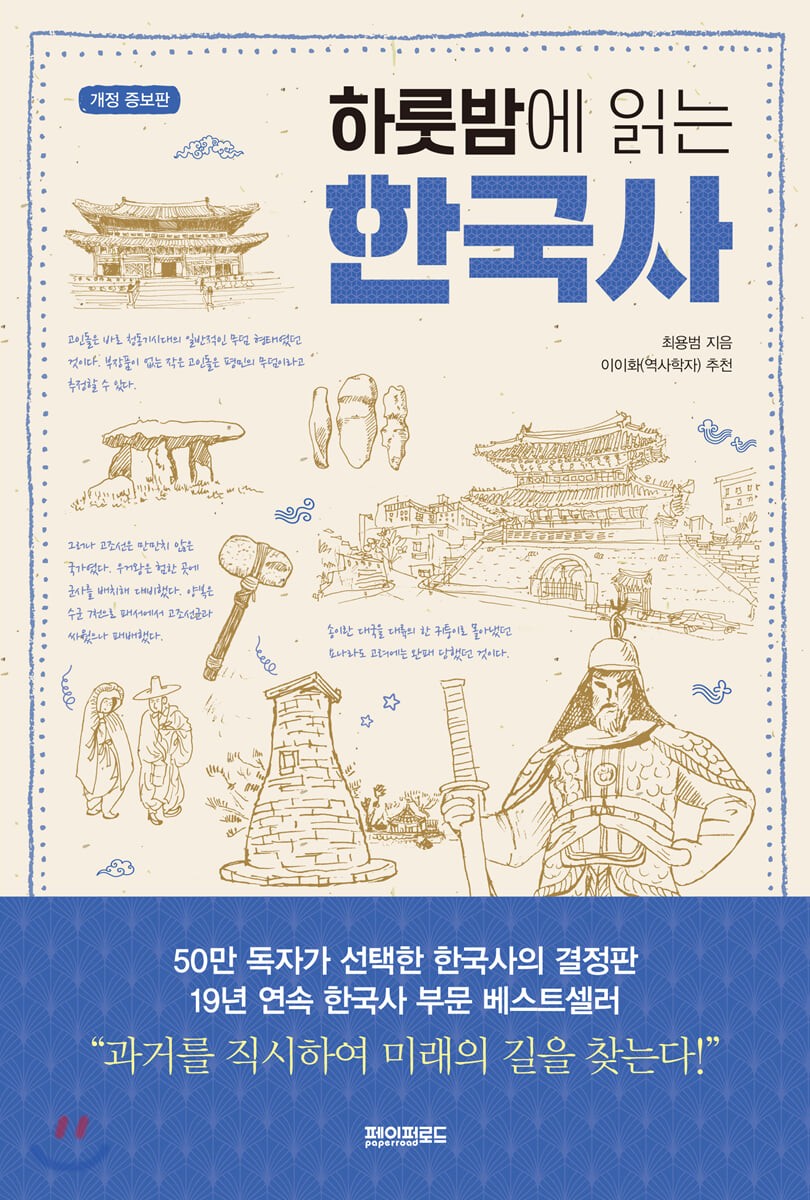
Hearing my eldest child say history was the hardest subject on their recent midterm exams made me realize how little I actually know about our own history. That’s precisely why this book caught my eye. Having fond memories of enjoying Reading World History Backwards, I began this one with high expectations—and true to its title, I finished it in one night. The chronological narrative starting from Gojoseon differed from the rote-memorization focus of old textbooks. Detailed explanations of key figures stood out, as did commentary free from left-wing or right-wing bias. The objective assessments of heroes who laid the groundwork for independence and figures who set history back were also immensely helpful.
The chronicles of the Goguryeo kings who commanded the Manchurian plains, Jang Bogo who founded Cheonghaejin—a trade hub akin to modern Hong Kong, Admiral Yi Sun-sin, greater than Britain’s Nelson, the illustrious and tyrannical kings of Joseon, and the tumultuous lives of independence fighters during the Japanese occupation felt like watching a condensed film. The modern history section offered a slightly different perspective on the achievements and failures of successive regimes compared to what I learned in school, which was a refreshing shock. Discussing post-liberation history remains cautious while the war generation survives. Yet, moving beyond binary and emotional judgments, constructive criticism and synthesis for the future is surely our generation’s responsibility. In any country, extremist forces and their supporters inevitably exhaust those around them. Think of Middle Eastern terrorist groups and Israeli Zionists, unrepentant Japanese ultra-nationalists and indifferent otaku, Trump-supporting Rust Belt white workers and pro-abortion big-city Democrats, and in Korea, the far-right factions and violent activist groups. Each may have their own logic, but just contemplating this landscape is enough to give you a headache.
Closing the book, I was left with the fact that history repeats itself and the question: “Where in history do I stand right now?” I realized that in this era of rapid change, reflecting on history is not a waste of time but a way to gain the wisdom to predict the future. We are standing at an immense historical moment of opportunity right now.
 택배기사핸디맨 블로그
댓글 남기기