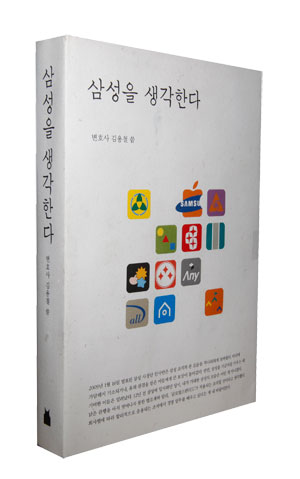
This book, now a rare find, is a shocking account that lays bare the unvarnished reality of Samsung’s lobbying efforts against the government, as witnessed firsthand by attorney Kim Yong-chul while working for the Samsung Group. As a former special prosecutor with deep connections in the legal community, he held a pivotal position overseeing the Samsung family’s illicit management succession and lobbying activities designed to serve their interests. However, through a turning point, he experienced a change of heart and resolved to become a whistleblower. Accepting the stigma of being labeled a ‘traitor,’ he compiled the hidden truths into a book. Yet, due to Samsung’s immense influence at the time of its 2007 publication, it faced rejection from the media and advertising markets, making its publication itself nearly impossible—a book fraught with twists and turns.
This book is both the conscience-driven testimony of someone deeply involved in Samsung Group’s core Restructuring Headquarters and an accusation written with the resolve to leave South Korea, dubbed the ‘Samsung Republic’. Its core content offers a bittersweet look at the problems within the circular investment structure and governance system that arose from attempting to hand over management control of a global corporation to an heir whose management capabilities were unproven, all seen through the eyes of an insider. In truth, his denunciation went beyond mere exposure; it was also earnest counsel that transparent and rational management innovation was essential for Samsung Electronics to leap forward as a true global leader. Furthermore, it was the courageous declaration of a father who wanted to be a father his two sons could be proud of.
However, the fact that the supporters who helped Attorney Kim Yong-chul bring this book to the world were the National Priests’ Association for Justice and some media outlets is a matter that warrants careful consideration from multiple angles. This is because there was a risk that forces exploiting South Korea’s anti-corporate sentiment and high inheritance tax burden could potentially use it as a strategic political tool. Samsung’s downfall could weaken national competitiveness, and the reality is that external threats targeting core semiconductor industry secrets persist even now. Furthermore, it occurred to me that a former prosecutor, who spent his career convicting criminals based on legal principles and precedents, might have had limitations in fully grasping the urgent, hyper-competitive environment of global corporations.
Depending on one’s perspective, this book could be seen as either a ‘betrayer’s exposé’ or a ‘whistleblower’s declaration of conscience’. Yet, he is undoubtedly a courageous figure who has left a significant mark on the history of Korean business. I became a shareholder of Samsung Electronics with the hope that the Samsung Group would transform into a transparent corporate entity where ownership and management are separated, attracting the best talent, and that it would stand firmly as a global group representing Korea. Today, I rise at dawn to check the U.S. market and write my blog, energetically starting the day for a better future.
 택배기사핸디맨 블로그
댓글 남기기