Seeing the government’s recent real estate policy announcements and the ensuing market turmoil, I realized how truly arduous it is to live in a home in our country. My heart grows heavy whenever I see news covering the frustration felt by young adults entering society during real estate bubbles and the so-called ‘panic buying’ phenomenon, where people buy homes by scraping together every last penny. Furthermore, witnessing elderly citizens who failed to secure housing in their later years fall into poverty, unable to keep pace with a rapidly changing world, makes me keenly aware that housing is a matter of survival.
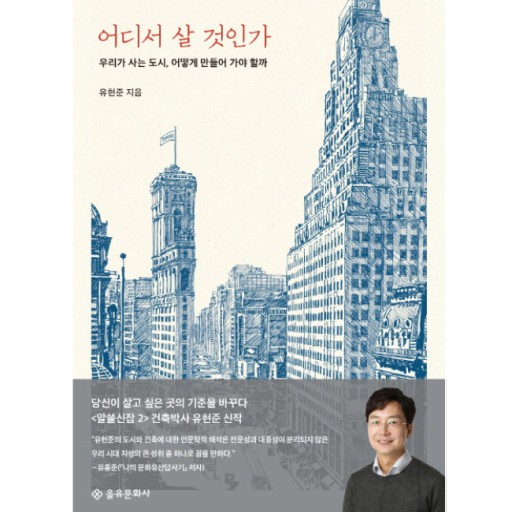
In such times, the question “Where should I live?” might even feel like a luxury. I wondered what meaning there could be in discussing architectural history or design with those desperately seeking even a small home. But when I encountered the point in the first chapter comparing Korean school buildings to prison structures, and the observation that children raised in such uniform environments struggle to develop creativity, it felt like a slap in the face. Realizing I too must have been influenced by such an environment, I set aside my preconceptions and immersed myself in the book.
The psychological analysis of human history through the lens of architecture was fascinating in every chapter. The argument that the Mongols, who conquered Europe, vanished within 150 years because they left no architectural legacy in their settlements—unlike the pyramids of Egypt, the Colosseum of Rome, or the Great Wall of China—was highly persuasive. Tracing the custom of building skyscrapers to flaunt power back to the dolmen era was also fascinating. Moreover, the explanation attributing why some streets are crowded while others are deserted to ‘the number of events pedestrians encounter’ and ‘the slope and curvature of the street’ was a revelation. The commentary suggesting that the underlying psychology behind the preference for high-rise apartments hides a kind of power will – ‘I see others, but others cannot see me’ – was also refreshing.
This book, which unpacks the author’s vast knowledge through the medium of architecture, opened a new window on the world for someone like me, who received a dichotomous education divided into arts and sciences. I especially hope the younger generation, enduring the tail end of the real estate bubble, will read it. Analyzing phenomena with a long-term perspective on the times can free us from the ignorance of buying a house out of impatience or taking our given circumstances for granted. I dream of a ‘reconfiguration of space’ where the younger generation utilizes the untact work environment to build and live in creative homes in the suburbs, while the older generation moves to smaller apartments in the city center, rich in public transportation and attractions. It was an excellent book, like a lecture that sparked a shift in thinking.
 택배기사핸디맨 블로그
댓글 남기기