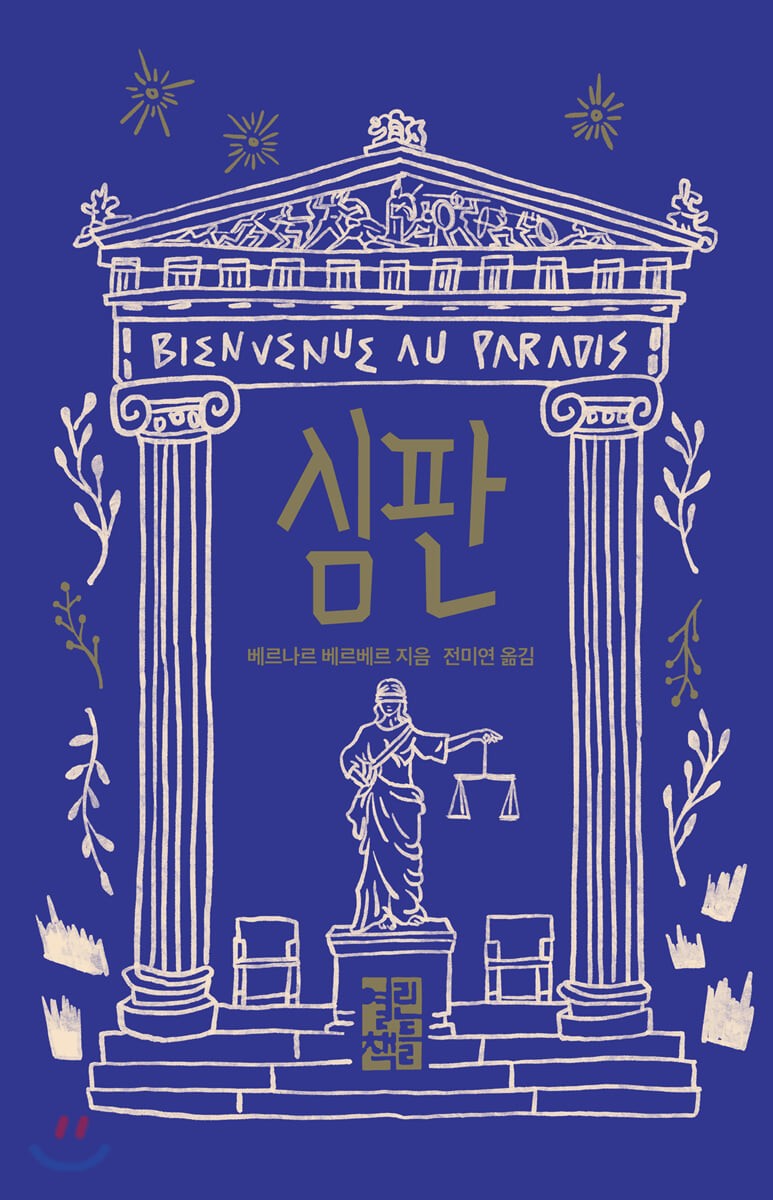
I read another novel by Bernard Werber, Judgment, which imaginatively explores the concept of judgment in the afterlife. The trial faced by Judge Anatole Pichon, who died of lung cancer, in the afterlife brings to mind the popular webtoon Along with the Gods. Seeing two authors from different countries create such similar works on this subject clearly shows that the afterlife is the most fascinating theme for humanity, regardless of time or place.
Whether one is reincarnated depends on the trial’s outcome. An interesting point is that losing the trial is depicted as a kind of punishment, meaning one must ‘be reincarnated into a new life again.’ This is proof that life is that arduous. While one can supposedly choose options like country, gender, or family wealth for reincarnation, it’s said that the total amount of suffering one must endure in life remains roughly the same.
This reminds me of a conversation I once had with an Indian friend regarding Hinduism, a major religion that believes in reincarnation. The belief was that good deeds in this life lead to rebirth as a human, while evil deeds result in rebirth as an animal or insect. A question suddenly struck me: “Human good deeds have clear moral standards, but what constitutes good or evil from an insect’s perspective?” He seemed flustered and replied that he’d have to ask his meditation center teacher. After all, he’d never heard stories about dung beetles giving up dung they were about to eat, or mice throwing themselves at approaching owls to save their friends.
Reading this intriguing hypothetical tale, I resolved that regardless of whether reincarnation exists, I must perform many good deeds in this lifetime. That way, I can prepare for any possible judgment after death or rebirth. But no matter how much I think about it, I don’t want to be like a dung beetle. I simply cannot give up ‘dung’.
 택배기사핸디맨 블로그
댓글 남기기