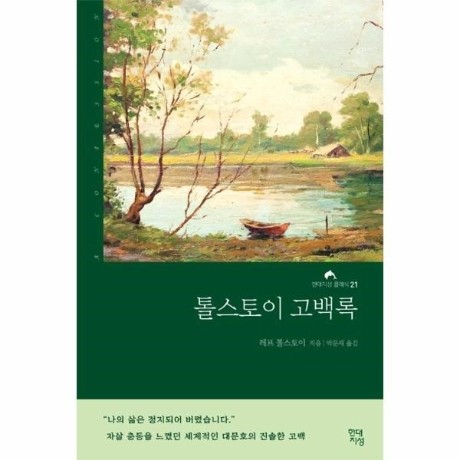
Through a lecture in the past, I had the opportunity to learn about the great writer Tolstoy. I learned that he was born into a wealthy noble family of the Russian Orthodox Church, left behind immortal masterpieces like War and Peace, and was also a successful businessman. Yet despite such dazzling success, I also learned that he wandered aimlessly, unable to find meaning in life, until he ultimately discovered life’s true purpose from the nameless peasants in the fields.
However, it was only after reading his Confessions directly that I could truly grasp how profoundly he had sunk into despair, to the point of feeling suicidal impulses, when he lost his life’s purpose. The conclusion of futility he reached was not merely the whining of a “spoiled rich kid.” It was the agonizing confession of someone who had witnessed death firsthand on the battlefield, arrived at through rational thought. It also brought to mind Solomon’s Ecclesiastes, who, after enjoying all riches and glory, mused, “Everything is meaningless.”
Ironically, he concludes his writing by finding God again after observing poor farmers who gratefully accept their fate with humility, appreciating even the smallest things. This reminded me of ‘two characteristics of saved people’ I heard in a recent YouTube lecture: ‘gratitude’ and ‘awe’. The explanation was that a life where one sincerely thanks a resident for a bottle of drink handed over after delivery, and marvels at the rising sun every morning, is the very proof of salvation.
Hearing how Tolstoy, after his awakening, endeavored to return his income tax proceeds to society, I am reminded once more of the value of a life of sharing. I too wish to emulate Tolstoy’s exemplary attitude—discovering God’s providence in life’s small fragments—by putting into practice the donations I had been putting off.
 택배기사핸디맨 블로그
댓글 남기기