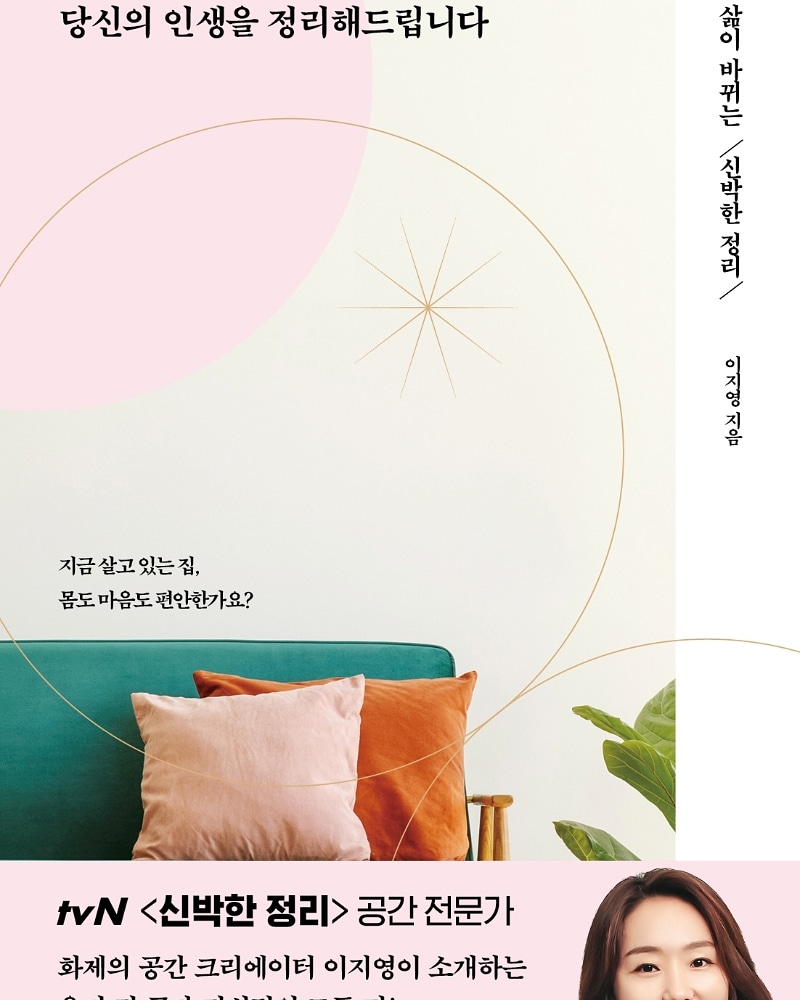
The first person who came to mind while listening to the audiobook ‘We’ll Organize Your Life’ was my wife. An expert at home organization, she constantly rearranged furniture and household items, always emphasizing the need to minimize family members’ movement paths. I found it fascinating that ‘organization consultant’ was an actual profession, and I read the book curious about what process was needed to elevate organizing to a consulting level.
Organization consulting involved observing a family’s lifestyle to declutter unused items or revive dead space, then proposing optimal spatial design and furniture placement to transform daily life. The initial step fascinated me: emptying all household items into the living room to make people realize how much stuff had accumulated. Most exclaim, “I had no idea we had this many clothes and books!”—identifying the root cause. Subsequently, we tailored solutions to each family’s lifestyle patterns—like relocating the dining table to the living room center or replacing the TV with bookshelves. The customized solutions were remarkable, ranging from thoughtful arrangements like placing socks in front of the shoe cabinet for easy matching when going out, to bold proposals like separating the bedroom to ensure a husband working late shifts could get restful sleep.
Consulting with many families inevitably reveals deep-seated issues or personal histories. One particularly moving episode involved a client who had contemplated suicide but, through home organization, found renewed will to live. As Professor Yoo Hyun-joon noted in Where to Live, this vividly demonstrated how people create spaces, yet those spaces profoundly influence people in return.
For mothers raising young children, the home is essentially their workplace. A crucial discovery was that even the smallest space dedicated solely as a resting place for the mother is vital. Just like a small chair placed on the balcony, having a space to rest, even briefly, provides mothers with significant psychological comfort and stability. This principle is similar to how fathers cannot properly rest if told to lie down next to their work desk.
The principle is simple yet clear: small changes in space bring about behavioral changes, and those changes lead to good habits, creating psychological stability and positive life transformations. However, consistently making tidying a habit is never easy. People inherently seek comfort, so even if a tidying consultant creates the perfect environment, without constant effort, things inevitably revert to how they were before.
I, too, resolved to diligently maintain my habit of rising at dawn, meticulously manage my own belongings, and organize my life. Otherwise, I might just end up being “tidied up” by my wife someday.
 택배기사핸디맨 블로그
댓글 남기기