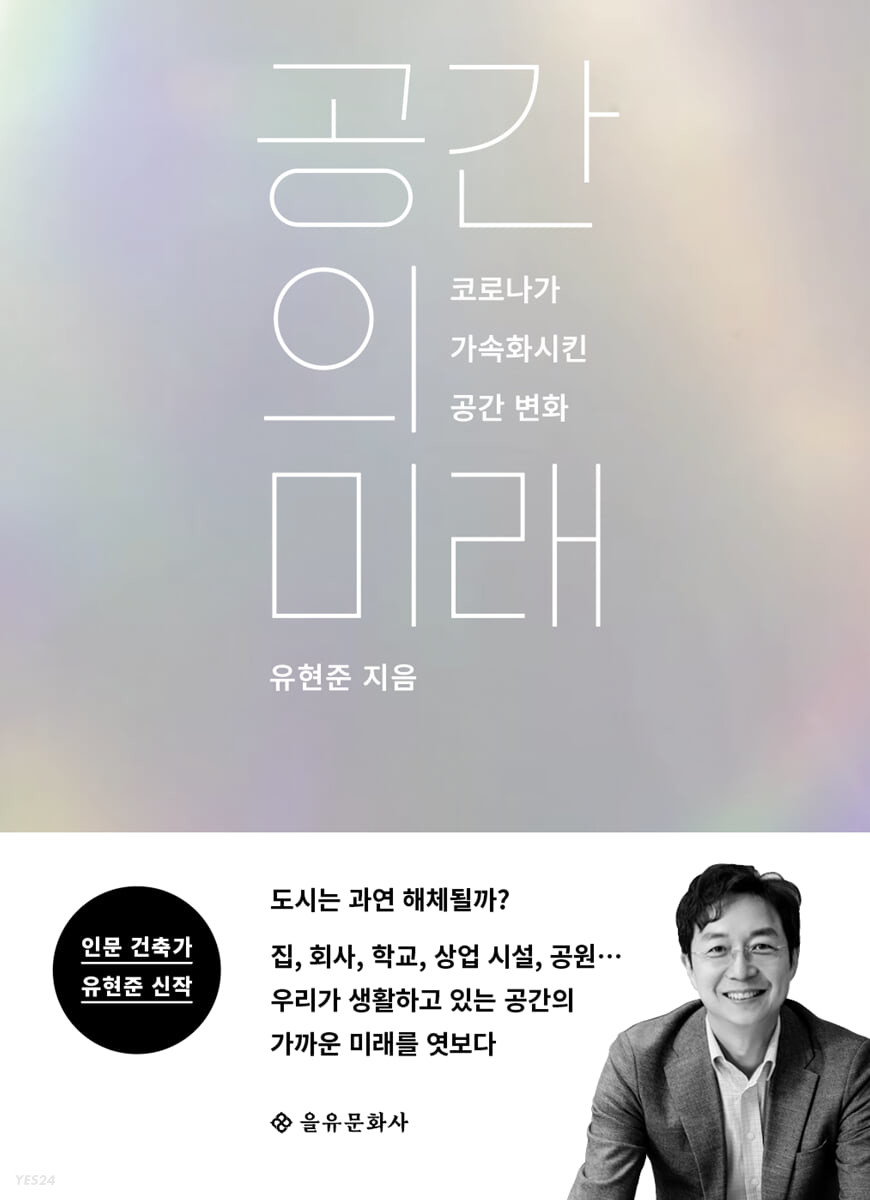
Whenever I read Professor Yoo Hyun-joon’s books, which unravel world issues through the dual lenses of humanities and architecture, I am struck by his exceptional insight and erudition. His explanations flowed seamlessly—from the history of establishing middle-class apartment standards, to the consumption surge triggered by balcony extensions, and even the phenomenon of spatial value increasing by 1.5 times as people spent more time at home during COVID-19. Particularly intriguing was his prediction that remote work will become even more prevalent in regional cities due to changing lifestyles.
Global corporations have long made remote work and online collaboration routine. This was driven by the need to collaborate with employees across multiple cities with different time zones, coupled with the goal of reducing high real estate costs. I recall my time working in IBM’s sales team, where I would commute by inline skates in the morning, change into a suit and shoes from my personal locker, and then start work in a mobile office. At the time, being issued a personal laptop and having flexible working hours were groundbreaking benefits that even employees of large corporations envied. As solutions for relatively smaller living spaces, Professor Yoo suggests growing plants on balconies, reducing furniture, and utilizing sofas and dining tables for multiple purposes. His proposal to fundamentally solve inter-floor noise issues by modifying the building’s column structure (rahmen structure) was also highly practical. The argument that high-rise timber construction and material innovation using 3D printers are necessary for eco-friendly architecture also seemed highly feasible. It was a new discovery that timber high-rises are far more environmentally friendly than steel and concrete buildings and allow for easier partial repairs. The Muryangsujeon Hall at Buseoksa Temple, which has endured 700 years, stands as living proof.
The analysis that South Korea’s cities lost their unique character and became homogenized due to the short tenures of executives at large construction firms was bitterly accurate. It made me realize that if leaders refuse to change and judge the present by outdated standards, they risk harming future generations. For the generation that focused solely on rapidly catching up with developed nations (Fast Follower) during the developing country era, efficient apartment complexes and villas with pilotis structures might have been the best solution. But the result is that our cities now have the same bland, lifeless landscape everywhere you go. The explanation of the correlation between space and power was also fascinating. The way religion has built power through space—the seated arrangement designed to focus attention on the leader on the podium—is a time-honored strategy stretching from ancient ziggurats to modern idol concert halls. Furthermore, the argument that Korea’s ondol heating culture made high-rise construction difficult, thereby delaying urban densification and commercial development, was highly persuasive. Conversely, New York, transformed into a high-density city by the invention of reinforced concrete and elevators, maximized human contact, creating an environment where productivity and creativity exploded, granting it world-leading competitiveness.
Professor Yoo likens this urban growth process to synapses within the brain. The very essence of a city’s vitality lies in diverse people meeting and pursuing creative, constructive endeavors. The argument that Seoul can become a model for future cities is highly realistic. If the birthplaces of human civilization were dry regions abundant in water yet safe from epidemics (like Mesopotamia), then in the post-COVID era, cities with robust disease prevention systems and comfortable high-density living environments will prevail. I imagine that South Korea’s major cities will pioneer this future—places where diverse cultures converge within 5G networks, dawn deliveries, and same-day transportation infrastructure, giving birth to creative startups. With this joyful vision in mind, I rise early again today, write my blog, and energetically begin my day.
 택배기사핸디맨 블로그
댓글 남기기