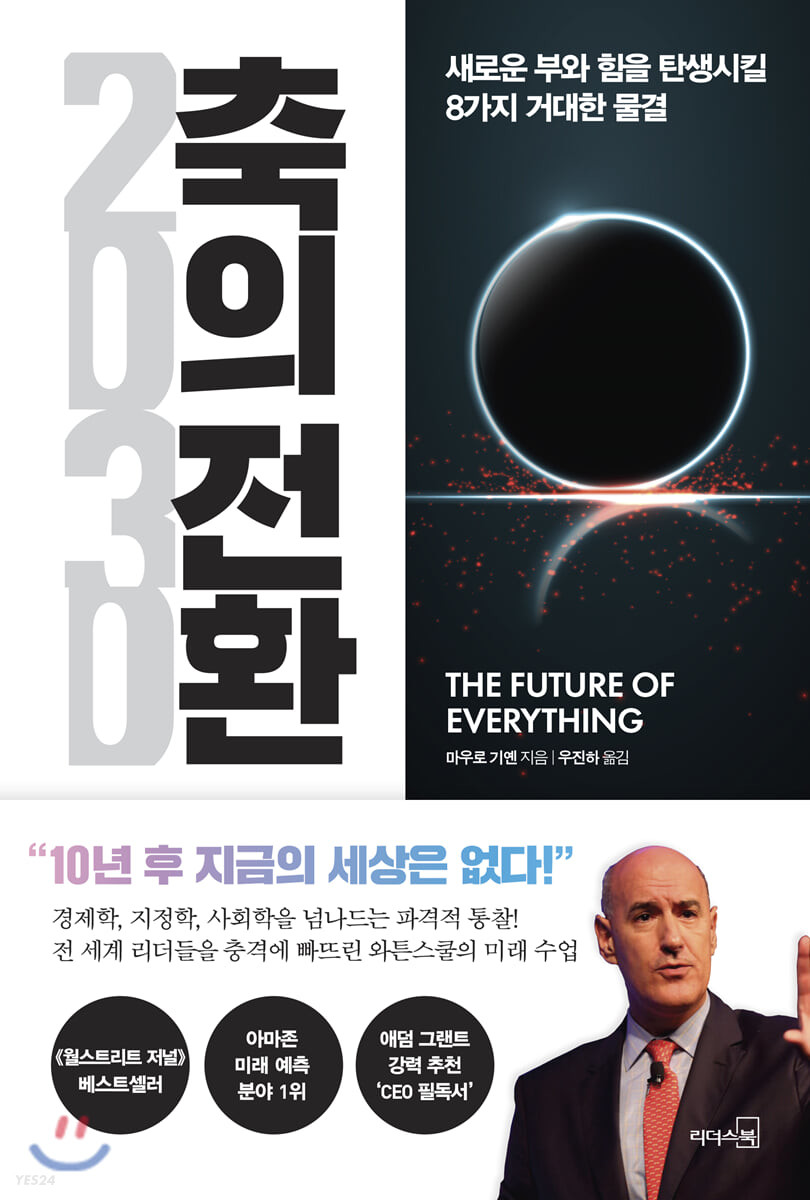
As a child, I imagined 2020 would be a vague future filled with flying cars, but no one could have predicted it would become a time when the entire world came to a standstill due to COVID-19. Many futurists are also analyzing the phenomenon from new perspectives and predicting the world of the post-COVID era. The author defines this perspective as ‘horizontal thinking’. It involves looking far ahead to explore diverse paths, avoiding dead-end situations, and approaching uncertain circumstances with optimism. China’s ‘one-child policy’, implemented since 1979, caused a gender imbalance, and as a man’s financial resources became the top priority for marriage, the savings of parents with sons increased. The author’s insight into how this social phenomenon influenced U.S. mortgage rates was truly remarkable. Essentially, Chinese parents provided collateral for U.S. household debt. Recalling that South Korea’s foreign exchange crisis (IMF) was also triggered by the fallout from a financial crisis originating in Southeast Asia, this analysis is highly persuasive.
Furthermore, while all media focus on the MZ generation, the author advises paying attention to the ‘silver generation’. He analyzes that by 2030, the silver generation will own over 50% of global wealth and hold assets exceeding 20 times those of the MZ generation. The prediction that today’s 40s and 50s will lead consumption in a decade is both obvious and represents one of those pivotal shifts we easily overlook. The real estate market is already dominated by those in their 50s and 60s, and the primary customer base for luxury goods and overseas travel is also middle-aged and older. Furthermore, it is predicted that in ten years, the number of ‘mega cities’ with populations exceeding ten million will increase, and asset inequality will deepen. Observing the trend of apartment prices in Seoul, this phenomenon appears likely to accelerate even further. Many scholars have also predicted an explosive growth in the new middle class. The spending power of China’s middle class, in particular, exerts a massive influence on the global market. In his 2009 book Hot, Flat, and Crowded, Thomas Friedman warned that if China’s middle class adopted the American consumption model, the climate crisis would worsen significantly.
As mentioned in Tyler’s book No Planet B, considering that livestock farming is a major contributor to air pollution, the increase in meat consumption in China is a cause for concern. However, if this middle class instead leads eco-friendly consumption, a ‘green revolution’ could accelerate. There is also hope that sustainable eco-friendly businesses will grow through technology innovation centered in major cities. The prediction that women will be stronger and wealthier by 2030 is an inevitable outcome given their rising education levels and social participation. The active roles of many female CEOs will accelerate this change. Having collaborated extensively with female CEOs at global companies, I deeply resonate with this point. The sharing economy, a ‘world without ownership,’ is already a familiar phenomenon to younger generations. Although it has faced growing pains domestically due to various conflicts, Uber and Airbnb clearly represent a new axis of change that breaks the mold of existing industries, going beyond a simple trend.
Finally, it’s interesting that cryptocurrency is mentioned as a major axis of change. The analysis suggests that blockchain technology, represented by Bitcoin, is shaking up the existing financial order and power structures. Blockchain technology has already been validated in multiple fields and is fully viable as a monetary tool, yet it faces a period of confusion navigating existing legal frameworks and power structures. There is inevitably a gap between the speed at which individuals adopt new technology and the pace at which societal systems embrace it, and governments tend to adjust conservatively. I believe that new value will be created or redistributed from this ‘speed differential’. To adapt to this rapidly changing world, I strive diligently, waking before dawn every day.
 택배기사핸디맨 블로그
댓글 남기기