Unfortunately, I witnessed the subprime mortgage crisis firsthand while living in the United States between 2007 and 2010. Derivative financial products, issued based on mortgage-backed securities sold to subprime borrowers with low credit ratings, collapsed. This led to the bankruptcy of major investment firms and the collapse of the entire U.S. real estate market. Ultimately, ordinary citizens who bought homes with excessive loans suffered the most. When the central bank raised interest rates, countless people who couldn’t afford the loan interest payments lost their homes. Watching the movie ‘The Big Short,’ which depicts that era, I gained a detailed understanding of the complex mechanisms that made the real estate market crash inevitable.
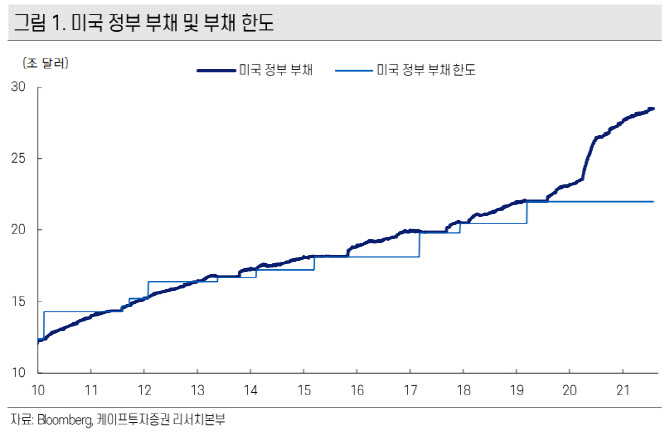
Recently, while encountering news about the possibility of a ‘national default’ related to the U.S. government’s debt ceiling negotiations, I wondered if this was truly possible. Having experienced the 2010 bankruptcy of the California state government, I thought a national default might not be just a distant story. However, once I learned that the Federal Reserve (Fed), which issues the US dollar, is a private bank rather than a national bank, and that the US has continuously increased its debt to operate its dollar hegemony economy since the past, this situation began to become clearer. In the past, even when I heard such news, I couldn’t understand it at all and didn’t even try to look into it more deeply. But since starting to invest last year, my interest in economics has grown. Thanks to studying little by little, I’m now starting to grasp the flow of economic news. Within these macroeconomic trends, I’m also gradually developing a sense of which assets to invest in and when.
It suddenly occurred to me that Jesus, two thousand years ago, was also a ‘sole proprietor’ as a carpenter, so he must have understood the real economy well. Since He engaged in carpentry not merely as artistic expression but as an economic activity for livelihood, He would have understood market prices and profit structures while selling products. Though Jesus likely didn’t invest in Bitcoin, I can’t help but imagine—with a touch of humor—that feeding five thousand people with five barley loaves and two fish might just be the most astonishing ‘investment return’ in human history. 🙂
In turbulent economic times, I believe the real danger isn’t ‘bad investments’ but ‘failing to invest’ itself. I head to the parcel collection site daily to gauge the pulse of the real economy, and today too, I rise at 4 a.m. to study and write, kicking off another energetic day!
 택배기사핸디맨 블로그
댓글 남기기