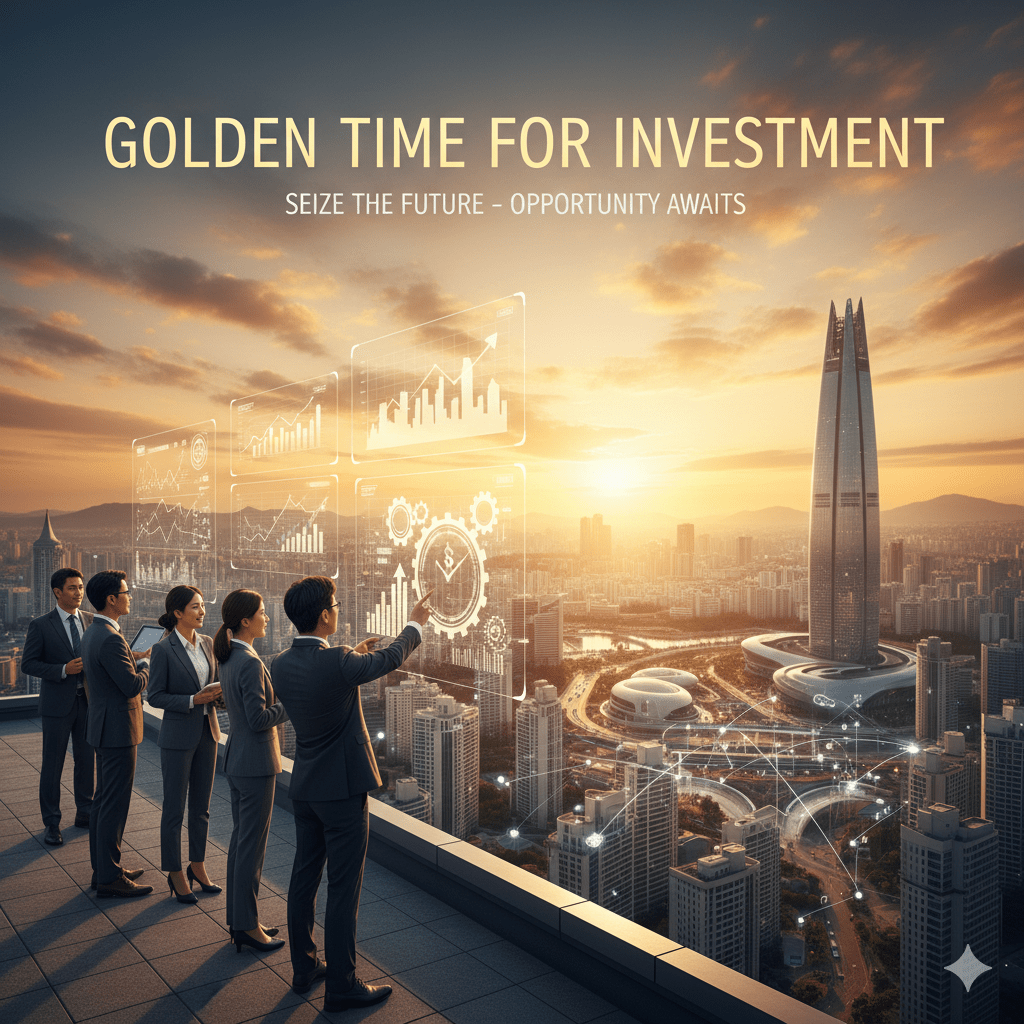
By the end of 2020, through the book ‘The Golden Time of Wealth’ by an author formerly of the Bank of Korea, I gained an understanding of the overall market situation before investing in stocks and developed a macro perspective on the appropriate timing for investment. This gave me confidence in my investment timing, and I became one of the ‘Donghak retail investors’ who invested in Samsung Electronics in the second half of 2020, earning significant profits. Beyond that, I felt both fortunate and proud to have caught the golden time for investment while also investing in Kia Motors, Hyundai Motor, and ETFs. Of course, I still have some regret that I didn’t start earlier. I believe those who invested courageously in the first half of 2020, when the world trembled with fear over COVID-19, possessed a different perspective and insight than ordinary people. From a macroeconomic perspective, 2020 was also a year for the history books. The market at that time could be summarized by two keywords: ‘low interest rates’ and ‘liquidity’. In short, it was a period when money, whose value had declined, flooded the market. Consequently, from early 2020, the stock and cryptocurrency markets delivered once-in-a-lifetime returns to quick-footed investors. Bitcoin, for instance, skyrocketed roughly tenfold by late October 2021 compared to early 2020.
I pondered the mindset of those who didn’t invest even during this golden period. Having gone through a similar process myself, I recognize that while not everyone is the same, several common patterns emerge. The first reason that comes to mind is ‘not having money to invest’. Most salaried workers have little income beyond their monthly paycheck, inevitably lacking seed money, and are often intimidated by the high prices of blue-chip stocks. Furthermore, hearing rumors of others’ profits makes them feel left out, dismissing investing as the exclusive domain of the financially comfortable. At this stage, they constantly compare their finances to others, seeking justification for not investing. But the truth is, it’s not that they lack money to invest; it’s that they lack money because they don’t invest. Moreover, many salaried workers focus their finances solely on purchasing real estate. If they buy a home at the peak of the real estate market with excessive loans and then pour most of their salary into repaying principal and interest, they run a significant risk of falling into the quagmire of poverty when asset values decline, especially if they’ve gone against the 10-year cycle trend. This is akin to pouring cash into a bottomless pit – pouring money into assets that are losing value. As former Meritz Asset Management CEO John Lee noted, this is a highly dangerous financial plan that overlooks South Korea’s rapid transition into an aging society.
The second is ‘fear’ stemming from past losses or others’ failures. People hesitate, worried about losing their hard-earned savings, only to see prices skyrocket and conclude ‘it’s too late,’ giving up. Yet, they often fail to realize that holding cash without investing is the lowest-yielding and riskiest choice when inflation is factored in. They wonder why a ten-thousand-won bill has lost value at the supermarket, but not the other way around. Furthermore, dismissing Bitcoin as merely for crime or gambling is akin to thinking the entire stock market is worthless just because there are stock manipulation groups. You might even console yourself, thinking ‘I’m glad I didn’t do it’ when you see news about someone losing their wallet password. The third pitfall is the ‘infinite loop of thought’ that highly educated financial illiterates fall into. They expend energy philosophically debating the difference between investment and speculation, or searching for logical grounds to claim cryptocurrency is a scam. They enjoy the benefits of the latest technology (like overnight delivery and online shopping) while evaluating the value of assets solely through their own beliefs or religious yardsticks. Many either deny or remain unaware that the market cap of metaverse company Roblox reaches tens of trillions of won. Witnessing this made me acutely aware that failing to stay alert risks becoming fossilized. I even imagine what if heaven were operated by blockchain-based nano-computers. Realizing my own past laziness, I understood that the golden time for investment is ‘now’.
After that, I made it a daily routine to wake up at 4:30 AM to monitor market conditions, adjust my portfolio, and capture arbitrage opportunities. At one point, I took excessive risks, achieving high returns and even managing my family’s assets. My biggest miscalculation was the mistaken belief that the bull market would continue through the first half of 2022. 2022 marked a historic turning point where infinite quantitative easing ended and tightening began. The Russia-Ukraine war and the Fed’s ‘giant step’ interest rate hikes delivered massive shocks to the market. While engaged in leveraged investing, my collateral assets were liquidated, compounded by the Celsius bankruptcy, resulting in significant losses. I faced nearly every adverse event in the cryptocurrency market head-on, including the Luna crisis. Analyzing the failure revealed that going against market trends, excessive leverage, failure to diversify the portfolio, and most painfully, missing the ‘opportunity to cut losses’ were the root causes. I repeated the classic retail investor mistake of refusing to acknowledge losses and holding on, only to suffer greater losses, which shattered my mental resilience.
Having paid a steep tuition fee to experience the investment cycle, I now aim to build a more stable and rational portfolio. Recently, I gained insight into various products like REITs through Park Gom-hee’s book and revised my stock strategy after resonating with Nomad’s dawn investment strategy. Additionally, Kang Hwan-guk’s ‘The Giant’s Portfolio’ taught me the importance of quantitative investing and defensive strategies during downturns. Creating stock accounts for my children has been a precious opportunity not only for financial education but also for meaningful conversations beyond academics. Though I still struggle to answer the question, “When will my stocks go up?”
 택배기사핸디맨 블로그
댓글 남기기