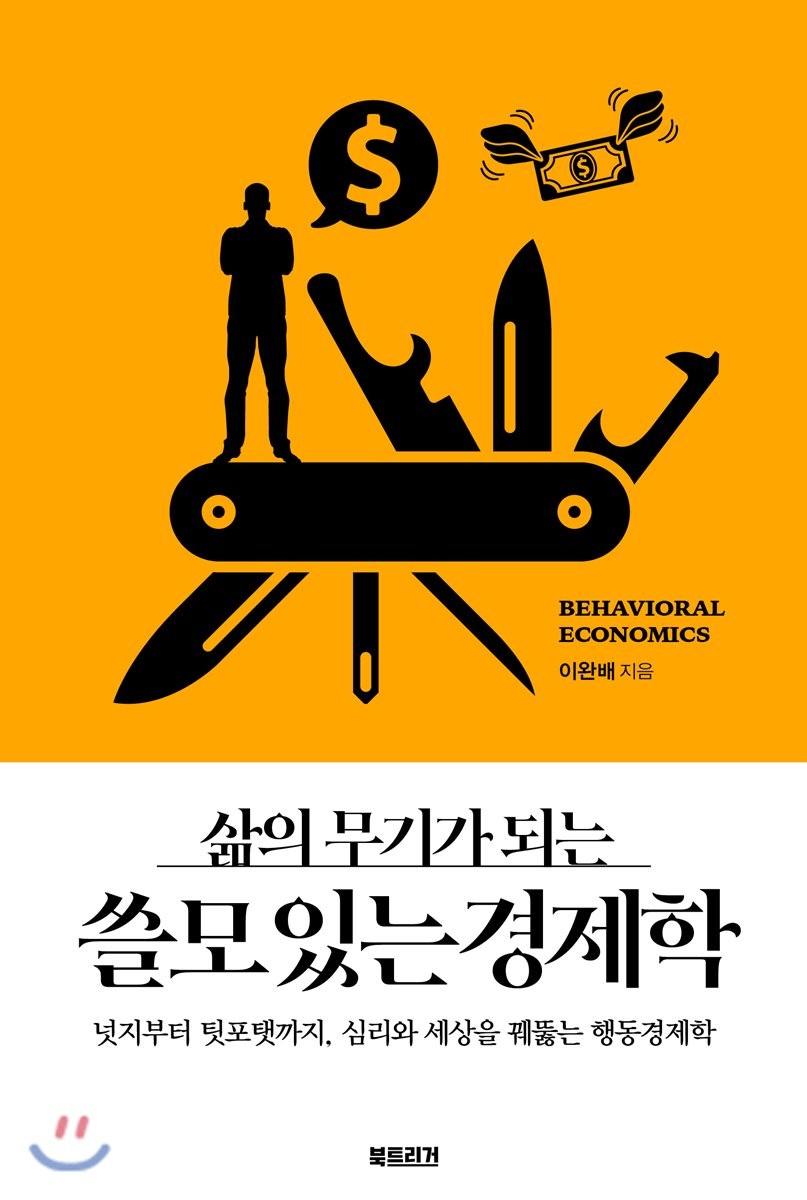
This book was like a vibrant and entertaining food court in a department store basement, compiling economics, behavioral psychology, and various fascinating social experiments. The psychology behind failing diets night after night and buying late-night snacks is attributed to ‘ego depletion,’ where patience runs dry. The analysis that people buy expensive items even by going into debt or struggle with excessive loans to buy a house because they exhaust their energy debating whether to buy or not, ultimately making irrational choices, is fascinating. Those who engage in so-called ‘all-in’ or ‘debt-fueled investments’ might believe they made a logical decision, but perhaps it was a choice made in a state of ego depletion.
A waiter’s ability to perfectly memorize and relay complex menu orders to the kitchen is explained by the ‘Zeigarnik Effect,’ where unfinished tasks are remembered better. Other striking concepts included the ‘Tunneling Effect’ that drives last-minute cramming before exams, the ‘IKEA Effect’ where we assign higher value to food or furniture we make ourselves, and ‘Hindsight Bias’ where we retroactively fit our thoughts to conclusions. Additionally, the ‘Curse of Knowledge’ where teachers who know a lot struggle to teach, the ‘Law of the Few’ where people judge the whole based on a small sample and exclaim “Back in my day…”, The dangerous ‘Chicken Game’ like the nuclear threat between North America and North Korea, the ‘Tit-for-Tat Strategy’ needed in Korea-Japan relations lacking sincere apologies, and even the ‘Methuselah Syndrome’ where the past is remembered more beautifully than reality—I gained a clear framework for understanding phenomena around me.
Particularly memorable was the chapter on “What Frame Should We Weave to Win Elections?” Examples like specific candidates getting trapped in frames during past presidential elections, or Bill Clinton’s “It’s the economy, stupid” slogan capturing voters’ hearts, demonstrate the power of framing strategies. The “Chowonbokjip incident,” which stirred regional sentiment with the phrase “Who are we if not us?”, may be long past, but even today, the two major parties attack opponents and rally their bases using frame strategies. The true essence of politics should be to converge diverse societal opinions through dialogue and steer society toward a better direction. Yet observing politicians’ behavior in the recent presidential election campaign, one cannot help but echo candidate Kim Dong-yeon’s lament, borrowing the words of scholar Jeong Yak-yong: “Not a single hair on this nation is free from disease.” The conflicts stemming from winner-take-all politics and polarization ultimately manifest as money issues—asset disparities—and the COVID-19 era has only deepened these rifts. While this is a global phenomenon in our hyper-connected era, its impact seems particularly acute in South Korea, where information spreads exceptionally fast. The US may have greater wealth or regional disparities, but physical distance might make them less acute. Yet, on a recent business trip to Busan, I overheard a taxi driver meticulously comparing apartment prices per square foot, offering a glimpse into the root of the stress Koreans endure.
While economics or psychology alone cannot solve all the world’s problems, this book has served as a valuable window into understanding the underlying principles and psychological processes behind them. That’s why, even today, I rise at 4 a.m. to diligently build the knowledge that will become my weapon in life.
 택배기사핸디맨 블로그
댓글 남기기