
This book, compiling various lectures by KAIST Professor Jaesung Jung, felt like a ‘gift set’ containing the essence of his witty storytelling and insightful talks. It was fascinating to learn how a physicist became a neuroscientist. After majoring in physics as an undergraduate and studying astrophysics in graduate school, he fell into doubt. It was then that he encountered ‘complex systems science’ through a lecture on fractal geometry. Applying this field—which studies how simple principles can yield complex outcomes, like the butterfly effect—to neuroscience, I deeply understood his academic direction: interpreting phenomena within the brain using the language of science, rather than through psychoanalysis or the realm of the soul.
Among his scientific analyses of our thought processes, the section on ‘regret’ was particularly fascinating. Comparing past decisions with present outcomes to feel regret is said to be a uniquely human, higher-order ability. Regret is the negative emotion felt when our constant predictions of the future diverge from actual outcomes. Professor Jung advises that this simulation ability allows us to progress without repeating the same mistakes. The famous ‘marshmallow challenge’ experiment (building a tower with marshmallows and spaghetti) related to decision-making was also impressive. MBA students spent time crafting perfect plans but were defeated by kindergarteners who acted immediately without plans, continuously refining through trial and error. This demonstrates that good decision-making involves making swift decisions at the right time, executing them, and then adjusting the flawed parts. I believe this result provides the basis for startups to surpass large corporations through constant challenges and failures.
The generation that struggles to make decisions due to information overload is called ‘Generation Maybe,’ driven by fear of failure and anxiety. This tendency is particularly pronounced among Korean students raised in environments where parents decide everything before they even feel their own lack. They are deprived of the opportunity to make decisions themselves, being placed into tightly scheduled cram school routines before they even feel the need to study. For this reason, I also discussed it with my eldest child last year and had them quit cram school. Surprisingly, the child studied independently and recently achieved the excellent result of being accepted into Incheon Foreign Language High School.
Furthermore, I learned that the term ‘decision paralysis’ can actually indicate a serious symptom, prompting me to think I shouldn’t use it lightly around others. Particularly, the point that severe depression weakens self-assertion and leads to being consumed by others’ opinions resonated deeply with my own experience. I resolved to encourage those who struggle with decisions to start making small choices themselves and, if depression is suspected, to help them overcome it together.
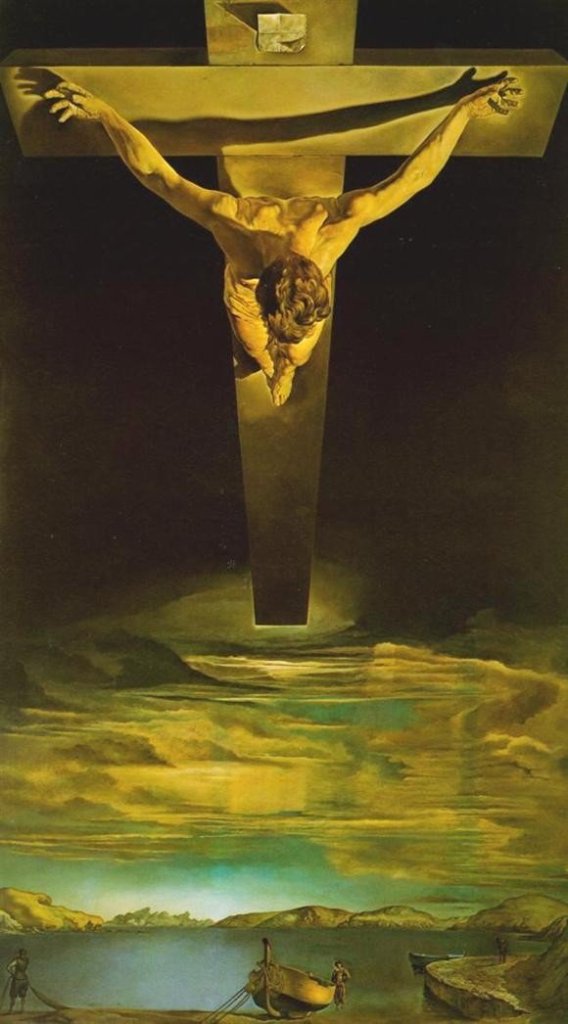
Among the methods for enhancing creativity, the assignment to “draw a picture that vividly captures the heart of Jesus hanging on the cross” was refreshing. It’s a training exercise to view things from a different perspective. When I looked up Salvador Dali’s 〈Christ of Saint John mentioned by Professor Jung, the unconventional composition looking down from above was truly creative and a fresh shock.
His erudition, cultivated through extensive reading since childhood, and his scientific logic resolved many of my inner curiosities. His advice, shared through an anecdote about getting lost while searching for a conference venue in Turkey, to “create your own life map with an explorer’s mindset,” resonated deeply. To draw my own life map, I too rose at 4 a.m. today to complete my trading and book review.
 택배기사핸디맨 블로그
댓글 남기기