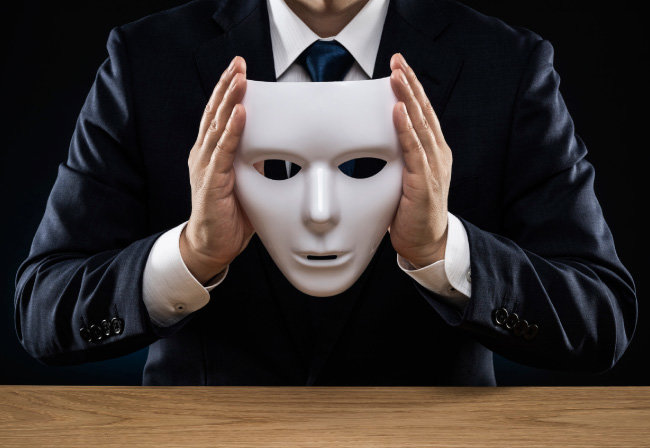
There are small lies and big lies. When a child secretly eats candy and then denies it out of fear of being scolded by their mother, that would be a small lie. On the other hand, deliberately defrauding someone to extort money and then denying it would be a big lie. While the standard may vary depending on each person’s moral compass, observing the political sphere lately has made me wonder just how far the standards for lying among some politicians extend.
A family I know visited recently. They went beyond strong opposition to the COVID vaccine and government policies, sharing opinions while introducing various unfiltered conspiracy theories circulating online. I, too, have personal questions and reasonable doubts about aspects of the pandemic process, including distrust of global pharmaceutical companies. However, I do not deny the entire government policy or believe that world leaders, including the president, are plotting immoral conspiracies. I simply hope the truth emerges regarding the multiple testimonies and reports suggesting the virus leaked from the Wuhan Institute of Virology, which received U.S. government funding, and that freedom and choice regarding personal hygiene are no longer infringed upon.
In this global era, I am deeply curious whether complete herd immunity is truly achievable, and how unreliable confirmed case statistics or PCR testing methods can accurately distinguish an ever-mutating virus. This reminds me of the so-called ‘BCG shot’ (Bacillus Calmette-Guérin), which the entire population received in childhood under the pretext of tuberculosis prevention. Many citizens were left with scars on their shoulders from the side effects back then. Did that shot truly prevent them from contracting tuberculosis? While the fact that ‘people weren’t infected in the end’ is used to justify vaccination, it’s confusing how to understand the rarely reported side effects or fatal accidents where causality cannot be proven.
If someone starts with baseless claims or obvious lies from the beginning, it’s easy to spot. But when a story begins with facts or a trustworthy figure tells a lie, it’s much harder to discern. Mixing truth and falsehood ultimately creates only falsehood, never truth. Yet people, valuing relationships and reacting emotionally, are often deceived. It seems like the desire for everything a supported figure says to be true, combined with personal greed, blinds them. Supporting a specific government might breed an urge to trust all its policies unconditionally, perhaps fueled by the hope that such belief will bring personal benefit.
If even the highest-ranking government officials were deceived, or enacted such policies for some benefit, what should we do? While I understand the government’s position of having to recommend vaccines purchased in bulk under pharmaceutical companies’ persuasion to the entire population, the logic that vaccines from previous versions can prevent the already mutated virus is no longer very convincing. It’s also questionable how much shelf life these vaccines have left.
With the presidential election approaching, politicians’ lies might just be the usual rhetoric. Yet I see the sad reality of South Korea, surrounded by too many lies, from small ones to big ones. I too start my day at 4:30 a.m., reflecting on whether I’m being deceived without realizing it, or if I simply want to believe it.
 택배기사핸디맨 블로그
댓글 남기기