The Russia-Ukraine war, which could have easily escalated into World War III, began in February 2022. A movie-like tragedy became reality, with countless casualties resulting from missile strikes that hit not only military facilities but also civilian areas. Footage of a young girl killed by a bombing while riding her bicycle showed the horrific scene unfiltered, evoking both fear and anger. Watching the endless stream of refugees fleeing to Poland and citizens taking up arms to resist, I found myself wondering: if it were me, could I evacuate my family and then head to the battlefield? Amidst complex thoughts about the ruthless diplomatic relations of the international community, Putin’s ambitions, and the response of Ukraine’s leadership—which initially drew skeptical eyes—I also felt a helplessness, thinking only of prayer, as I imagined the despair of citizens forced onto the path of exile.
At the time, I encountered neutral, multifaceted analyses across various media outlets, including critiques of the Biden administration’s passivity and the West’s lackluster response. I saw the harsh underbelly of international politics: the failure to impose immediate, stringent sanctions despite Russian oligarchs’ assets being concentrated overseas, and the implications of abstentions at the UN. When Ukraine’s unexpectedly fierce resistance and deteriorating global sentiment finally prompted active sanctions like SWIFT expulsion, I felt relieved yet also questioned why civilian casualties weren’t prevented sooner. Ultimately, witnessing cold diplomatic calculations exploiting war under the pretext of national economic interests and inflation control, I was reminded that war is a tragedy where the majority of the weak sacrifice themselves for the benefit of a powerful few.
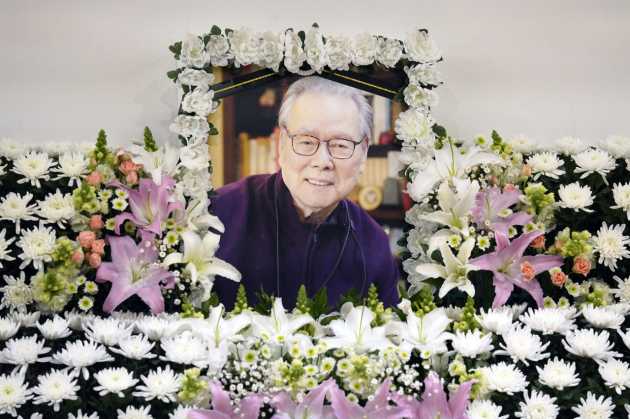
Amidst the daily war reports, the heated political rhetoric ahead of the presidential election, and the unexpected chaos at home due to my eldest son testing positive for COVID-19, my mind was in turmoil. It was then that I heard the news of the passing of Professor Yi Eoryeong. Amidst the sounds of war and the ear-splitting election jingles, his voice, heard in his final interview, came to me as a small yet profound resonance. Having lived as an atheist his entire life before converting to Christianity and writing From Intellect to Spirituality, he was akin to ‘Korea’s C.S. Lewis’. His writing was sharp yet gentle, possessing a creative power of harmony that helped readers discover their inner potential.
Wondering how he might view this situation, I sought out an interview and found astonishing insight. His remarks on the importance of humans sensing ‘alone’ were striking, particularly his point that reducing anything to vast numbers numbs even the sense of murder. Killing one person feels like murder, but killing four thousand becomes merely a statistic. It struck me that Putin might be a dictator whose humanity is impaired, much like Hitler—who was too weak to kill a single parrot yet orchestrated mass murder in gas chambers. His image, isolated at opposite ends of a long table in private meetings with aides, reveals the profile of a war criminal who has lost his humanity and is trapped in the illusion of past glory. History proves how cruel human history becomes when leaders lose their humanity. This makes me realize anew how crucial it is to preserve the ‘humanity’ within my own heart, just as much as safeguarding the nation’s security. I humbly pray for the repose of the departed soul, Professor Yi Eoryeong.
 택배기사핸디맨 블로그
댓글 남기기