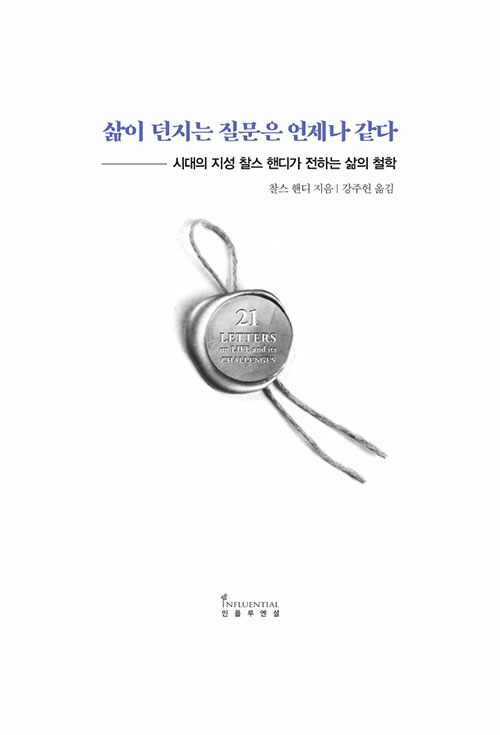
The book was written in the form of a letter a writer leaves for his grandson, which reminded me of the letters my father sent from overseas during his school days. It was the kind of book that made me think: if my grandfather had passed on his experiences, successes, failures, and the many wisdom of life to my father, my father’s life might have been a little different. Likewise, if my father had passed on his life know-how to me, wouldn’t my life have changed in a better direction than it is now? Yet, while anyone can express such profound life wisdom in their own words, I realize anew that actually living that kind of life is an entirely different matter.
Starting with the question of why we must kick ourselves out of bed every morning, it explains changes in how we work. Having gone through the COVID era, where remote work has become the new normal, it discusses how we should approach our work now. Looking back, I worked in a mobile office environment that was very advanced for its time, starting in the early 2000s. Salespeople, who were frequently out of the office, didn’t have assigned seats; they simply logged into a desk using their personal laptops for as long as needed. In the 2010s in the US, the BlackBerry mobile device allowed people to read and write emails anytime, anywhere. Even now, in the metaverse era following smartphones, where new virtual offices are emerging and cloud-based collaboration tools enable real-time communication and work with employees worldwide, the book explains the enduring principles of work. Meanwhile, it brought to mind corporate cultures built on trust, even as companies now routinely require employees to submit all electronic storage devices to security screening or affix anti-spy stickers to phone cameras due to security concerns, and as over 2,000 employees worldwide work entirely from home offices without physical offices.
The author, raised in a Christian household, advised that one must question even one’s own beliefs, prompting me to do the same. I understood that even regarding humanity’s fundamental, essential questions, one should not rely solely on parental teachings or the doctrines of one’s religion, but rather explore and reflect through one’s own efforts to arrive at one’s own version. This struck me as a way to protect myself, my family, and my community in this age of pluralism. It’s truly difficult to determine which standard should anchor my beliefs—whether the closed mountain retreat or the open San Francisco rainbow flag district. It made me reflect on a past incident several years ago when the Presbyterian Church (USA), the largest Presbyterian denomination in the US, approved same-sex marriage, causing divisions among its member churches and sparking conflict within the Korean church community.
In the letter advising how to rekindle inner curiosity, I heard the counsel that maintaining creativity and imagination, coupled with courage, can make one an entrepreneur. This reaffirmed that the first step for an entrepreneur is precisely that small spark of curiosity—like the author’s wife trying out a new meal recipe.
Reading the sections on avoiding becoming a machine part, recognizing true friends as those who can bluntly tell you the truth like “you’re bald,” renewing marriage contracts three times, distinguishing needs from money, and not being dazzled by numbers, I felt that achieving balance in life’s many aspects is truly difficult and that I must strive to change myself, starting with small things. Through author Charles Handy, I was reminded anew that age is just a number. This book brought to mind a wonderful elderly gentleman I once met. After completing a mountain marathon in San Jose, he descended, downed a beer, and declared it his 60th birthday, celebrating himself. So today, I rise again at 4:30 AM, striving to find my own answers to the same questions life poses.
 택배기사핸디맨 블로그
댓글 남기기