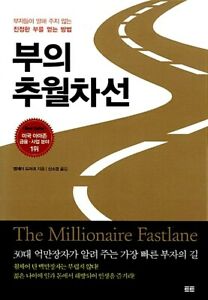
Every time I read a self-help book about becoming wealthy, I realize that while the destination everyone aims for is the same, the paths to get there are all different. This is likely because the backgrounds, eras, and chosen business ventures of self-made individuals are all distinct. Looking back, I too have always been fascinated by unique backgrounds, historical trends, and specialized ventures, which is why I find these books particularly resonant. I believe anyone can write their own ‘wealth guidebook’ if they can objectively answer: ‘What background did I grow up in and what abilities do I possess?’, ‘What opportunities of this era will I seize?’, and finally, ‘What is a realistically executable venture?’ The author of this book is someone who proved his expertise by working as a limousine driver observing the wealthy, growing an online marketing business in the internet age before selling it, and then becoming a full-time investor and writer.
I believe ‘slow lane’ and ‘fast lane’ are merely marketing terms; their essence is relative. Everything requires physical time, and the standard for how fast one should drive differs for each individual. However, one thing is certain: there is a clear difference in the speed of reaching wealth between those who grasp these concepts and put them into action as soon as possible, and those who only know them in theory. Furthermore, the standard for wealth should not be reduced to a simple monetary amount; it should be judged by the presence or absence of ‘financial freedom’ – the freedom to not have to work for money. The author also defines the three pillars of wealth as **Family, Fitness, and Freedom**.
During my college days, when the dot-com bubble was at its peak, I ran a business with acquaintances producing and distributing a street magazine. We distributed the magazine for free in cafes and subways, generating revenue through advertising. It was a pioneering model for free newspapers like today’s ‘Metro’. Unfortunately, due to funding issues and disagreements among the founding members, we couldn’t sustain the business beyond the first issue. As editor-in-chief, I mobilized acquaintances to manage and oversee all practical aspects, from content creation to on-site photography. Looking back, I feel immense gratitude and guilt toward my friends. I sometimes imagine that if the business had continued, successfully transitioning from offline to online and then to a mobile platform while securing subscribers, I too might have experienced a splendid ‘Exit’ like the author.
Above all, the biggest realization was that I didn’t understand the fundamentals of management back then, and crucially, not having a stake in the project was a fatal mistake. Still, I’m deeply grateful just for having gained such valuable business experience as a college student. Believing that reflecting on the past nourishes the present, I started today with renewed vigor.
 택배기사핸디맨 블로그
댓글 남기기