Waking up at dawn, the first thing I do is check cryptocurrency prices and market conditions on my phone. Rebalancing my portfolio or engaging in short-term trading to capture price differentials has long been part of my daily routine. At one point, I even recorded quite high returns. Managing tens of millions of won worth of crypto assets across multiple exchanges and wallets, I considered myself an investor. I even took the reckless step of investing some of my family’s assets that had been entrusted to me.
However, in 2022, as we entered the worst financial crisis and recession in history, I witnessed the disappearance of most of my investment assets. This prompted me to reflect on what went wrong and what mistakes I made. Furthermore, based on this experience, I resolved to build a more stable and rational portfolio.
The biggest misjudgment was the prediction that the bull market would continue into 2022. The most significant shift in the market’s trajectory was the transition to quantitative tightening, where the US began withdrawing the unlimited dollars it had printed during the pandemic. The Russia-Ukraine war and the abrupt interest rate hikes, dubbed ‘giant steps,’ also delivered massive shocks to the market. Failing to anticipate these trends, I proceeded with leveraged investments and ultimately had all my collateral assets liquidated. Compounding this, the bankruptcy of Celsius Wallet led to massive losses.
Had they cashed out a portion during high yields and diversified their investments, they might have weathered the downturn. Unfortunately, they couldn’t avoid the decline across all financial assets. Furthermore, the Luna coin evaporation and last year’s wallet hacking incident added to the mix, leaving them fully exposed to the direct and indirect impacts of crypto-related setbacks. Calculating the losses, it seems I lost at least the equivalent of one Tesla. On one hand, it’s surprising I even had that much to lose.
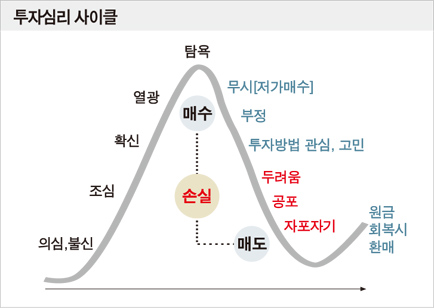
Analyzing the reasons for the loss, the biggest factors were predicting the market trend incorrectly and leveraging at the peak, failing to diversify the portfolio and holding an excessively high proportion of cryptocurrency, and above all, failing to admit the loss and missing the opportunity to ‘cut losses’. He should have cut losses at the right moment and waited for the next uptrend, but instead repeated the classic retail investor failure pattern: holding on until the end only to suffer greater losses. The root cause was trading based on a shattered mental state, abandoning all analytical criteria.
As several market crashes repeated, trading volume noticeably decreased. While institutions continue to buy at the bottom during times like this, retail investors who have lost their investment capacity can only watch helplessly. I choose to believe I’ve paid a steep tuition fee to experience the cycle of past investment failures. Today, I woke up at 4:30 AM again and started my day with vigor.
 택배기사핸디맨 블로그
댓글 남기기