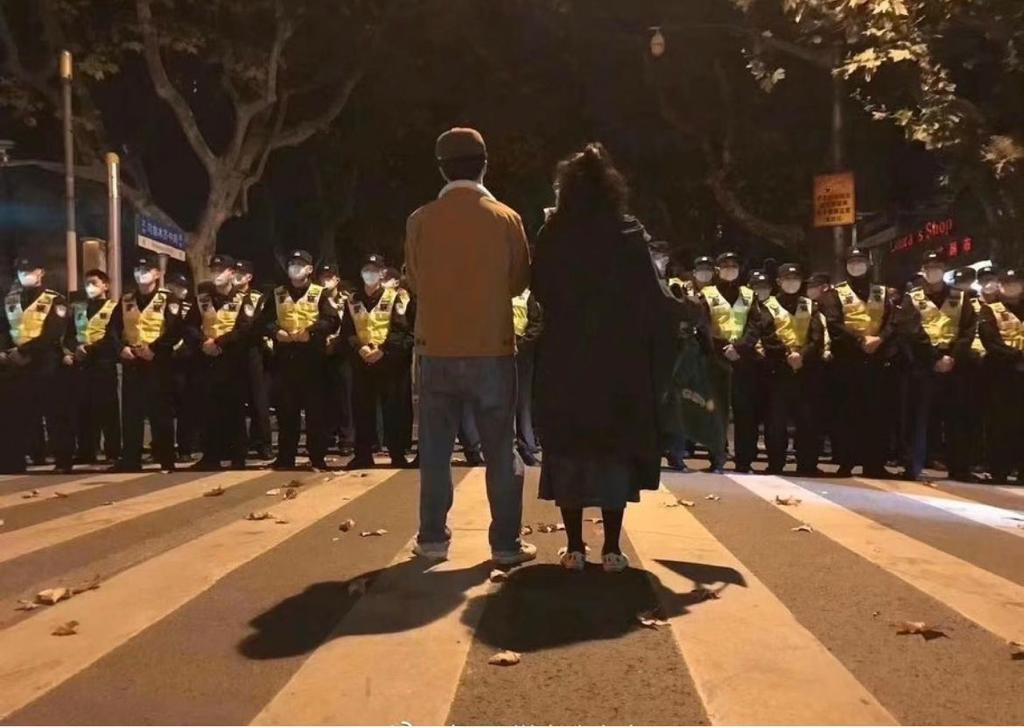
I heard news that riots erupted as anger exploded over the three-month Shanghai lockdown starting in March 2022 and the Chinese government’s prolonged zero-COVID policy. At first, I suspected the news might be somewhat exaggerated or that it was just a protest by an extreme minority. However, during a video conference with a colleague who recently returned to Shanghai after a business trip to Korea, I learned the local situation was far more serious than anticipated. Ultimately, the Chinese government lifted the lockdown, allowing medical care for the elderly and vulnerable and permitting outings, effectively conceding to the citizens. The government rushed to placate public sentiment by releasing contradictory statements claiming Omicron’s fatality rate was one-tenth that of previous COVID variants.
When I asked my Chinese colleague residing in Shanghai directly, the sense of injustice they felt was beyond imagination. People reportedly felt extreme anger seeing the World Cup broadcasts showing the world cheering without masks while they remained confined at home. I learned that local lower-level officials repeatedly locked apartment entrance doors from the outside to avoid responsibility. This practice, combined with the Xinjiang fire incident where dozens died trapped inside, became the catalyst that ignited nationwide protests.
South Korea, too, lived a controlled life under stringent quarantine policies and social distancing for the past three years. As a delivery driver during that period, I had the unique experience of observing the halted society from the outside while working extremely busy hours. While regular delivery drivers had to follow fixed routes within designated zones, effectively living a controlled life, I could move relatively freely, handling both dawn deliveries covering all of Incheon and business development work for tech companies. At the time, if a confirmed case was reported at a parcel hub, the entire terminal could shut down. Consequently, many drivers, desperate to make ends meet, often concealed their positive status or continued working without self-isolating. For them, isolation was an unaffordable luxury. The Korean society I observed during COVID bore a strange resemblance to China’s controlled state. It was a society gripped by collective hysteria, where fear of the virus bred mutual distrust, and people glared with disgust at anyone not wearing a mask in an elevator. I had avoided vaccinations since adulthood, trusting my immunity over vaccine efficacy, but I had no choice but to get vaccinated to access the parcel terminals.
As the world moves toward endemicity, witnessing China’s abnormal lockdowns makes me reflect on the controlled state our society experienced just a short while ago. Looking back on those three years of madness—where the entire population was driven into fear, the movements of confirmed cases were indiscriminately disclosed, and a specific religious group was persecuted without basis—I realize that time spent traversing the field as a delivery driver was, for me, a time of freedom and gratitude. Today, I rise at 4:30 a.m. to write my blog, recalling those happy moments crossing the Incheon Bridge to do live broadcasts, and start my day with vigor.
 택배기사핸디맨 블로그
댓글 남기기