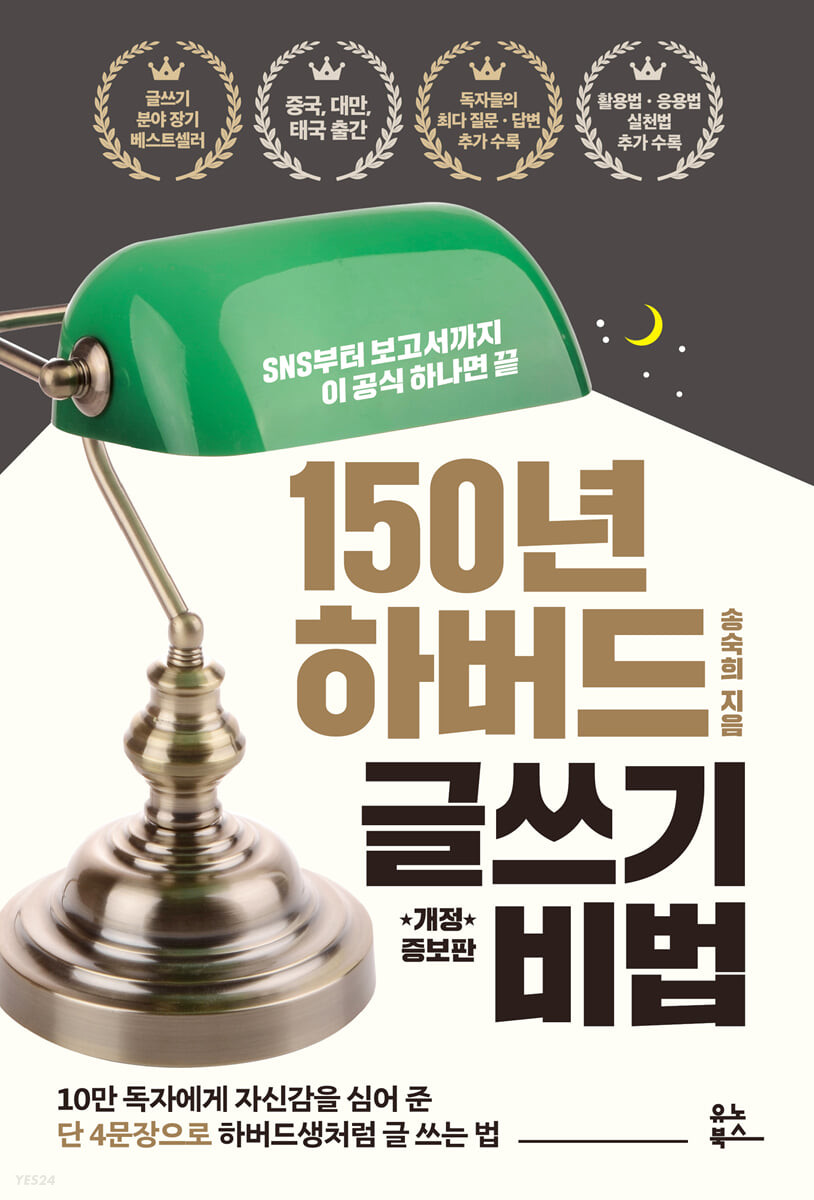
The most significant change since I began writing is my ‘language habits’. I feel my ability to organize my thoughts, summarize them, and convey them has noticeably improved compared to the past. This is likely because everything within me—from my way of thinking to my expression skills—has been reorganized around writing. As my language changed and my conversations transformed, the first thing that deepened was my relationship with my family. Communicating with my eldest son, who is preparing for college entrance exams, through my blog, and editing my second son’s writing while getting to know each other’s inner selves is an irreplaceable happiness and benefit.
Children under South Korea’s college entrance exam system also attend cram schools and devote themselves to studying for school grades and the CSAT. However, I believe the true path for children to break free from the confines of the entrance exam system ultimately lies in ‘writing’. Books like 『The Harvard Guide to Writing』 have solidified this conviction. The fact that even Harvard University, home to the world’s top talents, focuses intensely on writing training throughout all four years is highly significant. The specific techniques were fascinating: from finding writing topics to assembling structure like Lego blocks, to compressing ideas into around 1,500 characters for maximum efficiency.
Just as the great Tolstoy never satisfied with his own writing and constantly revised it, writing is not about completion but the ‘process of refining’ itself. (As a side note, while Hemingway revised his novel The Old Man and the Sea hundreds of times, I believe the spirit of relentless refinement shared by both masters is fundamentally the same.) I, too, aim to let go of the desire for perfect writing and practice a daily routine of revising and filling in my work bit by bit. Holding onto that resolve, I woke up at 4:30 AM again today to start the day energetically.
 택배기사핸디맨 블로그
댓글 남기기