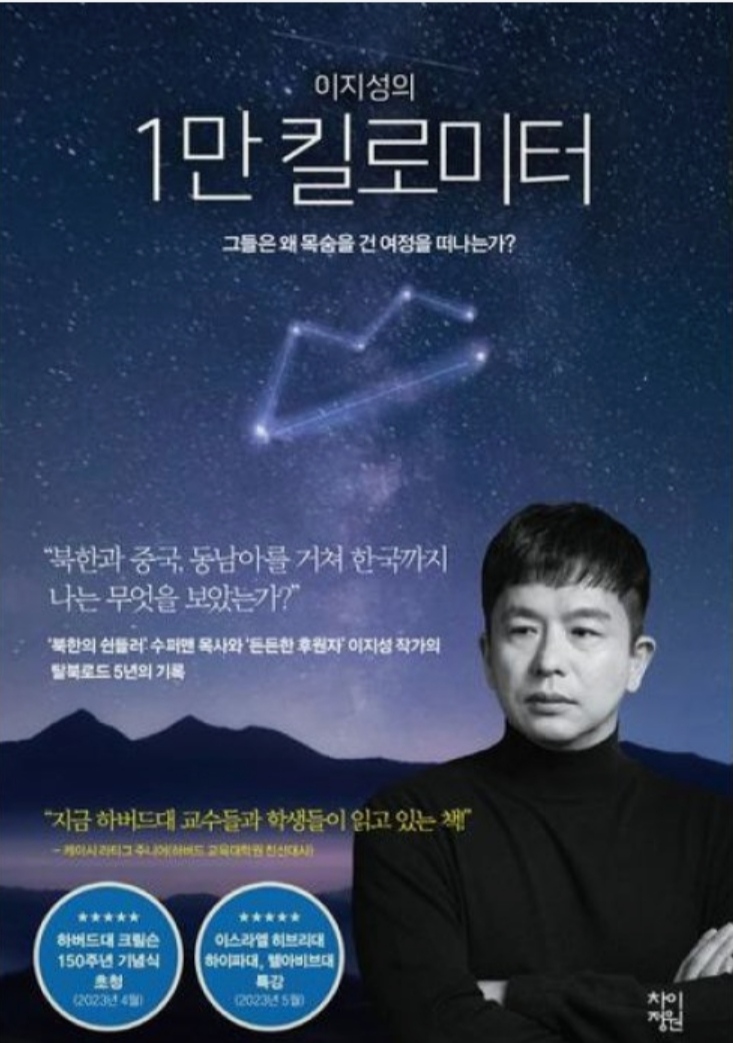
Reading Lee Ji-sung’s book 10,000 Kilometers caused a massive shift in my values. It was like the shock the protagonist felt in The Matrix after taking the ‘red pill’ and waking up from the fake reality. I realized that the information we believed to be true, and the actions we took with good intentions, might actually be part of a grand deception.
This book chronicles the vivid and perilous five-year journey of rescuing North Korean defectors through secret routes in Southeast Asia, beginning with the author’s trip to Dandong, China, following a missionary known as the ‘Superman Pastor’. The pastor’s work, which saved over 4,000 lives while negotiating ransoms for female defectors sold to human trafficking rings—even enduring stabbings and gunshot wounds—resembled an international espionage operation. The most heartbreaking part was the story of defectors who, after embracing Christian faith, risked their lives to return to North Korea to spread the gospel and were martyred. Faced with this harrowing yet noble truth, ignored by any media outlet, one could glimpse the sincerity behind why Lee Ji-sung, a bestselling humanities author, threw himself into this perilous field, even at the cost of being branded ‘ultra-right’.
During my university days, I developed an early interest in North Korea’s reality through a fellow student who had defected. Later, while stationed abroad, I participated in supporting disabled North Korean children through collaborations with Korean churches in the Americas. I firmly believed humanitarian aid would one day become the foundation for unification. Yet this book shook the very foundation of my belief. The existence of fraudsters posing as missionaries to exploit the sympathy of Korean expatriates for foreign currency earnings, the reality of underground churches that are virtually impossible to sustain, and the structure where goods sent for humanitarian purposes are sold in markets to become a funding source for Pyongyang’s privileged class were truly devastating. The illegal activities of North Korean hackers stealing cryptocurrency and trafficking drugs—behavior too shameful to call a nation—along with the tragic forced repatriation of citizens who sought freedom, were the ‘uncomfortable truths’ we must confront.
This book goes beyond a mere memoir of escape, sharply questioning the constitutional foundations of South Korea and the current state of its North Korea policy. It compels deep reflection: have we been intoxicated by the ‘fake peace’ event, turning a blind eye to the tears of starving ‘flower children’ and North Korean defectors trapped in human rights blind spots? We realize it is time to discern not with sentimental pity, but with cold intellect and fervent faith. I resolve to stand on the right side, see the truth, and become an awakened citizen of unification. Even with a heavy heart, to hold onto the thread of hope once more, I begin today with dawn prayer.
 택배기사핸디맨 블로그
댓글 남기기