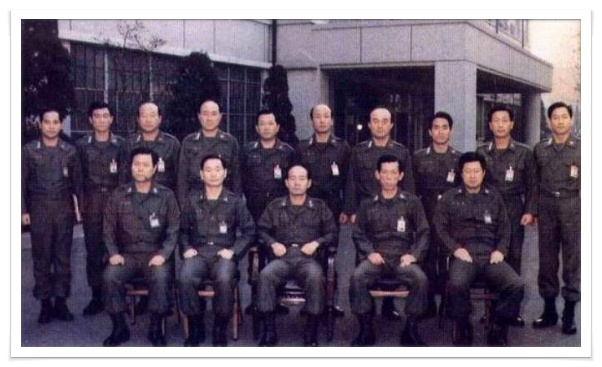
I saw news that the movie ‘Spring in Seoul’ has surpassed 10 million viewers. With middle and high schools organizing group viewings, it’s becoming a ‘national film.’ I never imagined this historical film—which depicts the process by which former President Chun Doo-hwan and the ‘Hanahoe’ group, a military clique now synonymous with political soldiers, seized power through the December 12 coup, enhanced by the director’s imagination—would be such a box office hit. The film dramatically depicts the conflict between General Chun Doo-hwan, head of the Security Command, and General Jang Tae-wan of the Capital Defense Command, portraying the tense, civil war-like situation on the brink of explosion.
This film is not a neutral documentary narrating history; it clearly establishes protagonists and antagonists. However, the subject matter is so shrouded in secrecy that it creates the illusion the entire film’s content is factual. Moreover, former President Chun Doo-hwan, after leaving office, retreated to a secluded life at Baekdam Temple. During his subsequent arrest and the process of imposing fines, he became branded as a villainous figure in South Korean history. His refusal to pay the enormous fines to the end and his failure to fully accept responsibility likely left many citizens feeling disillusioned and angry. Given such a figure as its subject, media outlets rushed to report that viewers created memes like the ‘Anger Challenge’ after watching the film.
However, the battle over the truth surrounding the mysterious October 26 incident—the death of President Park Chung-hee—continues to this day. The suspicious relationship between Army Chief of Staff Chung Seung-hwa, who was present at the scene, and the perpetrator Kim Jae-gyu remains difficult to comprehend by common sense. His actions at the scene where over 40 shots were fired, and the process by which he moved with Kim Jae-gyu to the Ministry of National Defense, hastily declared martial law, and became the martial law commander, contain elements worthy of suspicion. Although he was acquitted 17 years later, this occurred after he joined the Democratic Party during the presidency of Kim Young-sam, who, following a change in government, sent Chun Doo-hwan and Roh Tae-woo—the masterminds of the December 12th military rebellion who later became presidents—to prison. While directors may create works with intent for the sake of entertainment and dramatic effect, they must bear greater responsibility because cultural content can be accepted by the current generation as unfiltered belief.
Even knowing we should strive not to be biased when viewing history, it is unavoidable that preconceptions arise based on the intentions of those who recorded and edited history. Moreover, even those who know the truth often choose neutrality and silence. Consequently, we view historical records from a third-party perspective and judge them based on our own values. Much like evolution versus creationism, or atheism versus theism, if we start from different origins and beginnings, we inevitably see specific historical events through different lenses.
And just as someone who believes in God can understand evolution but find it hard to accept, one might comprehend socialist ideology yet struggle to embrace it.
Therefore, I explained to the children that the film ‘Spring in Seoul’ is based on real events, not a documentary. I also explained how political conservatism (right wing) and progressivism (left wing) are distinguished based on two different perspectives of freedom: Freedom and Liberty. Above all, I write this blog post as I greet the dawn on the last day of 2023, starting the day energetically, so that we may uphold the value that the true protagonist of history is not famous political leaders or loud crowds, but God alone.
 택배기사핸디맨 블로그
댓글 남기기