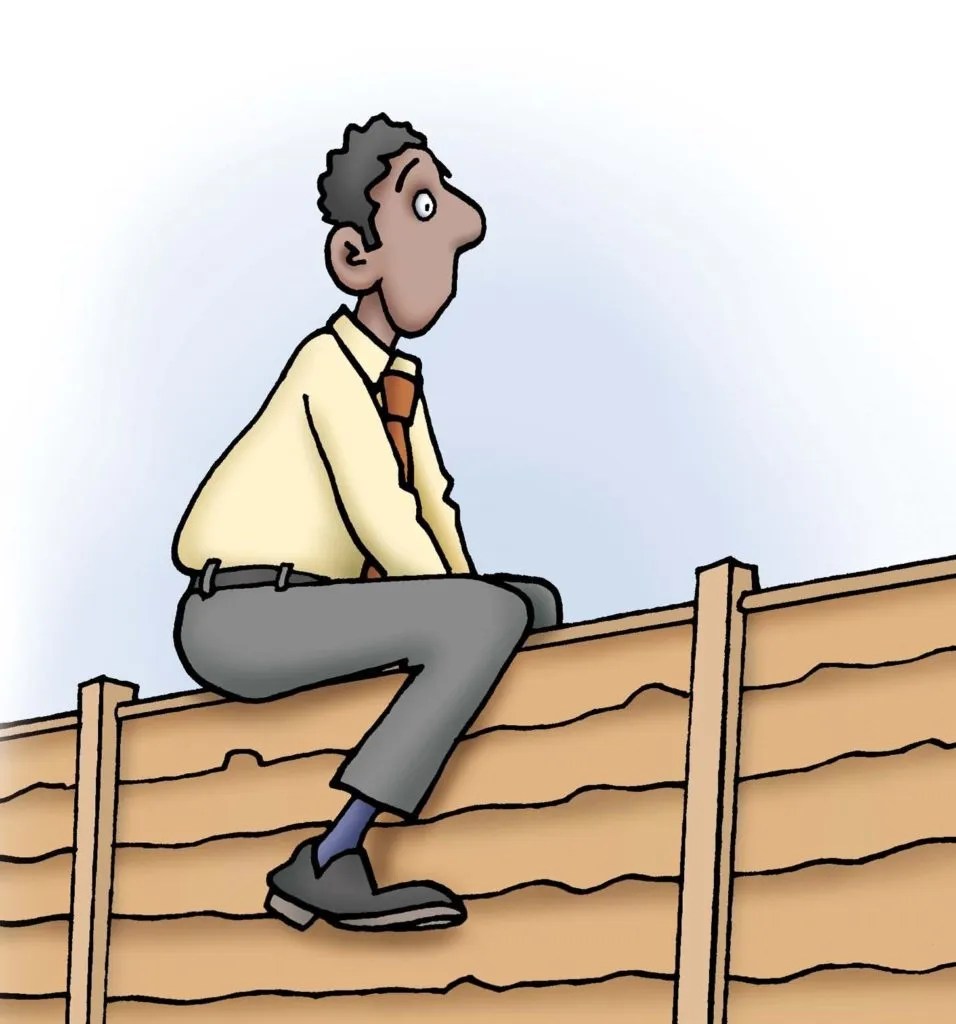
As the April 10 general election approaches, political issues like party nominations and mudslinging between candidates seem to be blanketing South Korea like a cacophony of noise. Rather than debating candidates’ policy pledges or solutions to local issues, the focus is overwhelmingly on ideological scrutiny, evaluating past statements, and criticism. Consequently, I’ve grown weary of politics and now only care about issues directly affecting my own interests. In the past, I prided myself on being politically moderate, distancing myself from anyone I perceived as leaning too far to either side. In English, it’s called ‘sitting on the fence’ – cowardly neutrality, watching from the sidelines and following the prevailing trend. And for a long time, living as a salaried worker, I believed that earning money for higher positions, a bigger salary, and my family’s prosperity was the most important goal and value in life.
However, during the COVID-19 pandemic, I became a delivery driver—classified as a special employment worker—and began seeing the world from the perspective of ordinary citizens. This gave me a very different viewpoint. Especially while directly affected by COVID-19 prevention measures and disaster relief policies, I realized the crucial role of lawmakers who create government policies and laws. This further sparked my interest in South Korea’s economy and foreign policy. While driving a delivery truck through the alleys of Incheon, I listened to the famous current affairs radio show, “Kim Eo-jun’s News Factory,” to understand the world from a left-wing perspective. At the same time, I also tried to maintain a balanced view by watching YouTube channels broadcast from a conservative Christian perspective. Through this process, I learned that some media outlets spread fake news about trivial political issues or personal flaws, and I realized that there are also pastors who act with political agendas. I tried to understand perspectives from both left and right, pondering how to cultivate a positive mindset for moving forward.
Naturally, this led me to study the modern and contemporary history of South Korea, the root of these issues. As I sought out books, documentaries, and lectures by history instructors, I felt I was gradually confronting a vast truth. I came to realize anew that, like Israel in the Middle East, South Korea plays a crucial geopolitical role in East Asia, and that the Korean War, once a proxy conflict between the US and the Soviet Union, has never truly ended. Regarding the argument that 70 years after the armistice agreement, it’s time to declare an end to the war, I was reminded of the historical fact that the withdrawal of US troops led to the communist takeover of Vietnam. I also came to understand the military strategic analysis that if a Chinese invasion of Taiwan becomes a reality, the ROK military must participate based on the ROK-US Mutual Defense Treaty. Only the continued US military presence in South Korea can deter North Korean provocations. Moreover, the words of a missionary, almost like a prophecy, resonated deeply: that after the general election, the National Assembly’s majority vote would decide the dispatch of the ROK military, and that this would determine the role South Korea would play in the global era of the Fourth Industrial Revolution, based on semiconductors and batteries, and in the unification of the Korean Peninsula.
Reading futurists’ books that identified the rapid pace of change as the greatest impact of COVID-19, I found that various questions that arose amid the chaos at the time gradually resolved themselves over time. Particularly during the period when the government controlled citizens through COVID vaccines, I became a delivery driver. Moving around relatively freely, I witnessed a South Korea that seemed frozen in time. Looking back now, it feels truly bizarre. At the time, it was praised as “K-quarantine,” hailed as a model epidemic control policy. Yet in reality, countless victims suspected of suffering vaccine side effects emerged. Recently, while on a business trip to Shanghai, I met a senior colleague whose family member developed leukemia after vaccination – a heartbreaking case. Most self-employed individuals who ran restaurants either went bankrupt or suffered significant losses during the pandemic. Consecutive failed real estate policies led to skyrocketing property prices. While authorities claimed these were global phenomena during COVID and presented statistical data, the credibility of that statistical data has since been questioned.
However, I now realize that what I experienced during the pandemic was part of God’s amazing plan, and this story has been published in a book. It’s as if, even amidst the crisis where South Korea seemed poised to vanish from the world map, the dream God planted in a young man imprisoned a century ago is suddenly gaining attention now, and its truth is being revealed to over a million people through a documentary. Now, at this critical juncture before the general election that will determine South Korea’s destiny, I intend to step down from the fence. I have decided to speak out that the sun-worshipping cult that most persecuted Christians and enslaved POWs resides in Pyongyang, to oppose politicians who propose or support anti-discrimination laws, and to criticize the government that persecuted Christian churches during the COVID-19 period. However, rather than political action, I have resolved to live like the 7,000 righteous people hidden by God who did not bow their knees to Baal in the increasingly darkening Republic of Korea, alongside those who earnestly pray to move politicians. Therefore, realizing the historic mission entrusted to a unified Korea in the global era, I too intend to cast my vote (Build Up Korea) to rebuild Korea from my own position, like Nehemiah who rebuilt the broken walls.
Christ has set us free so that we may be free indeed. Stand firm, then, and do not let yourselves be burdened again by a yoke of slavery. (Galatians 5:1)
 택배기사핸디맨 블로그
댓글 남기기