When I worked for IBM in Korea in 2002, we had a mobile office arrangement that was quite unconventional at the time. Salespeople, who were often on the road, would arrive at the office in the morning, enter the back of their cell phone into the “flexmove” reservation system on the mobile office floor, dial their phone number into the IP phone at their desk, and grab their ThinkPad laptops from their lockers to check email and contract documents. It was a great way for me to learn what it was like to work in a flexible and autonomous work environment, mainly for salespeople who traveled to clients to meet with them, to reduce office fixed costs, and to start my social life in a flexible and autonomous work atmosphere. I didn’t have to stand in the elevator queue on the first floor in the morning because of time and attendance, and I could take my lulav home and work from home instead of staying late in the office because of report deadlines.
And when I was working in the U.S., my mobile device, a Blackberry from RIM, made my job even easier and more convenient because it supported email push, a revolutionary technology at the time, allowing me to receive emails in real time to my corporate mail account. Before smartphones became commonplace, BlackBerrys were the de facto standard for enterprise mobile devices, and it was commonplace for salespeople who traveled a lot for business, both domestically and internationally, to have a BlackBerry strapped to their waist. But after Apple got the UI strategy wrong for smartphones and stuck with physical keyboards, the iPhone came along and invented touch screens and virtual keyboards.
Meanwhile, living in Silicon Valley, I had the opportunity to meet and network with many of Korea’s top talents working in the region’s many tech companies. The 0.1% of Korean talent, whom I knew through my college classmates and Korean-American church networks, were living the American middle class life, paying for expensive Silicon Valley rent and paying for their children’s education. It was the American dream as described in Thomas Friedman’s book Hot, Flat and Crowded, with startups making big IPOs or successful transfers to global tech giants, and often retiring at a young age with real estate or stock investments to fund their retirement. It was not uncommon to see top Silicon Valley talent attending their children’s baseball games, pushing little kids on swings in the park, and taking conference calls with earphones in.
In 2015, we saw a wave of startup founders returning to Korea to ride the wave of the creative economy, using their Silicon Valley experience and advanced IT skills to secure early investment from investors and run their development teams in Korea, where the labor cost for software engineers is relatively low. During the pandemic, more and more companies are converting their development workforce to remote work and hiring great talent from anywhere in the world, and I am one of them. Recently, we’re seeing more startups with development teams in Vietnam, where labor costs are cheaper than in Korea, or hiring in rural areas instead of hiring in expensive cities.
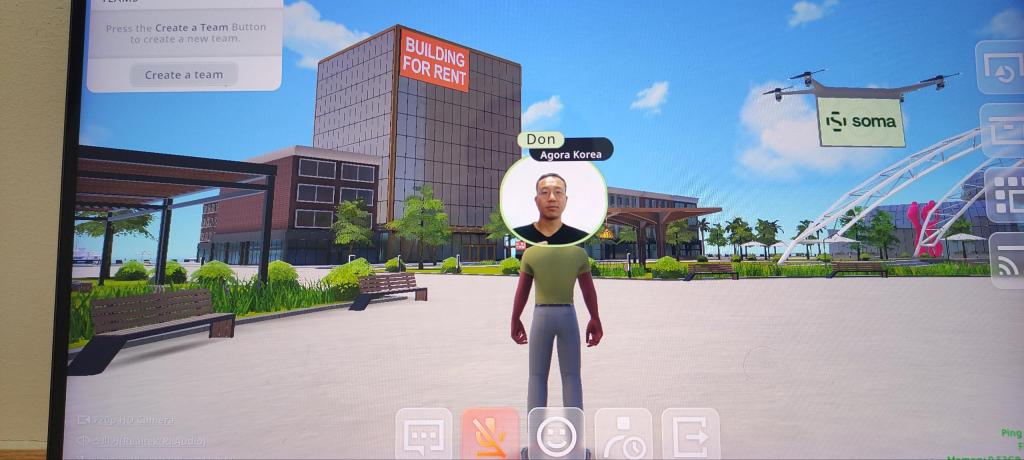
At Zigbang, an all-remote proptech startup, we’ve been doing everything on a metaverse platform called Soma for over two years now. The successful startups will be the ones that bring the best talent from around the world together in a unique culture and work at peak efficiency. I woke up at dawn today to write this blog, dreaming of such a startup.
 택배기사핸디맨 블로그
댓글 남기기