Just as many Christians fail to realize that the light created on the first day of Genesis is distinct from the sun created on the fourth day, I have recently become even more keenly aware that many people cannot distinguish between light and the objects it illuminates. God created light and darkness on the first day, formed space in the waters to create the heavens on the second day, and after separating the land from the sea on the third day, caused plants to grow on the land. What is astonishing is that plants were already growing through God’s life force before the fourth-day creation of the luminaries governing day and night—the sun and moon. And before comprehending God’s word that He created the sun and moon to govern day and night within the vaulted expanse, along with the stars in the watery layer above the vault, I was a theistic evolutionist who separated faith from science and believed creation and evolution could coexist.
And when I lived solely as a salaried worker in the past, I enjoyed relatively stable income and protection within the company’s walls. Consequently, I was largely unaffected by government policies or paid them little attention. At most, I’d engage in superficial conversations over lunch with colleagues about that morning’s news topics. However, the Republic of Korea under the Moon Jae-in administration, which I experienced firsthand while working as a delivery driver during the COVID-19 pandemic, gave me a new perspective. While touting COVID prevention as K-Quarantine and elevating the Korea Disease Control and Prevention Agency with increased budgets, social distancing and capacity limits forced many small business owners to close or go bankrupt. Despite claims that vaccines were 100% safe and urging people to get them, adverse effects and deaths that couldn’t be proven causally kept occurring. Watching the halt of nuclear power development under eco-friendly energy policies and the devastation of forests by solar equipment made me feel something was wrong.
This feeling intensified as I observed ordinary citizens and workers, whom I believed the progressive Democratic Party represented, growing poorer the more they followed its policies. Crucially, when interest rates were slashed to historic lows and disaster relief funds were indiscriminately distributed, I witnessed the inherent nature of money creating bubbles in real estate, stock, and cryptocurrency markets, realizing the critical importance of government policy. Looking back, income-led growth was an anti-market policy assuming that flooding the economy with money would automatically stimulate growth. It denied human nature and was underpinned by an ideology where a small power elite effectively controlled society. Moreover, I realized that this elite quietly committed even greater corruption and abuses behind the system, while simultaneously directing public attention to where media outlets like Kim Eo-jun’s News Factory shone their spotlight.
Moreover, South Korean politics was full of dramatic events, like a real-life version of a K-drama. A former president under investigation for bribery suddenly died under suspicious circumstances, or left-wing media manipulated news to incite the entire nation, leading to the impeachment of a conservative president and the arrest of a former president. President Yoon’s recent declaration of martial law also resembled a drama. Like the historically distorted film ‘Spring in Seoul,’ the scenes broadcast evoked a movie sequence: martial law being used to suppress opposition lawmakers, brutally mobilizing the military to arrest them or seize broadcast stations.
However, as the President later explained in his address, the reality was quite different. After the martial law declaration, only a small number of soldiers arrived at the National Assembly an hour later. They did not take control of the building, but instead allowed lawmakers to enter peacefully, lifted the martial law, and withdrew the troops a couple of hours later, ending the incident anticlimactically. It was later revealed that while the National Assembly was in an uproar, a larger contingent of soldiers quietly carried out more operational tasks, raiding the National Election Commission and seizing various documents. The president personally explained the background, causes, legal justification, and concrete evidence showing how liberal democracy was threatened by the tyranny of the parliamentary majority. His resolute stance, reassuring the public, seeking cooperation, and vowing to stand firm, was impressive. He explained that the declaration of martial law was unavoidable due to suspicions of election fraud stemming from the NCE’s flawed computer system. Furthermore, attempts to investigate were blocked by the NCE invoking its status as a constitutional body, and with judicial officials serving as commissioners, it was effectively impossible to conduct warrant-based seizures or compulsory investigations. This connects to the persistent truth-seeking efforts of former Prime Minister Hwang Kyo-ahn, who resigned as party leader after taking responsibility for the crushing defeat in the 2020 April 15 general election, and the allegations of election fraud in that election raised by Representative Min Kyung-wook in Incheon Yeonsu-eul.
Yet, the media, which should be revealing the truth, recently during the U.S. presidential election period, major domestic outlets focused not on conveying American public sentiment or on-the-ground voices, but instead persistently relayed the left-leaning U.S. progressive media’s narrative about Harris’s electability. In the past, the Democratic Party nationalized the issue of treated water from Japan’s Fukushima nuclear plant, ultimately wasting budget through comprehensive seafood inspections and maximizing public fatigue through the inflammatory performances of some ignorant celebrities. Furthermore, the unconstitutional lawsuit over health insurance premiums for same-sex couples sounded an alarm for South Korea’s Christians regarding the Anti-Discrimination Act, mobilizing over a million people to the plaza. Yet, the majority of citizens still refuse to see the light. Regardless of whether election fraud occurred, the National Election Commission should verify why the statistically recorded numbers exceed the actual pre-voter rolls, confirm passwords aren’t set to 12345 to prevent North Korean hacker attacks, and ensure data manipulation is impossible. Furthermore, the fact that a specific Democratic Party candidate’s stamp count keeps appearing on electronic vote counters is not manipulation but an extremely improbable coincidence where votes happened to cluster. Finally, unless the purpose was to destroy all this evidence, the former National Election Commission chairman appointed by President Moon Jae-in should explain why the servers were relocated.
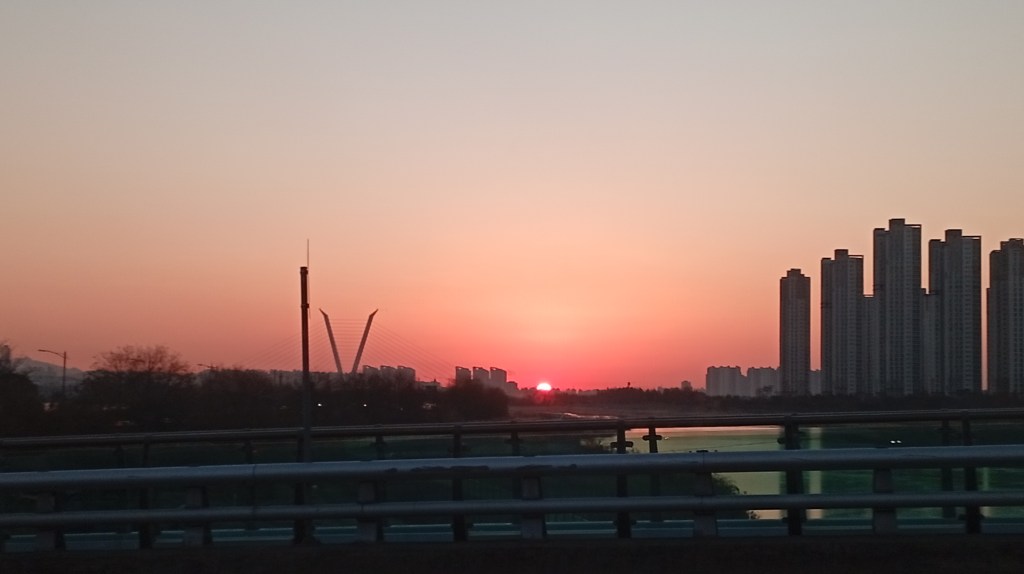
The common thread linking past incidents—the protest visit by Congolese officials to Korea’s National Election Commission, the election fraud scandal in Kyrgyzstan several years ago, and the recent Romanian case where a win was annulled due to Russian interference—is that all involved Korean-made electronic voting machines. It is deeply regrettable that Korean IT technology has been implicated in such unjust events. Just as a knife can be used righteously or unjustly, its purpose changes entirely depending on the user’s intent. While adult content or illegal cryptocurrency exchanges destroy individuals’ minds and souls, election fraud is a greater social evil because it can shake the very foundation of a community or a democratic nation. However, following his recent U.S. election victory, Trump has pledged a thorough investigation into past election fraud allegations. Meanwhile, independent media outlets staying vigilant through social media are growing in number. The recent conscience declaration by the CEO of an election equipment supplier feels like the clouds obscuring the light are finally parting. So today, I rose at 4:30 a.m. to watch the rising sun, revering the Creator of this brilliant light. I prayed for the light of truth to shine upon the Republic of Korea, a free democracy, and began my day with vigor.
God, who said, “Let light shine out of darkness,” has shone in our hearts to recognize the glory of God in the face of Christ.’ (2 Corinthians 4:6)
 택배기사핸디맨 블로그
댓글 남기기