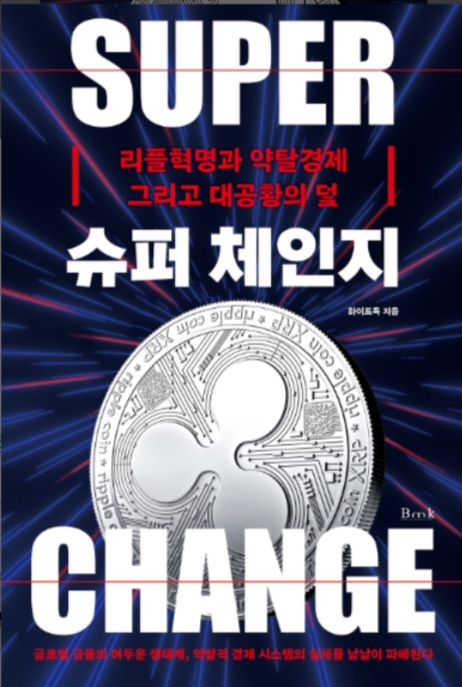
Several years ago, while studying cryptocurrency, I learned about blockchain projects for interbank transfers. At the time, I invested in Ripple’s XRP, a company whose vision encompassed all forms of value transfer. This process revealed the enormous scale of the international money transfer market. I also learned that several U.S. banks effectively monopolize this market, standardized through the SWIFT system. Today, we send text messages and make video calls in real time over the internet. Yet the financial system remained strangely outdated, with transaction speeds still painfully slow. This was particularly striking in regions like Africa, where remittance fees are exorbitant. It was heartbreaking to realize that workers toiling abroad must pay enormous costs to send money to their families. I also came to understand that after the gold standard ended and the dollar became the reserve currency, the global financial system was designed around the dollar. Clues about the forces driving and controlling that system also began to emerge gradually. When I first encountered blockchain technology, my expectations were high. I believed this new technology would disrupt existing platforms and establish a democratic order that returned financial sovereignty to the people. However, reading this book, I was somewhat surprised to learn that the cryptocurrency system ultimately serves as a supplementary mechanism to the dollar system.
Blockchain theoretically represents an egalitarian system through distributed ledgers. Yet in practice, its structure inevitably creates an entrenched class holding proof-of-work authority. Ultimately, only the name of financial power changed; in a market plagued by repeated ‘pump and dump’ schemes, few genuine opportunities trickled down to the masses. Perhaps the cryptocurrency market serves as a mechanism to prevent financial collapses like the Great Depression. The explanation about offsetting U.S. government debt with Bitcoin also made sense to some extent. While some may profit from investments, the argument that large funds could swallow a nation’s economy was quite compelling. Looking back, Korea’s past ‘Kimchi Premium’ phenomenon now seems like a money laundering mechanism designed by specific financial forces. The author insightfully analyzed patterns in international capital markets and predicted systemic shifts. However, seeing his arguments about the sun and earthquakes, I thought he might not know God well. The past IMF crisis could also be viewed as a conspiracy by international capital forces. Yet, on the other hand, it also served to awaken a financially illiterate South Korea and transform its economic constitution. The COVID period was similar. The process of flooding the market with massive amounts of currency to inflate assets, then using war as a pretext to recoup that money, repeated itself. Yet, I sensed ‘God’s reversal’ when I saw the initiative shift from the Fed to the government through President Trump’s tariff policies.
South Korea is currently experiencing an abnormal speculative frenzy with the KOSPI at 5000, driven by the government and forces like BlackRock. Fortunately, alert citizens are preparing for a crash by investing in US stocks and dollars. Furthermore, as evidence of election fraud in the 2020 U.S. presidential election is being disclosed through reports, the media and citizens are gradually opening their eyes to the truth. It is also becoming clear that President Yoon Suk-yeol has been preparing for this situation in our country. Many support his return, and a strong wind of change is blowing, particularly among the younger generation. Through <Super Change>, I realized the hidden agenda behind economic shifts and the global capitalists’ conspiracy. Hearing the news that former Prime Minister Lee Hae-chan, once identified as a key figure in the election fraud, died under suspicious circumstances in Vietnam, I feel God’s justice is being fulfilled one by one. Today, I started my day energetically by going out for dawn prayer, praising God, and writing this blog post.
 택배기사핸디맨 블로그
댓글 남기기