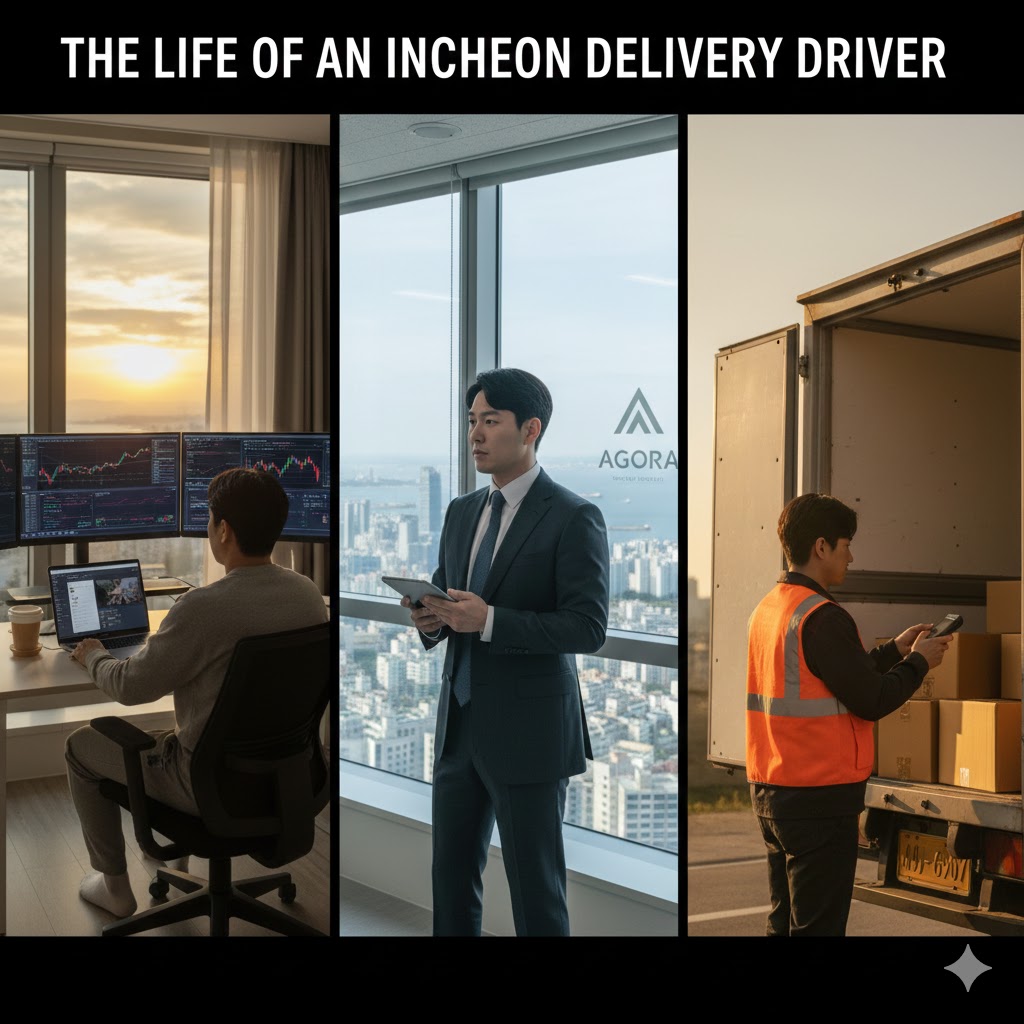
The COVID-19 pandemic period must have been an exhausting and difficult time for everyone. Thinking about those who passed away due to COVID-19 infections, their bereaved families, the self-employed who experienced business failures because of the government’s quarantine policies, and the students who couldn’t go to school or meet their friends, it was truly a strange and depressing time I’d rather not remember. I too lived a life vastly different from ordinary people. As I pondered how to begin writing, the story of King Nebuchadnezzar from the Old Testament book of Daniel suddenly came to mind.
King Nebuchadnezzar, ruler of Babylon and one of the greatest empire-builders, is likely more famous to Christians as the conqueror who captured Jerusalem and held the Jews captive for seventy years. The Bible (Daniel 4:29-34) tells the story of King Nebuchadnezzar boasting of his power and majesty while gazing down upon his empire, only to be punished by heaven. He was reduced to living like a beast for seven years, but when he looked up to the sky, his sanity returned. It’s a cautionary tale warning against pride. It might sound absurd, but the Old Testament is also a historical record. Moreover, the fact that it candidly documents the weaknesses of a king who ruled a great empire actually lends credibility to the story. It’s not symbolic or metaphorical; it’s very specific. So, at the very least, the record of a mad king existing back then seems factual.
But if I said something very similar happened to me, who would believe me? Except for my family and a few close friends, no one would know that after leaving my blockchain startup, my depression worsened. I sought psychiatric counseling and prescriptions at renowned hospitals and traditional Korean medicine clinics. Ultimately, I developed social phobia and even schizophrenic symptoms, making daily life practically impossible. Watching myself deteriorate, I attempted to end my life several times – something no one would know either. Things got so bad I even believed an evil spirit had possessed me, leading me to attend prayer centers and seek healing prayers. I too heard negative thoughts tormenting me daily and even experienced inexplicable auditory hallucinations, which shamanistic believers would likely describe as being possessed by a spirit. King Nebuchadnezzar probably faced similar accusations from those around him – in short, I was going mad.
At the time, to find the cause, I searched through countless online video lectures on mental health counseling, read related internet articles, sought psychiatric counseling, and consulted medical professionals. However, I could only grasp the superficial causes of the symptoms, never the root reason. Looking back now, though, it’s as if the fragmented puzzle pieces have clicked into place, revealing the cause: in a word, ‘pride’. The business venture I attempted with acquaintances was a cryptocurrency-based gaming project. During the process of securing substantial funding, I was shocked to discover the harsh reality lurking behind it. Additionally, I believe it stemmed from the stress of being laid off during a company merger after having been at the pinnacle of wealth in Silicon Valley, USA, and the pride—or rather, the arrogance—that came from climbing to a high position solely through my own abilities without ever failing. This arrogance crumbled, and the illusion that my small achievements were something truly great was shattered.
Despite my relatively young age, the fame and glory I enjoyed in the IT and gaming fields, along with the relatively high compensation and benefits I received from the company, were far beyond what an ordinary employee could expect. I was provided with a home in the heart of Silicon Valley, a company car, a corporate card, and worked in an expensive office displaying high-end modern art pieces. My primary bank visited my office annually to greet me, and industry leaders reached out to play golf on weekends. Companies trying to sell to me invited me to the finest wineries and boat tours, and my name graced the VIP list at lavish company-sponsored parties overflowing with expensive food and drink. It’s embarrassing to admit, but I was ordained as a deacon at a Korean church and even served as a children’s ministry teacher, priding myself on being a devout believer and a great dad. I lived without hesitation, meeting new people to turn into sales opportunities, closing deals, forming partnerships, and expanding both the company’s and my own horizons. My job was to go anywhere in the world, meet the people I needed to meet, and close business deals. I relished that free-spirited life. In the process, I built a vast global network, even serving as a networking hub with over a thousand public connections on LinkedIn.
But the wealth and fame I enjoyed vanished overnight. I felt utterly diminished, despite having firmly believed I was truly remarkable. While I now realize it wasn’t greatness but arrogance, back then I felt like I’d lost everything, drowning in anxiety and depression. In January 2019, when I was suffering from severe anxiety, my youngest son was born. My symptoms were so severe that I feared everything and couldn’t even go outside. As I cut the baby’s umbilical cord with trembling hands in the delivery room, I thought our family would soon be driven out onto the streets like the Syrian refugee family I had seen in Turkey. At that time, I was completely unable to engage in any economic activity, so we had no income whatsoever. We were cutting expenses and relying on family help to cover monthly living costs, but as this period dragged on and our situation grew increasingly difficult, I ended up selling not only my cherished car and expensive furniture, but even my wife’s belongings. Of course, in our early married life, we’d lived in a small apartment drafty in winter and driven a beat-up used car barely fit for the scrapyard. But the problem was that I was in a state where I couldn’t do any work, and with my family’s consent, I was on the verge of being forcibly transferred to a psychiatric ward. There was no hope whatsoever. In the Harry Potter novels, there are terrifying magical creatures called Dementors who guard the dungeons of Azkaban. At that time, I was like an empty shell, as if my soul had been sucked out by one of those Dementors. The reason I can recall these memories at all is because I wrote in my diary every single day without fail and kept a video blog.
As winter passed and spring arrived, I decided I had to escape the prison I’d built for myself. As a trial, I applied for a part-time job with Coupang Flex, starting to deliver packages for Coupang using my own car. I deliberately applied for the early morning shift to avoid meeting anyone, just making doorstep deliveries at dawn. I gradually started going out more, shifting my hours to include daytime deliveries too.
Later, I tried to maximize my income by delivering non-stop through the day and night. However, there was a limit to the number of deliveries a single person could be assigned at one distribution center. So, I ended up switching centers constantly, delivering without rest, which allowed me to cover many areas of Incheon. Eventually, I decided to pursue this work full-time. I obtained a freight transport license, retook the Class 1 standard driver’s license exam twice to pass, and interviewed at several logistics companies to find a courier position. During this time, I learned that many logistics companies engage in legal scams: they introduce job seekers to courier companies while charging brokerage fees or pushing trucks at inflated prices through high-interest capital loans. Fortunately, I avoided such pitfalls and became a delivery driver by going directly to companies, starting from scratch.
My first delivery job was with Hanjin Express in the Yeonsu-gu district of Incheon. An older driver who handled Yeonsu-dong moved to the countryside, creating an opening for someone to take over that area, which is when I joined. My assigned area was the Woosung 2nd Apartment complex in front of Woninjae Station. It was a large complex with 20 buildings, making it a great area with a consistently high volume of packages. As is often the case, good areas with relatively high income potential tend to have established drivers who guard their turf, leaving little opportunity for newcomers. I realized I was incredibly lucky. Instead, I also took on Dongchun Village, a five-story apartment complex without elevators, so I ended up handling both easy and difficult areas. I learned that people starting out in parcel delivery usually begin with apartment complexes that have elevators because their driving skills are still unpolished and they aren’t familiar with the geography of their assigned area. As they gradually gain experience, they move on to handling villa and residential areas focused on alleyways. Apartment complexes offered relatively stable volume but had the drawback of time lost waiting for elevators, making it hard to shorten delivery times. In contrast, the general residential areas, called “bungeo,” had the advantage that once you got familiar with them, you could deliver quickly enough to navigate the alleys with your eyes closed. I learned that those becoming delivery drivers mainly fall into three groups: people in their 20s looking to earn a lump sum quickly after military discharge before moving on; people in their 30s and 40s trying to earn living expenses while rebuilding after a failed personal business venture; and people in their 50s and older who have been doing delivery work for over a decade. Each has various reasons and goals for starting at the bottom of society. I also learned that some become agency owners, managing delivery zones by hiring multiple drivers, while others with strong sales skills become specialized pickup drivers by securing contracts with multiple shippers and clients.
After working at Hanjin Express for over six months, it was a huge surprise when a junior driver I worked with contacted me, asking if I wanted to join him at CJ Korea Express after he transferred there. CJ Korea Express handles significantly more volume than competitors, making it a coveted destination for all delivery drivers. However, they don’t post job openings, so it’s impossible to know which agency has vacancies. I learned that some of the drivers were foreigners, and due to a change in the law, they had no choice but to be laid off. A Chinese-Korean driver was about to leave soon. Through that junior driver’s introduction, I gained the opportunity to transfer to the CJ Korea Express Juandong Agency. This led to me getting scolded by the Hanjin Express agency manager and eventually moving positions the following year. As expected, the parcel volume was higher, but the area I was assigned to was a steep hill and extremely narrow alleys within a residential neighborhood, featuring five-story low-rise apartments that hadn’t yet been redeveloped. Moreover, CJ Korea Express managed its delivery drivers on a completely different level compared to Hanjin. They demanded strict adherence to delivery times and absolutely did not tolerate mistakes like misdeliveries or customer complaints. The agency scored drivers daily to boost its evaluation points, and it felt suffocating. Honestly, back then, my goal wasn’t to be a mistake-free delivery driver. I was more concerned with how to increase my income beyond just the delivery earnings. On weekends, I did delivery services for items traded on Karrot Market. Even on weekdays, whenever I had a spare moment during deliveries, I’d engage in the side hustle of selling items on Karrot Market. I think this is why I made mistakes like late deliveries or incorrect deliveries.
So I decided it would be hard to keep doing parcel delivery for CJ Korea Express long-term and started looking for new work. Then, quite by chance, I saw a personal ad on Carrot Market offering to transfer an agency for Jeongjakshiksa, a side dish early-morning delivery service. While Carrot Market is a platform for trading all kinds of used goods, seeing an ad for transferring an agency felt a bit absurd. On the other hand, I got curious, saved the contact info, and called over the weekend to hear about the business. However, it seemed odd that it wasn’t a franchise agreement with the main office requiring a franchise fee, but rather a private transaction between individuals. To resolve my doubts, I contacted the main office to verify. In the process, I confirmed that the main office doesn’t allow the transfer of agency rights between individuals and discovered that the deposit required was absurdly high compared to actual sales. I also learned about a kind of scam where people would sacrifice profits to inflate sales, fund marketing out of their own pocket for several months, then sell the franchise rights at a high price after collecting a large deposit. However, sensing the early morning delivery market would grow significantly, I proposed a model to the head office representative, with a friend’s help, to operate a franchise covering the entire Incheon area. Ultimately, I became the Incheon franchise owner. Within a year of starting in parcel delivery, I became the franchise owner managing and delivering for a side dish startup in the Incheon area.
Additionally, quite by chance, while trading used goods on Karrot Market, I met the CEO of Sobling, an espresso coffee producer, and secured a parcel collection contract with them. Parcel collection refers to the daily task where the assigned courier collects boxes from corporate customers shipping goods nationwide and sends them out from the logistics terminal. Parcel collection contracts are typically secured either through the agency owner’s sales efforts or when delivery drivers receive inquiries while handling deliveries in their assigned areas. Once a parcel collection contract is established, companies rarely switch carriers. Even when relocating, the collection service is typically transferred to the local agency in the new area. Therefore, cases like mine are quite rare. I secured a parcel collection client and then, through a Lotte Express delivery driver, was introduced to an agency. I became a dedicated parcel collection driver myself. During the COVID period, offline coffee shop sales declined while online sales exploded, allowing me to secure a major parcel collection client.
Between dawn delivery shifts and evening parcel collection duties, I worked as an assistant to a Songdo, Incheon delivery driver. My job was to deliver parcels stacked by apartment building to residents’ doorsteps. This opportunity also came about by chance through the Baton app, which connects delivery drivers with assistants. For delivery drivers handling high-volume, high-rise apartment complexes, hiring assistants is common to reduce elevator time. This service connected drivers with helpers. As a former delivery driver myself, I was far more skilled and faster than typical assistants. At the driver’s suggestion, I signed a direct contract and worked as an assistant four days a week.
Driving my truck through the alleys of Incheon’s Juandong neighborhood, I used to lament when I’d get to deliver comfortably in high-rise apartments. But now, piling boxes high on my mobile cart and riding the elevator in Songdo’s tallest apartment buildings, I felt like a million bucks.
After that, I woke up every day at 4:30 AM, drove my truck to deliver side dishes throughout Incheon, returned, worked as a delivery assistant in Songdo in the afternoon, and handled parcel collection in the evening. On my way home, I moved bulky furniture bought on Carrot Market, and on weekends, I did freight delivery to the provinces. I cut my sleep down to four hours a day. When I got tired while delivering, I’d pull over and catch a quick nap in the truck. When I got hungry, I’d buy kimbap or fast food in the car. I lived day by day, exhausted. Coming home late at night, I’d cook and eat alone, often dozing off from exhaustion. I narrowly escaped death several times due to drowsy driving accidents. I delivered without fail every single day, even in the early morning when the wind chill dropped below -20°C. During the summer monsoon season, I delivered wearing a raincoat. From parcel delivery to pickup and freight hauling, I had somehow become not just an ordinary delivery driver, but a one-man delivery business.
When I first started this job, my family was naturally puzzled, probably thinking I’d give up after a short while. Also, since parcel delivery drivers are still strongly perceived as blue-collar workers, it didn’t align with my past white-collar career. They might have even felt embarrassed by the low social status of the job. How many kids can proudly say at school that their dad is a parcel delivery driver? But climbing apartment stairs daily brought my mind back to normal and my body as strong as steel, fully restoring both body and spirit. That’s why I wanted to keep doing this job. In fact, I went further: I shared live videos and photos of dawn deliveries on social media while managing customers for a side dish ordering shop. I also worked as a daytime delivery assistant alongside my retired parents, helping them financially and giving them daily walks to regain their vitality.
I used my driving time and elevator rides to listen to audiobooks, news, and YouTube lectures. Except for sleeping, I wore headphones all day, finishing about one audiobook every two days and listening to YouTube lectures. I summarized the content into book reports and posted them on my blog. With the knowledge I gained bit by bit, I started investing. Fortunately, I miraculously liquidated shares from a game startup accelerator I invested in years ago, which provided the seed money. Finally, through an introduction from an acquaintance at a U.S. startup I advised, I successfully returned to the IT industry. I now lead the Korean branch of Agora, a global tech company listed on the U.S. Nasdaq market. I’m also the Incheon franchise owner of ‘Honest Meals’ and still work as a courier. Just as a terminally ill patient miraculously recovers and gives thanks to God, I am grateful for miraculously overcoming depression and making a comeback as a multi-jobber. I strive to repay the grace I’ve received from the world. So, I joyfully began making offerings again, which I hadn’t been able to do for a while due to insufficient living expenses. I also used all the income earned from the Honest Meal side dish business to support the Sharing Fridge project at the Songdo Administrative Welfare Center, donating side dishes to elderly people living alone.
And I habitually wake at dawn to write my blog, communicating with the world. Now I too, like King Nebuchadnezzar, praise and exalt the King of Heaven and give Him glory!
“Therefore I, Nebuchadnezzar, praise and extol and honor the King of heaven, for all His works are true and His ways are just; and He is able to humble all those who walk in pride.” (Daniel 4:37)


 택배기사핸디맨 블로그
댓글 남기기