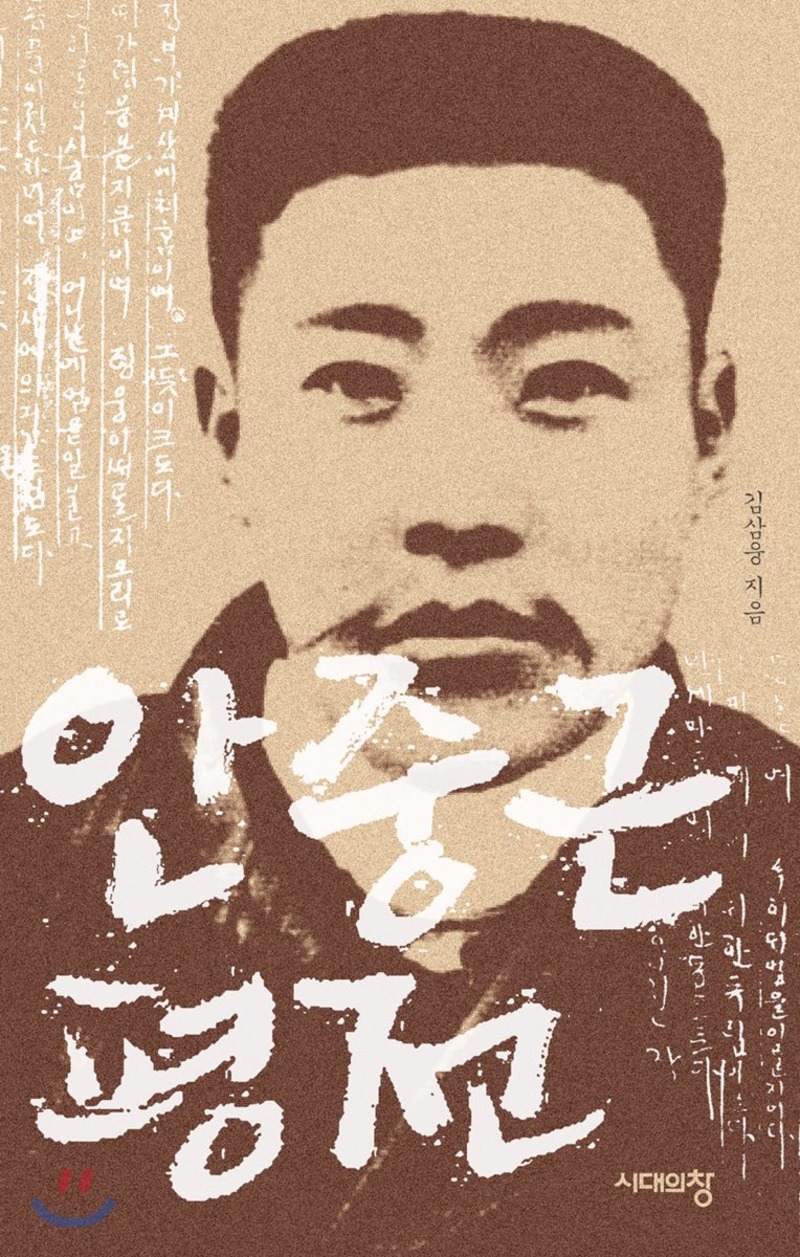
On October 26, 1909, a large crowd gathered at Harbin Station in China to welcome Ito Hirobumi, the Japanese Prime Minister and Resident-General of Korea. Amidst the tight security of Japanese troops and the inspection of Russian guards, Ahn Jung-geun, a Major General of the Korean Empire’s Righteous Army, shot and killed Ito with a pre-prepared pistol.
This famous incident is remembered not only in Korea but also by many historians in China and Russia because that moment was not merely about Korea’s independence; it was a ‘kairos moment’ that awakened the universal spirit of independence. In an era when imperialist powers justified subjugating weaker nations and the strong trampling the weak, Doctor Ahn created a moment that ignited the torch of independence while inspiring the spirit of freedom.
The image of Doctor Ahn Jung-geun’s dignified face and voice, shouting “Korea Hura (Long Live Korean Independence)” after being arrested by the military police, vividly came to mind. He could have escaped in the chaos following the gunshot, but he allowed himself to be arrested with dignity. Later, while detained, he confronted the interrogating prosecutor with clear logic and spirit, even rebuking the prosecutor. This was truly awe-inspiring.
His assertion that he was not a terrorist who assassinated Ito Hirobumi, but a general of the Korean Empire’s independence army engaged in combat against the Japanese Empire who had killed an enemy commander, and thus should be treated as a prisoner of war under international law, remains a thrilling blow even when considered today. Until the very moment of his execution at the gallows, his actions and mindset remained unwavering as an independence fighter. The letter from his mother, Maria Cho, urging him to “choose death for the greater cause rather than beg for life in humiliation” reveals the spirit of the parents who raised this great hero. It reaffirms the belief that distinguished families have different roots, and I consider this spirit a priceless intangible historical value, more valuable than any grand architecture or victory record.
The argument that the Japanese colonial authorities, fearing the independence movement would intensify after Dr. Ahn’s death, would inhumanely conceal and desecrate his body is highly persuasive. The persecution endured by his bereaved family must also have been unimaginable. Regrettably, following his great act of resistance, the 36-year period of Japanese colonial rule—a history of humiliation—began in earnest, causing countless compatriots to suffer sacrifice and pain.
Reading the biography of Ahn Jung-geun provided a precious opportunity to awaken the spirit of independence within me and to rekindle my historical consciousness. I express my deepest gratitude once again to Doctor Ahn Jung-geun, who restored our national pride.
 택배기사핸디맨 블로그
댓글 남기기