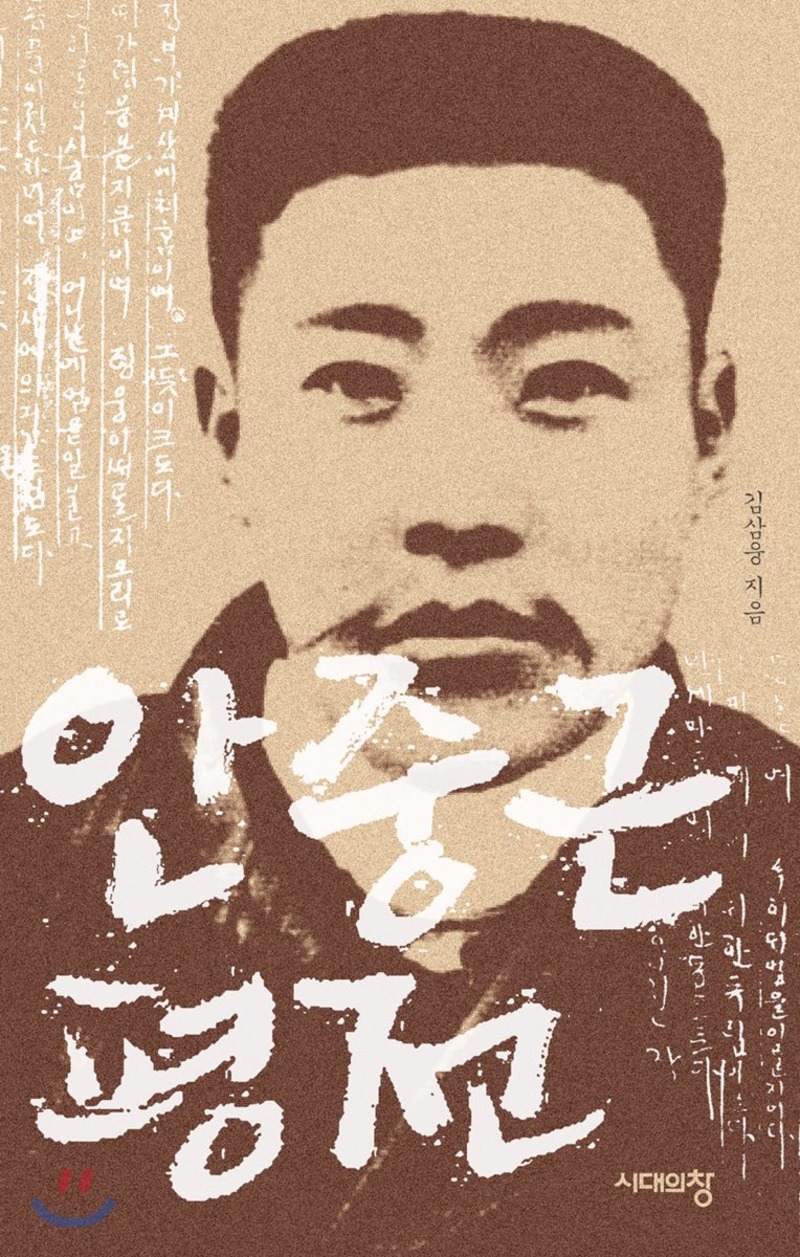
On October 26, 1909, Harbin Station in China was packed with crowds gathered to welcome Ito Hirobumi, the Japanese Prime Minister and Resident-General of Korea. Amid the tense atmosphere, marked by tight security from Japanese troops and a review by Russian garrison soldiers, Ahn Jung-geun, a major general in the Korean Empire’s Righteous Army, shot and killed Ito with a bullet he had prepared in advance.
Why is this event remembered as significant not only by South Korea but also by historians in China and Russia? It is because that moment was not merely about Korean independence; it was a “Kairos moment” that awakened the spirit of independence for all humanity. In an era when it was taken for granted that imperialist powers would subjugate weaker nations, Dr. Ahn created a decisive moment that inspired the spirit of freedom and lit the torch of independence.
The image of Dr. Ahn Jung-geun, shouting “Korea Hura (Long live Korean independence)” with dignity even as he was arrested by military police, sends a powerful shiver down the spine just to imagine it. Even amidst the chaos, when he could easily have escaped, he chose to be arrested with dignity, and even before the interrogating prosecutor, he rebuked his opponent with clear logic.
In particular, his demand to be treated as a prisoner of war—not as a terrorist, but as a “lieutenant general of the independence army engaged in combat”—in accordance with international law remains a truly satisfying blow even today. Behind him, unwavering until the very moment he walked to the execution ground, stood his mother, Mrs. Cho Maria, who had told him, “Do not grovel to save your life; die for the greater cause.” It makes one realize that distinguished families are indeed different from their roots, and that this spirit is an intangible historical value far more precious than any physical structure.
We often view Ito Hirobumi solely as the chief architect of the annexation, but in fact, he was a “pragmatic and cautious realist” who differed in character from the hardliners of the Japanese military. Behind his reluctance to rush the annexation of Korea and his consideration of a “federation” or “indirect rule” lay several harsh realities. Even after the victory in the Russo-Japanese War, Japan had not received a single penny in reparations from Russia, leaving its finances virtually on the brink of bankruptcy,
and for Japan, which had absolutely no experience in colonial administration, the initial investment costs for the Korean Empire were an unbearable burden. Furthermore, he believed that placing the Korean Empire under Japan’s security sphere of influence—following the models of the “British Commonwealth” or the “Austro-Hungarian Empire”—rather than direct rule, would be beneficial to both nations, and he was deeply wary of the large-scale resistance that a forced annexation would bring and the resulting increase in governance costs.
Ultimately, the assassination of Ito Hirobumi paradoxically led to the collapse of the “cautious faction” within Japan. As the hardliners’ argument that “control is impossible through moderate means” gained traction, the Korean Empire was annexed even more swiftly and harshly by the military, without the protective shield that Ito had provided.
Reading the biography of Ahn Jung-geun was a precious time for me to rekindle my spirit of independence and historical consciousness. However, viewed objectively from the perspective of international diplomacy, it is an undeniable fact that Ahn’s heroic act eliminated the moderates within Japan and accelerated the annexation. Through musicals like Hero, I have moved beyond mere emotional inspiration; I now face the limitations of that era—marked by ignorance of the international landscape—and have come to understand the figure of “Ahn Jung-geun” in a multidimensional way within his historical context. I am reminded once again that history is not always a clash between good and evil, but rather a collision of differing strategies and practical constraints that often leads to unexpected outcomes.


Leave a Reply