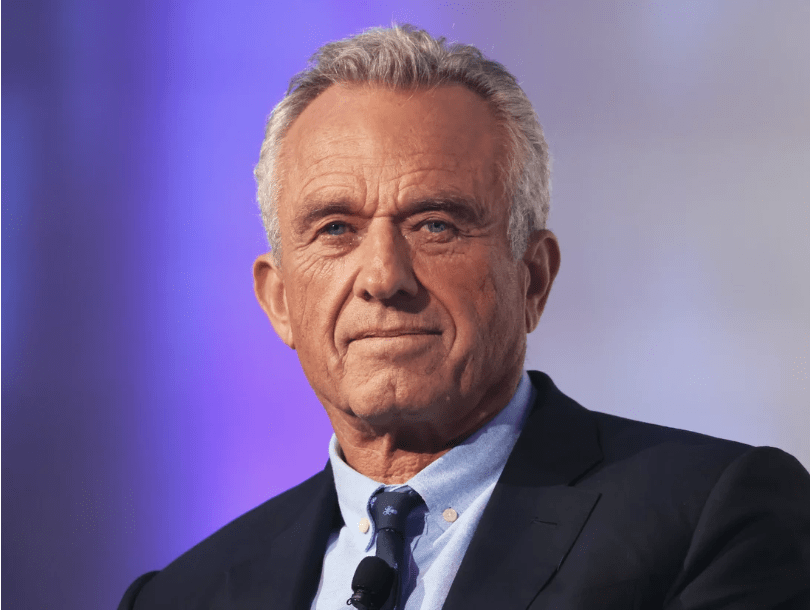
Global attention on Robert F. Kennedy Jr. has reached an all-time high after he recently announced his official support for former President Donald Trump in the presidential race. As the nephew of former President John F. Kennedy and the son of Senator Robert Kennedy—a figure hailing from a distinguished family that is the very embodiment of the Democratic Party’s history—his decision to chart his own course and ultimately endorse the Republican Trump is highly unusual. Moreover, given his history of strongly criticizing Trump in the past, this abrupt change of heart and shift in trajectory was more than enough to pique the curiosity of many. Given that he has a solid, independent base of support nationwide, his sudden declaration of solidarity in the midst of a neck-and-neck race initially led some to speculate that it might be a political calculation or a strategic alliance designed to sway the election’s outcome.
However, a closer look at the situation reveals the political reality that Kennedy had been thoroughly excluded from the Democratic Party’s nomination process—a system that bypassed the party primaries to nominate the current vice president as the candidate. To overcome the barriers of the two-party system, he ran as an independent candidate after a miraculous process in which he secured over a million signatures, made possible by the dedicated sacrifices and assistance of volunteers. Yet the mainstream media either paid no attention to his voice or refused to interview him, and numerous legal lawsuits and institutional obstructionist tactics followed in an attempt to strip him of his eligibility to run. It was a continuous, lonely battle that a candidate on the fringes of the political establishment had to endure in the face of a solid cartel built through the collusion of the political establishment and the media.
The message he delivered to the public sharply exposed the darkest underbelly of American society. Kennedy sharply exposed how major U.S. pharmaceutical companies and giant food and chemical corporations had neutralized and co-opted government regulatory agencies—including the Food and Drug Administration (FDA)—through astronomical amounts of lobbying funds and donations. As a result of this cartel of big capital turning a blind eye to public health in pursuit of profit maximization, American fast food and low-cost processed foods became indiscriminately flooded with artificial colors, high-fructose corn syrup (GMO), and various chemical sweeteners of unknown composition. He expressed his outrage, stating that these distortions in the food industry have ultimately pushed countless American children into the quagmire of obesity, diabetes, and unexplained developmental disorders and chronic diseases.
His revelations regarding the geopolitical sphere were also deeply shocking. He pointed out that behind the protracted war in Ukraine lie the powerful vested interests of giant defense contractors reaping massive profits by supplying weapons to the North Atlantic Treaty Organization (NATO), as well as transnational agricultural and chemical corporations seeking to expand genetically modified (GMO) crops by purchasing devastated farmland. He also exposed the structural contradiction whereby, at the apex of this entire global industrial ecosystem, mega-asset management firms—backed by astronomical capital—exert immense influence, driving the world’s course. In particular, his warning that these massive capital forces deliberately foment political conflict and partisan divisions to consolidate their dominance—thereby pitting the public against one another and blinding them to the essence of the issue—resonated deeply with the reality of the destructive divisions currently plaguing South Korean society.
Of course, some dismiss his actions as a pragmatic compromise aimed at securing his political standing or future influence. However, when one encounters the values he candidly shared during in-depth interviews—such as on *The Tucker Carlson Show*—one can sense the sincerity at their core. In his confession that he would gladly sacrifice his political career and personal safety if it meant saving young lives suffering from disease and a distorted environment, we see the resolve of a great individual determined to set the nation’s system right. In his heart, a spirit of sacrifice—one that sought to make the world even a little better, transcending his own personal gain—had already taken root, and the courage to speak the truth in the face of pressure from massive corporate power and a biased media was alive and well.
Above all, his bold testimony of faith—that he, having lived a life of deep wandering and misery during his youth to the point of falling into cocaine addiction, was completely transformed after encountering God personally in the darkest depths of his life—resonates deeply. This passage helps us realize where the source of his strength lay as he sought to shatter the constraints of worldly honor and family expectations to stand on the side of truth. I earnestly hope that in South Korea—a nation born by taking the United States, founded on Christian values and the Puritan spirit, as its model—leaders with spiritual discernment will rise up to stand against the colossal lies of our time and the demagoguery of capital. Amid the fierce spiritual battle between forces seeking to undermine the constitutional values of liberal democracy through populist agitation and populist trends, and those striving to defend these values, I kneel with a fervent heart once again today to record these early morning reflections, praying that our people will not be deceived by the framework of falsehood but will maintain discernment within the fullness of truth.


Leave a Reply