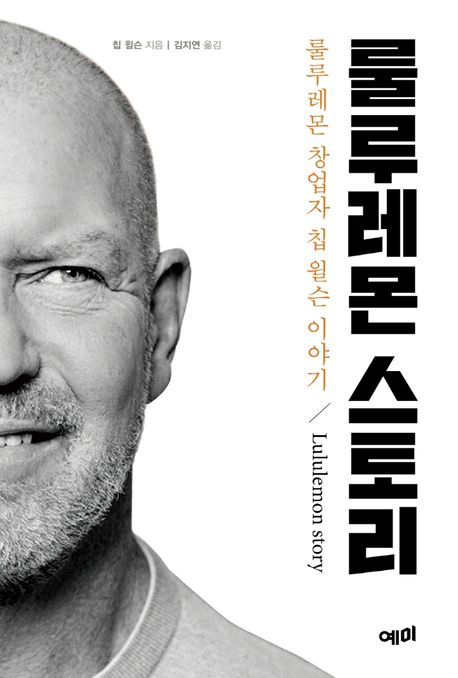
Yoga has become such a popular sport that you can’t go down the street these days without seeing an advertisement for a yoga class. Yoga has become the epitome of a healthy lifestyle, and Lululemon has been at the center of that culture, as moms unwind after a hectic morning commute and school run. I also learned from the book that Lululemon created a new fashion style called the Athleisure Look, where athletic clothes can be worn as everyday clothes to fit the lifestyle of busy moms who have to pick up their kids from school after yoga class and grocery shopping. I realized that Lululemon is a global company listed on the NASDAQ and is as famous as Nike and Adidas, so I looked up its market capitalization and it was 43.5 trillion won. For reference, Nike is 160 trillion and Adidas is 52.5 trillion.
This book is the story of how Chip Wilson, an athletic founder, sold his surfing and skateboarding sports business in Vancouver, Canada, in 1998 to raise $1 billion to launch Lululemon, a women’s performance sportswear company in the yoga market, which he saw as an emerging trend. With his experience in performance sportswear in the surfing and skateboarding markets and a deep understanding of athletic lifestyles, he knew exactly what women who were learning yoga were looking for, and he focused on creating a culture that was unique to Lululemon, including offering yoga classes in his retail stores. He also created a brand name with an L pronunciation that would appeal to Japanese customers, which shows that he was thinking globally from the start.
But what surprised me was that the book wasn’t just about Lululemon’s success story, it also centered around Chip Wilson and his friction with the CEO he brought in and his conflict with the board. Referencing Apple’s Steve Jobs when he was pushed out of the company he founded and then brought back in, he described the process he went through, showing the vulnerability of a publicly traded company where management and ownership are separated. The conflict between Chip and the board of directors, especially when the female CEO, a former Starbucks executive who didn’t fit in with the company’s culture, tried to stop Chip from interfering with management, taught me how a company’s leadership can fall apart when outside directors come in after the company goes public. While entrepreneurial autobiographies often glorify the story of how the company grew and the key decisions made by the CEO, I was impressed by Chip’s willingness to admit that he was largely responsible for bringing in the wrong CEO for the company and for failing to sustain Lululemon’s healthy, athletic culture.
Chip’s persistence in selling a single well of functional sportswear and his expertise in understanding every detail of clothing from fabric to function made me realize what makes a great entrepreneur. And indirectly experiencing the growing pains and organizational conflicts and disputes that a company has to go through as it grows reminded me of my own experience when I moved from a global IT company to a small game company. I was used to working in a sales organization where the work schedule was flexible and I was used to looking for multiple sales opportunities to meet sales targets, whereas the game company, which was a development organization, was all about finishing development work within a set time frame and meeting the planned update schedule after the game was released, so it was difficult for me to adapt to the corporate culture at that time.
The Lululemon story made me realize that a great founder creates a unique culture for a company, and a great manager sustains and expands that culture, and I vowed to fulfill my current role as president of Korea. It was an interesting book that taught me that organizations are stable and grow when founders and managers keep their roles separate but respectful and collaborative.
 택배기사핸디맨 블로그
댓글 남기기