I start my day by meditating on God’s Word in the early morning, praying for those who come to mind, and sharing Scripture cards. As God’s Word of truth begins to work in my life, I feel not only that my perspective on the world has changed, but also that my relationships with others are transforming. I also apply Christian values to various fields—such as politics, economics, society, science, and the humanities—and share my reflections on these topics through my blog with those around me. While I’ve found mutual understanding and deepened relationships with those who meditate on the Word alongside me, I’ve also experienced strained relationships with those who do not. In particular, when I shone the light of truth on humanistic ideologies that willfully and actively deny the Christian God; on science that believes life arose through chance coincidences in an infinite expanse of time and has since evolved; on religions that separate the realm of faith from public and private life and refuse to apply it to reality; and on South Korean politics—which had been stealing elections while the public remained indifferent due to their distaste and hatred for politicians—something astonishing happened.
I knew that the Statue of Liberty in the United States was a gift from France to commemorate the 100th anniversary of the victory in the American War of Independence, but I did not know exactly what that “freedom” meant. It turned out that it was not “freedom” (Freedom) within God, but rather “liberty” (Liberty)—liberation from God, who binds humanity—and I realized that the torch held by the statue was the light of reason, embodying the spirit of the French Revolution and humanism. Furthermore, theistic evolution—which seeks to reconcile Genesis with the theory of evolution—may at first glance seem to treat faith and science as separate entities and present a rational compromise. However, I eventually realized that the theory of evolution is not science but a form of belief in itself, and I came to understand that pastors who advocate theistic evolution are caught in a self-contradiction.
In particular, I realized that pastors who believe politics has nothing to do with faith—that it is a matter of choice based on individual values—and who insist that one should not make political statements in church or be swayed by propaganda on YouTube, are actually people who hold left-wing values. Perhaps because I lived in the United States and experienced its laws and culture, which were built on conservative Christian values, I was able to sense that South Korean society was strange—witnessing massive protests against the import of perfectly safe American beef, or seeing a president facing allegations of bribery suddenly turned into a myth after meeting a tragic end. However, I thought that people born in South Korea who live their lives receiving the same education might be trapped inside a giant box and remain unaware of this.
The opposition party, which sought to impeach the president who declared a state of emergency on December 3 of last year by labeling him the “ringleader of an insurrection,” had already impeached the Auditor General, the Chairman of the Korea Communications Commission, and several prosecutors. After the state of emergency was declared, they impeached the Minister of National Defense, the Commissioner General of the National Police Agency, and the Chief Prosecutor of the Seoul Central District Prosecutors’ Office. Once the presidential impeachment motion was passed and the president was suspended from office—shifting the government to a system led by the Acting Prime Minister—they even impeached the Acting Prime Minister for refusing to appoint the Constitutional Court justices they had recommended. Ultimately, they pressured the Acting Prime Minister’s deputy to appoint the two justices they had recommended. One of them was Judge Jeong Gye-seon, a member of the Our Law Research Association, even though she had a conflict of interest because her husband worked for the law firm representing the presidential impeachment prosecution team. Furthermore, although they had filed a criminal complaint accusing the President of being the ringleader of an insurrection, the entire nation became aware of their unjust intent to secure an impeachment ruling after they withdrew the charge of insurrection from the grounds for impeachment submitted to the Constitutional Court.
Throughout this process, as the Corruption Investigation Office for High-Ranking Officials attempted to arrest the sitting president by forcibly mobilizing police for an investigation, days of standoffs ensued between Presidential Security Service personnel—tasked with protecting the president’s safety—and countless citizens. On one side, the Korean Confederation of Trade Unions (KCTU), Democratic Party members, and even Chinese nationals were protesting in support of impeachment, while on the other side, patriotic conservative citizens, college students in their 20s and 30s, and Christians were holding rallies opposing it; yet, the media reported on these events in a biased manner. As this unprecedented standoff between the Presidential Security Service and the police continued for several days, opposition lawmakers made remarks inciting violence, and clashes between the KCTU and citizens nearly broke out on the scene. Fortunately, however, without any bloodshed, the President announced his intention to turn himself in voluntarily and was arrested and transferred to the Corruption Investigation Office.
That day, a handwritten letter from the President and a video recorded before he left the presidential residence were released. In them, the President stated that the rule of law in South Korea had collapsed and informed the public that the Anti-Corruption and Civil Rights Commission had issued an illegal arrest warrant, forged official documents, and—despite lacking the authority to investigate sedition—had mobilized the police to arrest him on charges of sedition. Mentioning election fraud for the first time, the President made a significant statement, implying that the massive evil enveloping South Korea was not merely the corruption of a few politicians. He noted that voting and ballot-counting irregularities, as well as the rigged election system, were made possible by the international solidarity and cooperation of political forces seeking to advance this agenda, manipulated public opinion polls, and the National Election Commission’s refusal to verify the facts and its cover-up. Amid this, when the President’s defense team mentioned during the impeachment trial that approximately 90 unidentified individuals arrested at the National Election Commission’s training center had been transported to a U.S. military base and confessed to election fraud—only for the National Election Commission to issue a statement calling it “fake news”—I sensed that something massive was afoot.
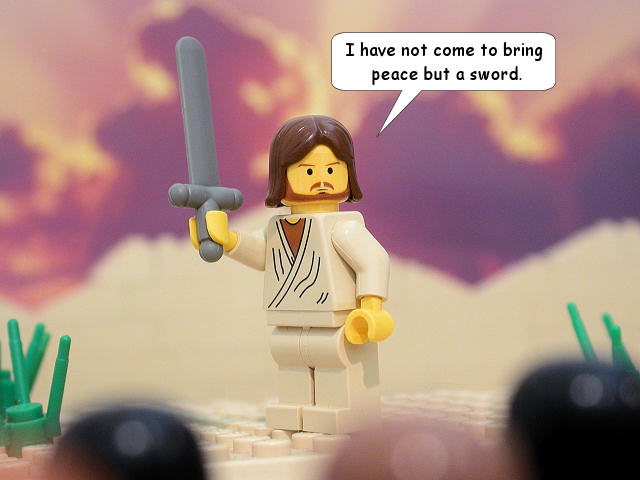
Many awakened citizens and the younger generation were already hearing firsthand accounts and voices from the scene through independent media and social media. In particular, centered around Christians, they were holding peaceful protests, including the weekly “Save Korea” worship services following last year’s October 27 joint worship service opposing the Anti-Discrimination Act. Furthermore, as documentaries and numerous video evidences of election fraud continued to spread, this was manifesting as an exercise of the people’s right to resist within South Korea’s liberal democratic system. Meanwhile, it seemed that Jesus’ words—that He did not come to bring peace to the world but a sword (Matthew 10:34)—were still applicable in this era. This meant that once one begins to believe in Jesus, one is inevitably thrown into spiritual warfare, and that the peace attained only after achieving true righteousness and godliness is the true peace.
I’ve also recently begun to understand, to some extent, the meaning of Jesus’ words that one must leave behind parents and siblings to follow Him. Seeing people who feel uncomfortable when faced with opinions—or even facts—that conflict with their own values and beliefs reminded me of a time in my past when my depression was severe. I now understand that the frustration and fear I felt back then, as the values and beliefs I had held dear crumbled one by one, were extremely intense and that it was a process of the self dying. And what I realized as I went through that process was that many people before me had gone through the same thing, and that walking along that narrow path is actually a cozy journey—not a lonely one—much like a forest trail. So today, too, I woke up at dawn, wrote a blog post, and prayed for my family and for South Korea, starting my day with vigor.


Leave a Reply