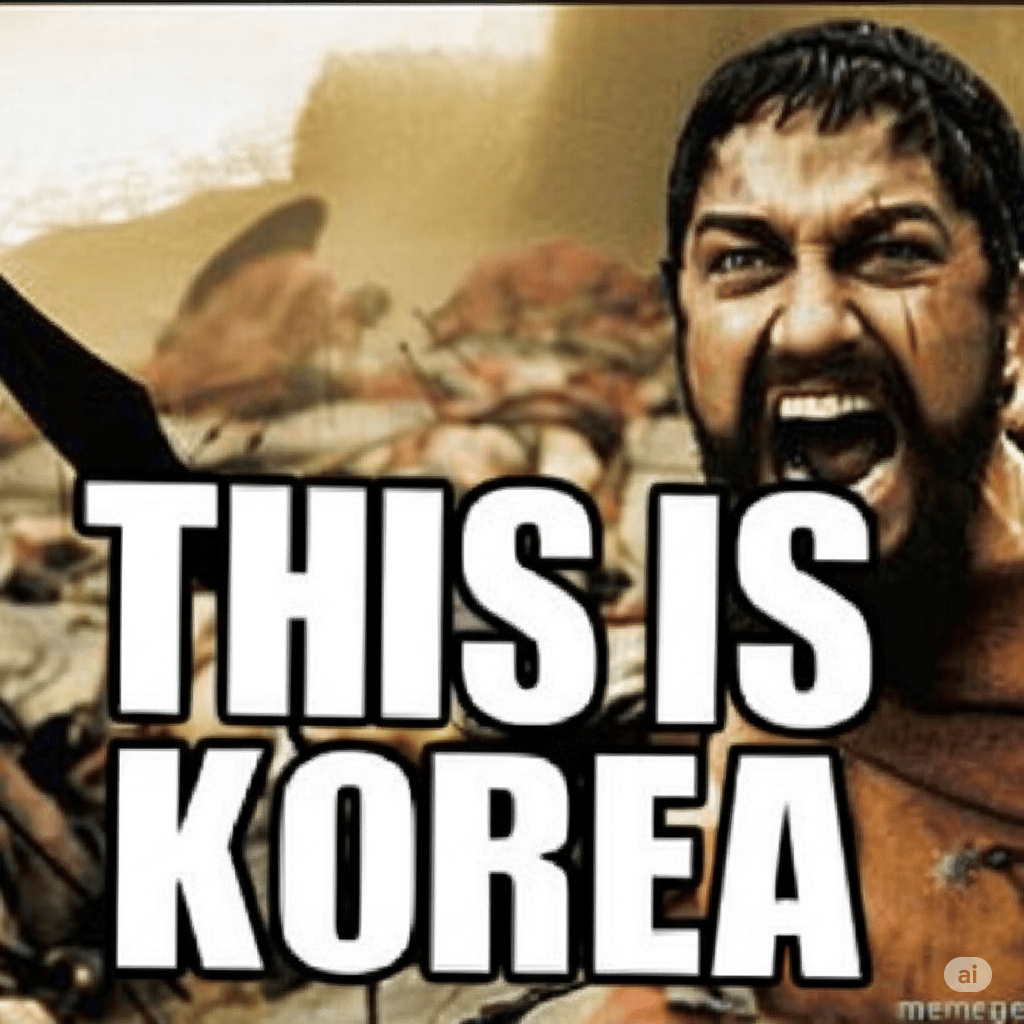
One of the most iconic scenes from the movie *300* is when King Leonidas of Sparta, faced with the Persian ambassador’s humiliating ultimatum backed by overwhelming military might, roars “This is Sparta!” and shoves the ambassador into a well. His courage—as he stood with just 300 elite warriors to defend the dignity of his nation and people against the invasion of a vast empire, ultimately falling in glorious battle—demonstrates the timeless essence of the human spirit in the defense of freedom. Had King Leonidas compromised with reality, kneeling before Emperor Xerxes and choosing the safety of a vassal state, Sparta’s great struggle would not have been recorded in history today. Just as future historians will evaluate King Leonidas and Sparta, I reflect deeply on how the actions of President Yoon Suk-yeol—who made a solitary decision in the midst of Korea’s turbulent modern history—will be reevaluated in the history and literature of future generations.
The tense narrative that unfolded during the December 3 martial law crisis—namely, the sudden attempts to deploy administrative resources to verify allegations of network security vulnerabilities and external cable connections surrounding the National Election Commission, as well as to control unidentified individuals who had caused security risks at NEC facilities—will be treated as a matter of great significance by future historians and national security experts. I believe that, with the passage of time, the objective truth will be established regarding whether the entities that undermined the credibility of election governance at that time were foreign security threats hacking into global computer networks, and what the circumstances were surrounding their entry into the country in the past. This parallels a trend in U.S. political history, where—long after the fact—the substance of allegations regarding the fairness of the electoral system surrounding the 2020 presidential election and the frame of “involvement by specific foreign forces” leveled against the previous administration were revealed through judicial scrutiny, ultimately placing even the former highest echelons of power on the chopping block for legal accountability. The crux of the matter is that leadership, which had prioritized safeguarding electoral fairness and national security within the constitutional order, paradoxically faced extreme upheaval—including impeachment and detention—amid backlash from a political cartel.
Over the past few months, I have painfully witnessed the process by which the rule of law and constitutional order in the Republic of Korea have been eroded. A series of events—from the sudden issuance of an arrest warrant for a former president, to the Constitutional Court’s unanimous approval of impeachment, and most recently, the re-imprisonment of the leader, who had been temporarily released on bail, in a solitary cell of just over 2 pyeong on the grounds of concerns about flight risk and evidence destruction—demonstrates a grave leadership crisis. Although many citizens have belatedly begun to realize the anti-state currents that have been operating covertly within the liberal democratic system to undermine the nation’s legitimacy, the power dynamics within the establishment had already been drastically reshaped. In this process, it has become clear that mainstream media, certain biased religious figures, and numerous civic groups have waged a “war of position” to obscure the public’s judgment while representing the interests of the cartel. Having sequentially taken control of culture, education, legislation, and administration, they appear to have nearly reached their goal of fundamentally transforming the system itself by even amending constitutional values.
Although allegations of electoral irregularities raised after the April 15, 2020, general election seemed to have been settled by judicial rulings, countless free-thinking citizens began to awaken intellectually upon encountering the contradictions in judicial records and the limitations of verification procedures exposed by the independent documentary *The Election Fraud Cartel* and the book *Stop the Steel*. Even during the last presidential election campaign, Representative Hwang Kyo-ahn ran on a platform centered on electoral reform and transparency, forming an alliance with candidate Kim Moon-soo; however, the transfer of power took place without the allegations of statistical inconsistencies and systemic flaws—spanning overseas voting, early voting, and election-day voting—ever being fully investigated. The changes that have occurred just two months after the change in administration are nothing short of shocking. A cabinet was formed centered on figures embroiled in moral controversies; total government spending surpassed 700 trillion won through two large-scale supplementary budgets; asset prices in the Seoul metropolitan area were distorted by real estate and financial regulations; and universal consumption coupons, funded by government bond issuance, were distributed. Furthermore, a number of radical labor and agriculture-related bills were passed under the leadership of the majority party, and the reorganization of the Ministry of Gender Equality and Family, along with the expansion of the gender equality agenda, has made the passage of a comprehensive anti-discrimination law only a matter of time. In the realm of foreign trade as well, the recent outcome of tariff negotiations with the United States—despite large-scale investment commitments to the U.S.—has raised concerns, as mutual tariff rates have been significantly increased and high tariffs on key export items such as steel have been announced, indicating that the results of efforts to protect national interests diverge considerably from the government’s initial explanations.
The fundamental reason why public outrage or grief has failed to coalesce in the face of this national crisis lies in certain churches that have lost their inherent evangelical mission, in the incitement of the masses, and in the moral indifference that pervades society as a whole. The behavior of certain clergy—who should be defending creationism and constitutional values—as they forget their duty and bring specific ideologies into the church is precisely the spiritual immorality against which the Bible issues a stern warning. As a result, believers whose eyes have been blinded are uncritically supporting forces that lay the legal groundwork for distorting their children’s values and exposing them to harmful environments such as drugs, while enthusiastically embracing secular materialism and distorted cultural power. It is truly lamentable that the public cheers for short-term consumer coupons while remaining silent about concerns over radioactive material leaks in border regions, and remains indifferent to anti-market bills that restrict parents’ educational choices under the pretext of ensuring educational fairness.
Nevertheless, I find new hope in the clear message from the senior pastor I serve: “We must return to God the Creator.” Throughout history, communities that drifted away from the Creator faced judgment and crisis, but nations that repented thoroughly and stood firm on the truth have always experienced great revival. My pastor solemnly warned that South Korea has strayed far too far from its original founding spirit and values, and that the evil trends of our times are stealing away the souls of our families and the next generation. We must never repeat the irresponsible, passive attitude of King Hezekiah in the Old Testament, who—even after committing the fatal mistake of flaunting all the nation’s treasuries and assets to the envoys from Babylon—still declared before the prophet Isaiah, who had foretold a future invasion, “It is good enough for me to have peace in my own lifetime.” This timely warning resonates with the Gospel principle that “new wine must be put into new wineskins.” Within a church that is growing spiritually and healthily, I have embraced a calling to become a “new wineskin” that holds the truth, envisioning a holy vision for the next generation and providing tangible support to young people and future generations.
Although South Korea’s current political and economic reality is bleak and stifling in many ways, there is clear hope for the faithful Christians who stand firm for the truth and for the next generation that remains vigilant. Today, too, with this holy hope in my heart, I climbed Bongjae Mountain near my home to protect our families more securely and to rebuild a healthy community and a nation brimming with hope. Breathing in the fresh air, I prayed earnestly for our country and our people, and I begin this day with a strong resolve as I set out for the front lines of life entrusted to me.


Leave a Reply