The back of the iPhone bears the inscription “Designed in California, Assembled in China,” signifying that the product design originated at Apple’s US headquarters while assembly took place in China. This message carried a nuance that trivialized key processes in China—such as manufacturing, supply chain management, and cost control—as mere assembly. Moreover, Apple, an American company, was at the heart of China’s high-tech industry. Through the transfer of Apple’s core technologies to China, the country was able to rapidly advance from primary to tertiary industries. This was because creating innovative products like the iPhone required establishing a supply chain among numerous suppliers, along with sophisticated assembly processes and cost management expertise. And all these production facilities were invested in China on a massive scale through Apple, with companies like Flex and Foxconn handling the manufacturing.
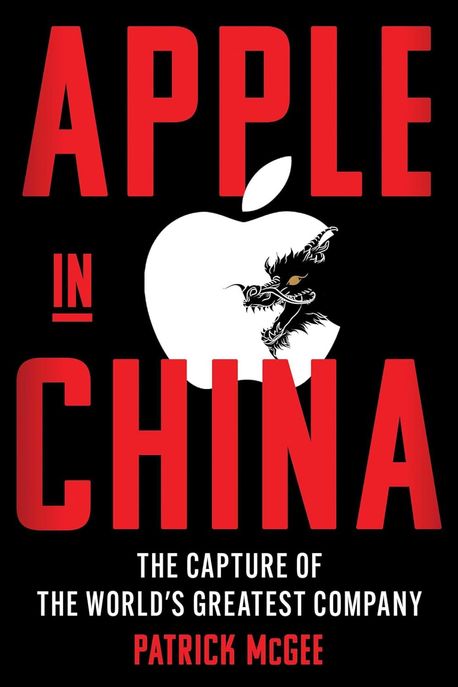
Apple’s investment in the Chinese market can be seen as a wise strategy, as it enabled the production of the most efficient and economically superior products using cheap labor. However, hidden behind this was the uncomfortable truth of poor working conditions and low wages for subcontracted workers. I couldn’t help but be shocked by stories of workers committing suicide in factories and the fact that tens of percent of workers don’t return to factories after holidays. And I wondered why Apple, knowing this, allowed such inhumane practices to continue. Under the guise of cost reduction and maximizing efficiency, Apple shifted production by changing suppliers, yet it thoroughly shifted all risk onto those suppliers. In practice, Apple placed orders exceeding ten times the suppliers’ existing production capacity, forcing them to invest in facilities. Then, by negotiating contracts with favorable terms, Apple could unilaterally cancel agreements to find better suppliers, engaging in classic power abuse. From a large corporation’s perspective, sourcing components from multiple suppliers to reduce production risk and manage costs is undoubtedly prudent management. However, the problem with Apple was that it relied on just one or two Chinese manufacturers for the majority of its production. While this allowed Apple to enjoy the ultimate in price efficiency and operational efficiency, it also meant it became excessively dependent on China. This was the core argument of the book.
And the bigger problem was that China is controlled by Communist Party dictatorship, not a market economy system. They aimed to use Apple to induce facility investments in the tertiary sector and ultimately achieve the goal of attracting technical personnel to China. This was a national strategy similar to how they induced Volkswagen’s investment in China to grow the automotive industry in the past. This process, where industries were cultivated under state planning and control rather than through natural market competition, became the root cause of various problems. Particularly, the distribution of high-priced iPhones in China—devices costing several months’ wages for Chinese workers—revealed how distorted China’s market economy had become. This was evident in social issues like organized crime groups known as “huangniu” monopolizing distribution through violent means, or the smuggling of iPhones by travelers from Hong Kong or overseas.
Through this book, I learned about the consequences of the mutual misunderstanding between Apple and the Chinese Communist Party, and I came to understand that behind Apple’s success lay the risks and losses of its suppliers, as well as the blood and tears of Chinese workers. I also believe investing in Samsung Electronics, which diversified its supply chain management by shifting production bases to Vietnam and India in addition to South Korea, was the right choice. While its returns may be lower than Apple stock, it aligns with my investment philosophy and principle of investing in morally sound companies. Furthermore, seeing Samsung Electronics also experience China risk—such as technology leakage and declining market share in China—after investing in its Xi’an NAND flash factory, while observing Apple unable to extricate itself from China, taught me a valuable lesson.
 택배기사핸디맨 블로그
댓글 남기기