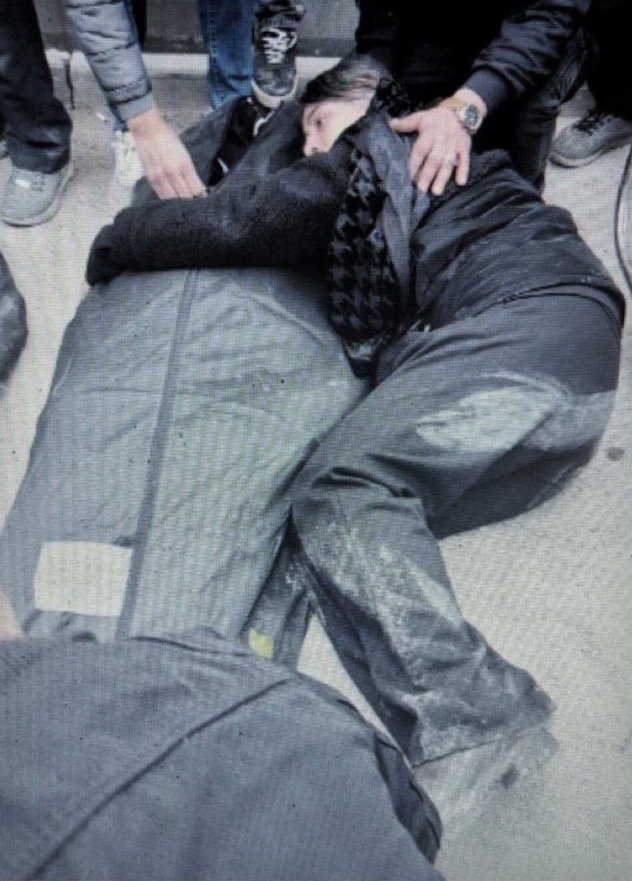
Upon hearing the news that state forces had carried out an indiscriminate and brutal crackdown against Iranian citizens, and learning of the shocking scale of the casualties, my world went dark. Thinking of the force being used against the heads and hearts of countless citizens calling for freedom and human rights, and of the innocent people lying lifeless on the streets, I felt utterly devastated and suffocated with grief. It was difficult to even fathom why so many had to be sacrificed, or what exactly was in the hearts of those who aimed their guns at their fellow citizens and carried out this massacre. It felt as though the darkness of “Lucifer, the morning star that fell from heaven”—as described in the prophecy of Babylon’s destruction in the Book of Isaiah—had engulfed the land of Iran.
Nevertheless, Iranian citizens, clinging to messages of support and solidarity from allies in the international community, refused to back down and continued to take to the streets to protest. Watching a video circulating on social media of a woman defacing a symbol of the supreme leader to express her resistance, I realized that this protest movement was a massive campaign to defend sovereignty, transcending generations and genders. However, my heart sank upon hearing the news that many young people—and even young children—had fallen victim to this violence. The sight of a woman weeping bitterly before her family member’s body vividly reflected the immense grief facing Iranian society.
In particular, upon hearing that the number of believers who have converted to Christianity through underground churches in Iran has exceeded one million, I couldn’t help but think that many of my brothers and sisters in faith who have been saved might have been among the victims. Undoubtedly, they took to the streets, sacrificing their lives for religious freedom and human dignity. As I deeply reflected on the question, “If such a constitutional crisis were to occur in South Korea, how would I have acted?” I asked myself whether my faith could truly measure up to their martyr-like spirit. This is because I sensed a growing crisis: South Korean society is also rapidly losing the essence of liberal democracy and moving toward an authoritarian, controlled society. I am also witnessing spiritual communities that remain silent in the face of truth, as well as the attitude of some mainstream media outlets that distort the truth while catering to those in power and fail to stand up boldly against injustice. Although documentary films exposing the flaws in the electoral system are being screened, evidence of numerous institutional loopholes is flooding in, and spontaneous citizen rallies continue every weekend, the majority of the public remains indifferent or still fails to recognize the gravity of the situation. They remain silent even in the face of institutional injustice unfolding right before their eyes, and it seems their gaze is even further removed from the tragedies unfolding across the sea in Iran.
As the crisis drags on, the number of innocent victims continues to rise, and my heart aches even more when I see images on social media of their pure and peaceful daily lives before their deaths. My heart breaks when I think of those who had to fall, bleeding from bullets of oppression fired from somewhere, simply for raising their voices to restore their sovereignty. I have often been overcome by deep religious doubts and anxiety, asking, “Why does God stand idly by in the face of such a horrific situation? Why has He allowed such a terrible ordeal?” I could only feel a desperate longing for external salvation and aid to arrive as soon as possible.
These feelings mirrored the disappointment and sense of futility I felt during the recent period of political upheaval—when the constitutional order was shaken by the opacity of the electoral system, and despite the cries of many citizens, systemic distortions could not be prevented; and when I witnessed the unprecedented situation in which the nation’s head of state was arrested and brought to trial to face judicial condemnation. Perhaps Iranian citizens, too, have endured decades of frustration as their freedoms and human rights were trampled upon, and the people of Venezuela have likewise groaned in defeat faced with an electoral system where the will of the people does not fully prevail. Ultimately, the situation in Iran reminds us once again of the grave truth that when the fairness of the right to vote is not guaranteed and the electoral system—the very foundation of liberal democracy—becomes opaque, all societal values are bound to crumble. And the pain of that systemic collapse has always fallen on the shoulders of ordinary citizens.
Nevertheless, all I could do here was to remember their tragic names in this digital public square and pray that their righteous souls may be fully guided to heaven. Today, as I went to morning prayer, I prayed for the nameless Iranian saints who fell before the bullets of oppression, and I implored God’s righteous intervention to come upon that land. While I earnestly hope that Iran will recover swiftly and find true freedom, I also resolved that South Korea must drive out the opaque cartels that distort our sovereignty so that we do not follow in the footsteps of such tragedy. I dream of the day when, in Tehran and in the heart of Seoul, the young people of both nations will come together to worship the Creator to their hearts’ content and sing of freedom. Trusting in the intervention of God, the Ruler of history, I pledge to pray even more passionately and to spread the truth to those around me. With that resolve, I am posting this blog entry today and starting the day with vigor.
“Behold, I am doing a new thing; now it springs forth; do you not perceive it? I will make a way in the wilderness and rivers in the desert.” (Isaiah 43:19)


Leave a Reply