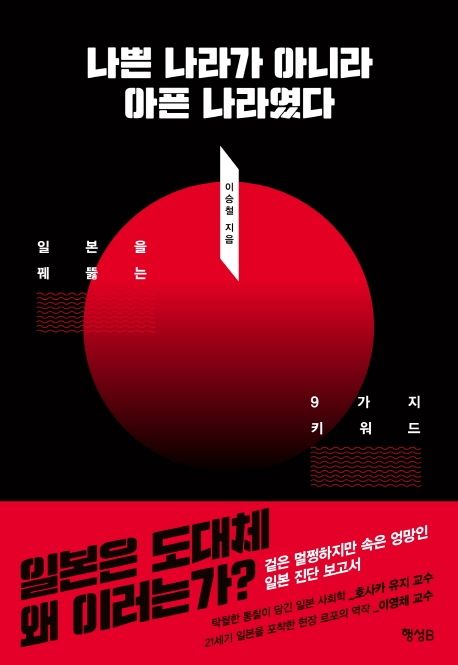
After reading this book and gaining an understanding of Japanese culture and the nature of the Japanese people, I realized—just as the title suggests—that Japanese society is truly in a state of deep distress. Social issues such as the rise of reclusive loners, late marriage, and the childless trend have ultimately turned Japan into the world’s most aging society, a situation that is also linked to long-term economic stagnation. It seemed almost inevitable that a culture of extreme reluctance to cause trouble for others would go too far, leading people to turn a blind eye to organizational corruption and the manipulation of financial figures rather than face ostracism within the organization—a choice that ultimately contributes to corporate insolvency. Beyond that, the book provided a deep analysis of various social phenomena—such as female students’ reluctance to attend the University of Tokyo, “random crimes,” the use of the Emperor and era names, and the factional politics centered on the Liberal Democratic Party (LDP) and entrenched cartels—that are difficult to understand without living in Japan for an extended period, as well as the “self-restraint” of the Japanese people hidden behind them.
However, the small and medium-sized enterprises held together by Japanese artisans, the large corporations that have survived by adapting to the changing times, and the unique diligence and integrity of the Japanese people offered glimmers of hope even within this dark society. In particular, the recent Christian revival movement among the younger generation seemed to suggest that a generational shift is taking place in Japan. I resolved to use criticism and analysis of others as a lesson to refine my own thoughts and actions. I concluded that while we should learn from Japan’s positive culture and craftsmanship, we must guard against its self-destructive and oppressive collectivism. Nevertheless, I acknowledged that Japan has a history of successfully modernizing its society by embracing new knowledge and culture through the Meiji Restoration, and that its leadership is more enlightened and capable of guiding the people compared to South Korea’s. Recently, observing the leadership of Prime Minister Takaichi and her popularity among the younger generation, I could sense Japan’s underlying strength and potential for change. Her image—arriving at work at 3 a.m. and making a firm statement to Chinese President Xi Jinping that she would not hesitate to wage all-out war if Taiwan were invaded—stood in stark contrast to South Korea’s shabby politicians who won elections through deception.
While perspectives on Japan’s past may vary, I found myself thinking that, from the eyes of a young person born into a society where over 30% of the population during the Joseon Dynasty were slaves—doomed to a life of servitude without hope—Japanese colonial rule might have represented a new opportunity. While the colonization of Joseon is a tragic chapter in history, compared to the thoroughly corrupt Joseon society, its incompetent kings and officials, and the ignorant yangban class stuck in the past, the samurai who laid down their swords to study and become bureaucrats might have been a better option. Of course, this was not a choice they made themselves but rather the immense current of history; yet, I sensed that the history of the Christian gospel was unfolding even in the unseen corners of Japan. Now, I find myself earnestly praying that a history of new life and freedom may also arise on Japanese soil.
 택배기사핸디맨 블로그
댓글 남기기