I woke up at 4 a.m. and opened today’s Scripture. It was Matthew 7:7: “Everyone who asks receives; the one who seeks finds; and to the one who knocks, the door will be opened.” Suddenly, I recalled a sermon by a certain pastor. He explained that the sequence of these three steps—asking, seeking, and knocking—holds significance in itself, representing a process of drawing ever closer to God. Reflecting on the fact that the Holy Spirit is the greatest gift we can ask of God, I went to my place of early morning prayer and offered my prayers.
While praying, news from the world weighed on my mind. Reports indicated that the U.S. airstrikes on Iran had temporarily subsided, and—true to his reputation as the author of *The Art of the Deal*—President Trump had opened negotiations. I prayed earnestly for the war to end as soon as possible. On the other hand, I was relieved to hear that Iranian citizens were resisting the Revolutionary Guards of the authoritarian regime on their own. It occurred to me that a regime change might be possible even without direct U.S. military intervention, and I prayed that the 5,000 U.S. Marines deployed to the Strait of Hormuz would secure the area and block the channels through which Iranian crude oil flows illegally into China. I thought that for China—which had been importing oil via small vessels and settling payments in yuan from Iran and Venezuela—if even that supply were cut off, its economy, built on a bubble with no real substance, would collapse even faster.
In fact, I have personally witnessed this trend firsthand while traveling back and forth to Shanghai for many years. Seeing the noticeable decline in foreign visitors, the bursting real estate bubble, and the efforts of Chinese citizens to move their assets overseas, I sensed cracks in the communist system. Yet, certain political factions in South Korea and a significant portion of the public seemed unable to wake up from the “Chinese Dream.” This is despite the fact that the very politicians and left-wing businessmen who sold that dream had already sent their own assets and children abroad long ago. The irony is that even Chinese elites, brainwashed with anti-American sentiment, actually want to send their own children to study in the United States.
In South Korea, too, the economy of ordinary people is being severely shaken by a sharp rise in the exchange rate and rising fuel costs. Yet, when I see people rejoicing that taxes on multi-homeowners have risen due to increases in official real estate appraised values, or those who believe the economy has revived simply because the KOSPI rebounded after the presidential transition, I don’t know whether to laugh or cry. What worries me even more is that there are people who feel the economy is booming, even as the won-dollar currency swap system is effectively faltering and our reliance on the won-yuan swap is increasing. Thinking of Christians who give thanks to God without recognizing this reality weighed heavily on my heart, so I prayed for them as well. It was as if they firmly believed that “all of this is God’s blessing” even as the head of the household lost his job and the family’s livelihood crumbled; I felt both sorrow and a sense of solemnity toward that faith.
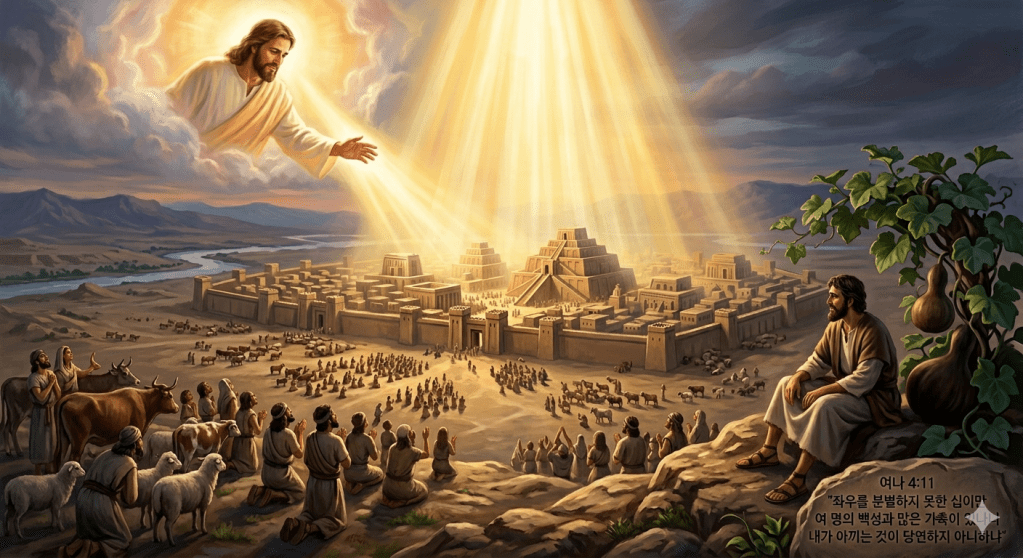
Then, suddenly, I wondered, “Perhaps my faith is lacking, or maybe I’m viewing the world through too biased a lens?” When I opened the Bible again, the Book of Jonah appeared. It depicted the scene where, after the people of Nineveh—from the king to the common folk—put on sackcloth and repented following God’s declaration of judgment, God relented; yet Jonah, instead, became angry with God over this. Faced with that passage, I examined myself. Rather than remaining in a place of anger and judgment like Jonah, I resolved to meditate on God’s heart—which cherishes even the 120,000 people and their livestock who cannot yet distinguish right from wrong—and to live diligently, fulfilling my duty in the place where I have been placed.
 택배기사핸디맨 블로그
댓글 남기기