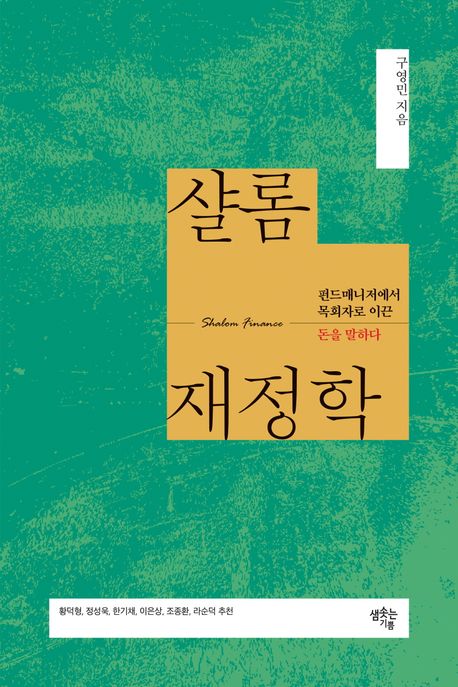
The fact that a former fund manager became a pastor is astonishing enough, but as I began reading Pastor Koo Young-min’s book, I found myself once again brought to my knees as I learned the essence of his insights and biblical financial principles. I couldn’t help but think that if I had read this book in my 30s, when I was just starting my career, my financial situation today would be dozens of times better—yet at the same time, I felt truly grateful to have come to this realization, even now.
His financial perspective, drawn from hands-on experience managing massive funds, was expert and highly concrete. At the same time, his biblical interpretation through the eyes of a pastor accurately diagnosed why large churches in Korea have failed due to financial issues. It felt like a truth he had realized through his own failures and trial-and-error, as well as a painful yet necessary warning regarding financial transparency in large churches. Furthermore, the principle that God’s blessings and work through finances are contingent upon the stewardship mission of managing God’s finances and financial integrity was highly persuasive. In particular, the advice that wealth must be spent to prevent it from decaying was an exceptionally sound explanation. Faced with the self-evident principle that one must earn, save, and share, I could not help but strongly agree. Having learned through various experiences that when the heart becomes corrupt, finances inevitably rot along with it, I deeply resonated with the pastor’s explanation.
Finally, I was impressed by the clear explanation of earned income and business income, as well as the easy-to-understand explanation of why financial income from capital investments is biblical. Given the current frenzy of reckless speculation in the stock market, the pastor’s pointed remarks were very timely. His advice to invest only surplus funds and his explanation that there is no such thing as a “get-rich-quick” investment return were not only obvious investment principles but also very realistic observations.
It was beneficial to learn through this book about faith-based financial principles, practical management know-how, and the virtues and practical steps of a proper steward of finances from God’s perspective. Moving forward, I will live by the three principles of “earning as much as possible, saving, and sharing” every day so that I can give more in tithes, mission offerings, and charity. To put that commitment into practice today, I woke up at 4:30 a.m. to write this blog post and start the day with vigor.
 택배기사핸디맨 블로그
댓글 남기기