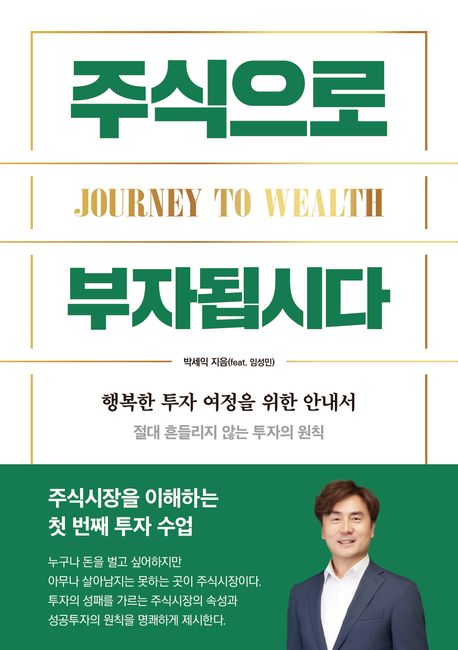
After reading this book, I was reminded of Warren Buffett’s “greater fool theory.” Buffett has likened investing in Bitcoin to “gambling,” explaining that since Bitcoin itself produces nothing, it is a game of finding a “greater fool” who will pay a higher price later on. Of course, stocks reflect the value of actual companies and are therefore a different type of asset from Bitcoin, but I believe there are similarities from the perspective of investing and trading. The author rose to fame as the “evangelist of the Donghak Ants” and, through his YouTube appearances, has been educating the public on how to invest in stocks while explaining what a fund manager actually does. As the author noted, for an active fund manager to analyze stock trends and stocks on YouTube was highly unconventional at the time and must have been a high-risk endeavor that put his reputation on the line.
This book offers various useful tips on stock trading and shares the author’s own stories of both failure and success. Looking back, it’s clear that the COVID-19 era was actually a prime time for investing, and I’m once again struck by the greatness of people like Chairman Kang Bang-cheon, who invested boldly during the IMF crisis. It’s likely that 2026 will be recorded as a difficult year economically for South Korea, with a sluggish economy, a steep rise in the won-dollar exchange rate and oil prices, and the country’s high dependence on imported crude oil. However, I thought it might once again be “the best year for investing” for people like CEO Park Se-ik.
However, since the author holds a theistic-evolutionary view of history, I felt it would be difficult to fully understand the essence of human psychology underlying stock investment. This is because the “Elliott Wave Theory,” which posits that stock charts are the result of collective psychology, cannot analyze all patterns on its own. Furthermore, complex variables such as wars between nations, international election fraud cartels, and conflicts between the deep state forces led by elite groups and the general public are reflected in the stock market. Therefore, one can only survive in this jungle-like market by adhering to a firm, personal investment philosophy and engaging in long-term investing.
Recently, I briefly considered recommending this book to my parents, who have lived their entire lives as “financially illiterate,” but I decided it would be better to introduce it to them only after they have established their own philosophy of wealth and investment values. This is because only when you have a clear set of values—understanding what it means to be wealthy and what it takes to become wealthy—can you win the “mind game” by maintaining the perseverance not to give up, the courage to cut losses, and the humility not to become arrogant even after making a profit. I, too, went through that process, repeating cycles of success and failure. In particular, what I realized while trading cryptocurrency was that the idea that I could make money solely through “skill”—knowing a little more than others and moving faster—was a delusion. So today, I woke up at 4:30 a.m., prayed, wrote a blog post, and started the day with vigor.


Leave a comment