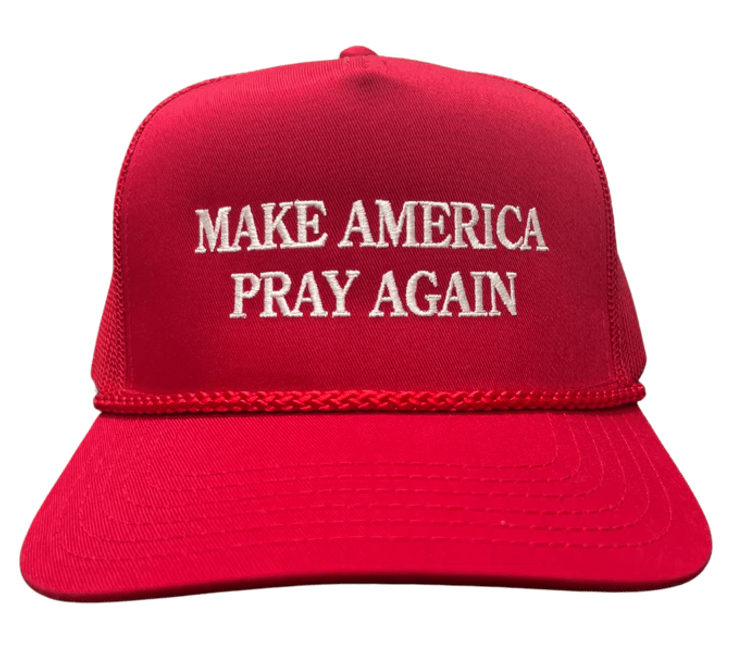
President Trump won the 2024 presidential election in a landslide and secured majorities in both houses of Congress. His campaign slogan, Make America Great Again, promised to lower prices so the American middle class could live, break the corrupt ties between corrupt corporations and government regulatory agencies to prevent the distribution of harmful foods, strengthen national defense to maintain global order and regain respect in the international community, It also includes removing destructive ideologies like LGBTQ from public education, debunking the climate crisis myth, scrapping inefficient green energy policies, achieving energy self-sufficiency through oil drilling (“Drill, Baby, Drill”), implementing an America First economic policy to provide jobs for American workers, respecting life through abortion bans (“Pro-Life”), and restoring freedom of expression and religion to allow free worship.
From 2007 to 2014, while living with family in the United States, I experienced America becoming an increasingly difficult place to live. The global financial crisis triggered by the 2008 U.S. subprime mortgage crisis dealt a severe economic blow worldwide. As the bubble in the U.S. real estate market burst, the hardship endured by many families was extreme, to the point where one wondered if America was truly collapsing. The movie The Big Short vividly depicted the collapse of derivative products built on top of subprime mortgage loans and its underlying causes, driving home the harsh reality to American citizens that there is no such thing as a free lunch. News was filled with stories of people losing their homes to foreclosure because they couldn’t make their monthly mortgage payments, or small businesses going bankrupt.
Obama, the first black president elected right after this financial crisis, took the lead in reviving the U.S. economy while enjoying immense public popularity. One of his key policies, Obamacare, aimed to expand health insurance coverage for low- and middle-income groups through government subsidies. However, I recall that the premiums for the health insurance plans middle-class families enrolled in only kept rising year after year. Truthfully, living in the U.S. as an expatriate, I wasn’t particularly interested in American politics or government policies, but I felt uneasy about the increasingly strange public education policies. Furthermore, when the Presbyterian Church (USA) endorsed same-sex marriage, causing turmoil within Korean churches in America and leading to divisions among congregants over whether to leave the denomination, I felt a sense of frustration that America was no longer the nation grounded in the Christian values I knew.
However, with Trump’s re-election, I was thankful that churches could now say “Merry Christmas” instead of “Happy Holidays,” and that public schools could once again read the Bible. Moreover, seeing how laws can both guarantee and suppress individual freedoms, I feel the outcome of this U.S. election carries significant influence over the world’s legal systems. Especially for South Korea, a nation heavily influenced by the U.S., Trump’s election presented another opportunity for escape from crisis for a left-leaning South Korea. I was also deeply grateful to see, through the recent October 27th joint worship service, that South Korea still has over a million citizens holding Christian values.
Meanwhile, observing major Korean media outlets covering the U.S. election process, I noticed their excessive left-leaning bias and a reporting capability that merely copies American headlines verbatim. This became understandable once I realized it stems from a structural problem: the fragile revenue models plaguing most South Korean media outlets, including JTBC Studio (which received 100 billion won investment from China’s Tencent), the leading left-wing media like MBC and Kyunghyang Shinmun, and the gender liberation-championing Hankyoreh. I came to see that, in the face of capital and power, a journalist’s conscience and courage are a luxury. It seemed almost inevitable that a Seoul National University graduate reporter of Chinese descent would write sensational headlines to please the desk. And praying that independent journalists like Tucker Carlson, Charlie Kirk, Ben Shapiro, and Amala Ekpunwi in the US—those who report the truth independently within such a massive box—would become more numerous in South Korea, I woke up at 4:30 a.m. today to write my blog, vowing that someday I too must become such a voice.
 택배기사핸디맨 블로그
댓글 남기기