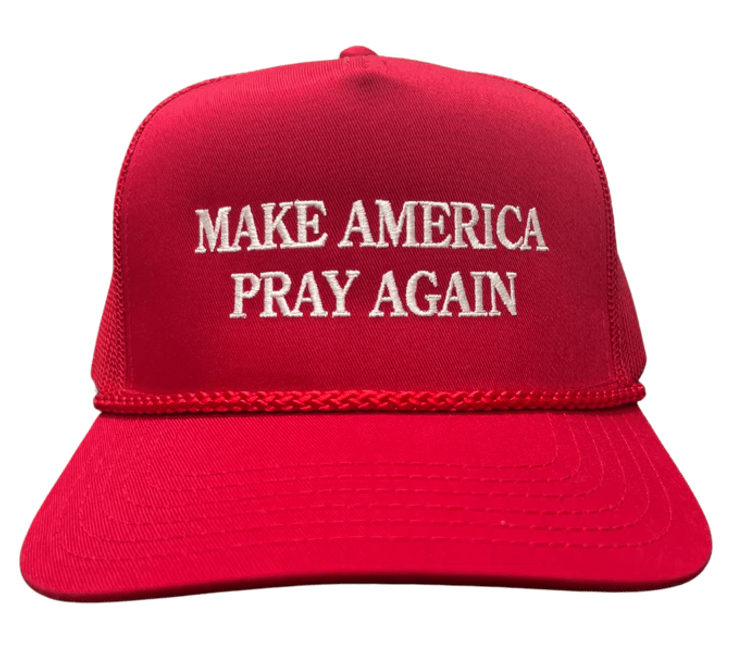
President Donald Trump scored a landslide victory in the 2024 presidential election, securing a majority in both the House of Representatives and the Senate. His core slogan, “Make America Great Again,” embodies a strong commitment to stabilizing prices so that the American middle class can lead stable lives, and to sever the ties between corrupt corporations and government regulatory agencies to prevent harmful foods that threaten public health from entering the market. Furthermore, his platform includes strengthening national defense to maintain global order and restore America’s standing in the international community, while also implementing policies to exclude excessive discourse on gender identity (LGBT)—which threatens traditional values—from public education.
Moreover, he has outlined a vision to achieve energy self-sufficiency through an aggressive oil drilling policy (“Drill, Baby Drill”), rather than perpetuating the myth of the climate crisis and continuing inefficient green energy subsidy policies. This represents a historic turning point in the history of civilization: through an “America First” economic policy, it prioritizes the protection of jobs for American workers; it embodies the “Pro-Life” spirit by respecting the right to life of the unborn; and it restores freedom of expression and religion to rebuild an environment where believers can worship freely without oppression.
Based on my firsthand experience living with my family in the United States from 2007 to 2014, I observed that life for the middle class was becoming increasingly difficult as time went on. The global financial crisis triggered by the 2008 subprime mortgage crisis dealt a severe blow to the world economy, and as the U.S. real estate bubble burst, the suffering endured by countless families was so extreme that it defies description. Looking back on that time, I even felt a sense of crisis, wondering if the entire massive U.S. national system might be collapsing. Just as the movie *The Big Short* laid bare the structural causes of how the greedy derivatives built on top of subprime mortgage loans collapsed, American citizens were forced to learn the hard way that “there’s no such thing as a free lunch.” It was a time when the media was filled day after day with desperate news stories of people losing their cherished homes to foreclosure because they couldn’t afford their monthly mortgage payments, or of small businesses—built up over a lifetime—going bankrupt in a domino effect.
In the immediate aftermath of this unprecedented economic crisis, the Obama administration—the first led by a Black president—took office amid overwhelming public expectation and popularity, raising the banner of economic recovery. Obamacare (a healthcare support program for low-income individuals), cited as one of his key achievements, presented a blueprint to expand health insurance coverage to the underprivileged and the middle class through government subsidies. However, the reality experienced by the vast majority of the middle class was nothing more than the burden of health insurance premiums that continued to skyrocket year after year. At the time, I was living in the United States as an expatriate, so I did not have a deep understanding of American politics nor was I significantly involved in government policy; however, I could not shake a deep sense of unease and concern regarding the direction of public education, which was drifting further and further away from traditional moral values with each passing day. Furthermore, as I watched some major Presbyterian denominations in the U.S. officially endorse same-sex marriage, I witnessed intense conflict arise within Korean-American churches as well. Seeing congregants divided over whether to leave their denominations, I experienced a deep sense of frustration, wondering if the United States was no longer the nation firmly grounded in the Puritan Christian values I had once admired.
However, President Trump’s reelection has served as a crucial turning point to reverse the spiritual tide in American society. I am deeply grateful that we can now confidently share the confession of faith, “Merry Christmas,” in the workplace and on the streets instead of the secular phrase “Happy Holidays,” and that the freedom to read the Bible in public schools has been restored. Observing the reality that individual freedoms can be guaranteed—or, conversely, religious conscience can be suppressed—depending on how a nation’s laws and institutions are established, I am once again struck by just how profound the impact of this U.S. election result is on legal systems and values around the world. Particularly for South Korea, which shares the closest geopolitical and cultural ties with the United States, his election has served as a crucial turning point, allowing our society—which had been experiencing ideological imbalance and confusion over values—to once again restore its constitutional essence. Furthermore, witnessing the fervor of the “October 27 Joint Worship Service”—where believers recently gathered in public squares to uphold the sacred values of faith—I felt a tearful sense of gratitude knowing that there are still over a million vigilant believers in this land who seek to defend Christian values.
Meanwhile, as I observed South Korea’s major mainstream media outlets covering the U.S. presidential election, I was painfully reminded of just how severely biased our media landscape has become, as well as the deplorable state of journalism that merely uncritically copies and pastes headlines from the U.S. mainstream media. I have come to realize that this phenomenon is a structural ailment stemming from the fragile revenue structures and dependence on capital that plague the entire South Korean media ecosystem—ranging from media groups that have attracted massive investments from specific foreign conglomerates, to broadcasters and daily newspapers that have long championed the ideology of a particular political camp, to media outlets advocating for radical gender liberation and social disintegration. In the face of the logic of massive capital and power, the objectivity expected of journalists and the conscience to uphold fair and accurate reporting have become luxuries. It is a sad reality that journalists with specific educational backgrounds or origins are expected to churn out sensational and distorted headlines to align with the commercial and political agendas of their editors.
That is why I earnestly pray that, just like Tucker Carlson, Charlie Kirk, Ben Shapiro, and Amala Ekpunobbi in the United States—who boldly broke free from the confines of the massive media cartel to report solely on truth and facts through independent platforms—there will be more courageous independent journalists like them in South Korea as well. Only when the number of people who speak the truth without fear of capital or power increases will our society’s eyes finally be opened. Today, as always, I woke up at 4:30 a.m. to write this blog post, and I deeply resolve to one day become a voice of righteousness that shatters distorted narratives and shines the light of truth in these dark times.
 Deliveryman's Blog
Leave a comment