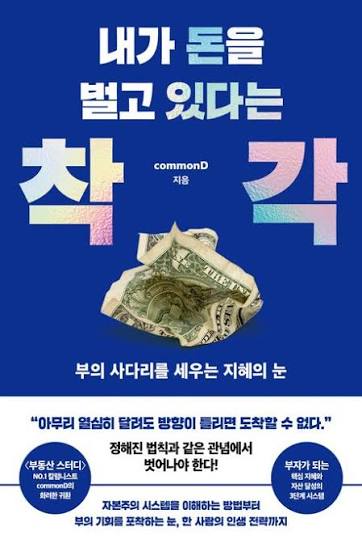
This was an excellent book that examined the conflict between the state and individuals over property rights through political, economic, historical, and humanistic insights. The explanation that all assets eventually depreciate due to the law of entropy, and the observation that the wealthy are constantly seeking new stores of value, were particularly interesting. The author’s suggestion of Bitcoin as one such alternative, and the explanation that while stocks focus on growth and bonds on stability, Bitcoin is a free asset that can transcend borders and institutions, was very apt. This is supported by news reports that, immediately after the Russia-Ukraine war, refugees carried USB cold wallets containing Bitcoin as they crossed the border.
The author explains the U.S. dollar-centric global economy in very simple terms, suggesting that China could compete on equal footing with the U.S. and catch up, based on America’s diminished national power and China’s threatening military and economic strength. Furthermore, behind the advice to quickly recognize unfair rules within the logic of power and to invest by increasing the value of labor, there seemed to be an underlying sense of the author’s unique perspective on the world and intellectual superiority. On the other hand, in the passage where he does not deny the existence of God and explains that atheism is also a form of religion, I got the impression that the author vaguely recognizes the existence of God, the Almighty, amidst his insights.
The author posits that the evolutionary processes humanity has undergone over a long period are deeply ingrained in the economic activities of modern people. His analysis is that while we believe we make rational judgments, we are actually navigating capitalist society with Paleolithic brains optimized for survival. The author explains that confirmation bias and herd instinct—products of evolution—actually act as poisons in modern financial markets, leading to herd-like investments, while the instinct to avoid losses hinders clear judgment during market downturns. Ultimately, he maintains a critical perspective that while humanity may have evolved biologically, it has not yet achieved the “financial evolution” necessary to fully control the complex economic systems it has created.
However, I wanted to point out to the author that evolutionary theory itself can be a form of religion, and that while the modern capitalist system has accelerated due to IT technology, its essence remains unchanged from the past. I also wanted to introduce the Bible so that human history could be understood not as a conflict between nations, but from the perspective of the freedom given to humans by God and Satan’s rebellion to take that freedom away. Many people are realizing that the Nephilim and the Tower of Babel in the Old Testament, as well as the evil spiritual currents that have continued since ancient times, are being exposed today through revelations such as the “Epstein Files.”
The attempts in South Korea to enact the “Yellow Envelope Law” and amend the Commercial Code and the Constitution are not part of the process of human evolution, but rather an encroachment on the property rights and freedoms that the author so desperately seeks to protect. I would like to propose to the author that we fight together to protect this freedom. For while our generation may enjoy peace, as in the days of King Hezekiah, the precious assets and freedoms of the next generation could vanish. I expect that an even better book will emerge the moment the author realizes that, though countless people wander in search of truth, the only way is ultimately Jesus, and that even the author’s vast knowledge and experience are nothing before God.


Leave a Reply