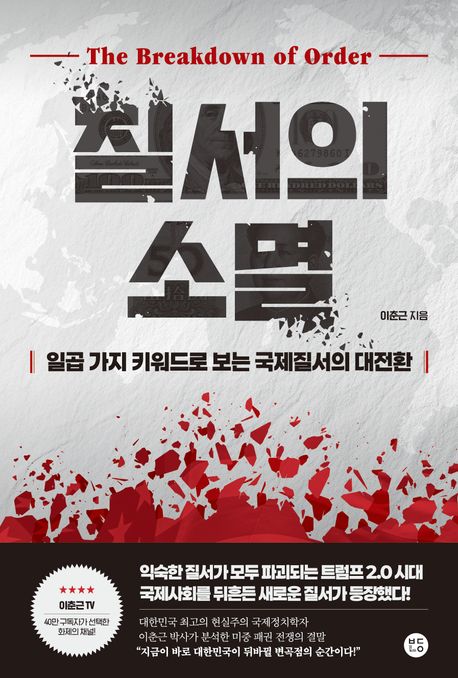
This book offers an interesting insight: to intuitively understand the prosperity and peace that characterized the eras of “Pax Romana” and “Pax Britannica” in history, one need only look at the American middle-class model, which sets the standard for the world today. An analysis of how hegemonic powers have maintained peace throughout human history reveals several key factors: an excellent national system, overwhelming military power, a financial network that tightly connects the entire world, and resource production capacity based on vast territory. The intersection of all these conditions is precisely where the United States stands today. Proclaiming itself the guardian of liberal democracy, spending more on defense than the combined budgets of the world’s second-largest military power and all other nations, having firmly established a dollar-based global financial network, and boasting a stable population of over 300 million living on the North American continent, the United States was truly a preeminent superpower.
However, during certain past administrations, American society underwent radical ideological shifts, and its social foundations were shaken by failures to control illegal immigration and the indiscriminate distribution of low-cost hazardous materials. Fortunately, with the advent of the Trump administration, the nation’s fundamental values began to return to normal. Although the country faced a crisis during the last presidential election—marked by intense power struggles among global forces over the integrity of the electoral system and pandemic response policies—he overcame numerous threats through a series of miraculous historical turning points. Just before the election, cutting-edge security technology and network defense systems functioned properly, allowing him to achieve a dramatic re-election victory that fully reflected the will of the people.
Since taking office, President Trump has radically overhauled tariff and immigration policies and, through a comprehensive review of foreign aid policies, has boldly cut off opaque channels of overseas funding. Furthermore, while pressuring for a regime change in Venezuela, he curtailed the influence of global software companies that had long faced allegations of election manipulation and technical opacity within the international community, and diplomatically and economically isolated even the hardline regimes in the Middle East that had been supporting these efforts behind the scenes. In the process, as Venezuela—a major source of crude oil for China—and the energy resources of the Middle East came under a U.S.-led control mechanism, authoritarian regimes in East Asia found themselves facing massive strategic isolation. Perhaps as a result of this, with external inflows of funds and materials cut off, attempts at cyber interference by external forces exposed numerous technical vulnerabilities and traces of suspicion during this election process. Their true nature—attempting to control citizens’ legitimate exercise of sovereignty and undermine the value of freedom by exploiting security blind spots in electronic control systems and loopholes in the voting management system—was laid bare. And as I realized the essence of the matter—that these external forces have long distorted the values of liberal democracy in this country by using certain corrupt domestic political and economic stakeholders as their front—I felt deep anger and a sense of desolation.
However, by examining the structural limitations of authoritarian regimes through this book, I have become convinced that their system of vested interests cannot be sustained for much longer. In fact, whenever I traveled on business to major Chinese cities like Shanghai, I would witness the noticeably quieter airports and infrastructure, experiencing firsthand the slump in the real economy. Through Dr. Lee Chun-geun’s incisive analysis of the situation, I was able to clearly confirm that this regime, centered on internal control, is effectively losing its grip on the external world. Their bloated system was nothing more than a house of cards. In every sector—from high-tech fields like military, IT, and consumer goods to the domestic market—they were so far behind that they couldn’t even be compared to the capabilities of the free allied nations led by the United States. Just like certain assembled products that look impressive on the outside but are filled with substandard parts and technical limitations on the inside, their true nature was nothing more than an overhyped paper tiger.
The geopolitical perspective on Russia and North Korea was also quite intriguing. Russia has effectively depleted a significant portion of its national power and available resources due to protracted conflicts and currently lacks the capacity to intervene deeply in the Northeast Asian situation. While it appears to flaunt strategic closeness with North Korea or China on the surface, in reality, it is revealing structural limitations in self-sufficiency to the extent that it must rely on immediate support for military supplies. Amid the enigmas of this rapidly changing international landscape, the macro-level prospects for inter-Korean unification and the opening of North Korea are higher than ever before. This leads me to believe that President Trump’s previously mentioned bold economic development vision may not be mere rhetoric, but rather part of a sincere long-term strategy. The day will come when world-class landmarks are built along North Korea’s once-closed coastline, transforming it into a thriving hub of prosperity that attracts a constant flow of capital and tourists from around the globe. South Korea, too, must now fully restore transparency in its electoral administration and, through comprehensive political reform, replace its leadership with a fresh, young generation capable of responsibly steering the nation toward a new future. That is why, even today, as I attended dawn prayer, I meditated deeply on learning about the new civilizational order that is taking shape and on finding—and dedicating myself to—even the smallest role I can play within that vast current.


Leave a Reply