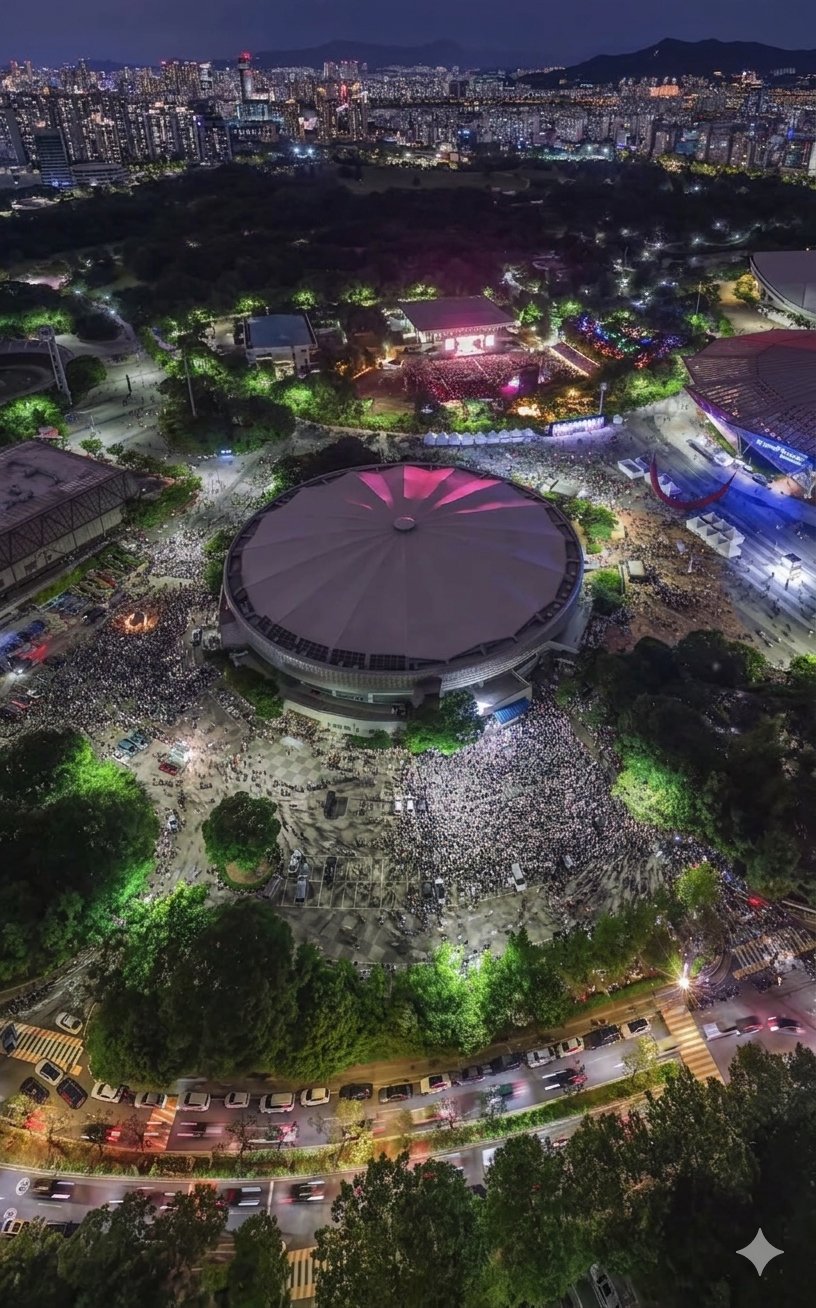
Seeing allegations that the vote shares by region in the recent June 3 local elections matched almost perfectly with the projected vote share estimates for South Korea’s local elections posted on a social media platform last May, I felt deep concern that South Korea’s electoral sovereignty is facing a crisis. Some have even raised suspicions that, in order to reconcile the record-high early voting rate (23.51%) with the lower official voting rate (37.49%), irregular ballots—which listed only certain candidates rather than the full slate—were distributed or discarded in a non-transparent manner. As a result of these allegations of mismanagement, ballot shortages occurred at approximately 50 locations nationwide. Critics point out that this phenomenon was particularly concentrated in the Songpa-gu district of Seoul, leading to an unprecedented situation where citizens were unable to cast their votes on time. Consequently, citizens who felt their right to vote had been infringed upon gathered at the ballot box storage facility near Woosung Apartments in Jamsil 7-dong to question the process of removing the ballot boxes, leading to a standoff in which they demanded a thorough investigation and a re-election. Furthermore, distrust grew as survey results and rumors spread suggesting that similar patterns of invalid vote handling had occurred not only in Seoul but also in Gyeonggi Province and Busan.
As the situation spiraled out of control, an official announcement was made stating that candidate Oh Se-hoon had pulled off a comeback, contrary to exit poll projections. Candidate Jeong Won-oh conceded defeat in an attempt to defuse the situation, but among citizens skeptical of the election’s fairness, cynical reactions emerged questioning whether this had been a predetermined outcome. In particular, regarding Mayor Oh Se-hoon, there are critical views suggesting he may be an opportunist who shifts his stance depending on the situation, based on his actions during past periods of political upheaval and his silence regarding election allegations. Some speculate that he will demand the introduction of a blockchain-based digital election system under the pretext of reforming the National Election Commission, raising doubts as to whether he, too, is merely aligning himself with the agenda of the global elite. Although some politicians, including Representative Jang Dong-hyuk, visited the scene in Jamsil at the time and promised measures, the prevailing sentiment was one of skepticism—it was difficult to fully trust their sincerity due to the established political establishment’s habit of distancing itself from public sentiment at every critical moment.
However, the spontaneous actions of the citizens who gathered at the Jamsil Woosung Apartments served as a decisive turning point in once again bringing the issue of transparency in the election management system to the attention of the entire nation. To avoid causing any inconvenience to the apartment residents, they maintained a mature, silent protest at the site, and amid an atmosphere of cooperation from the residents, items of encouragement and food poured in from all over the country. The dedicated efforts of the volunteers who managed the site autonomously demonstrated a mature civic consciousness in defense of the right to vote. Moreover, it is noteworthy that, despite it being a weekday, young people—who formed the core of the group—remained at the site until the very last moment when the ballot boxes were transported away by law enforcement. I, too, wanted to rush from Incheon to the Jamsil site at dawn to lend my support, but since my company’s project schedule overlapped with my weekend church commitments, I had no choice but to suppress my disappointment and console myself with archery and writing.
Coincidentally, my company was conducting a pilot test of a survey system using AI agents to gauge public approval ratings for government administration. At the client’s request, we adjusted the survey date to June 5 to account for its potential impact on the election, but inadvertently ended up conducting a telephone survey of thousands of people during the most sensitive period. It felt as though we were providing supporting fire with thousands of arrows from behind the scenes, and the thought crossed my mind that this, too, might have been a timely act of providence. At the time, the question asking for an evaluation of the current administration’s governance served as a channel to indirectly gauge public sentiment regarding the fairness and management of these local elections. During the actual survey process, the telephone response rate and survey completion rate were significantly lower than expected, leading us to analyze technical causes; however, we also speculated that the results might reflect the current state of public sentiment—marked by extreme fatigue and distrust following the election.
Although it is deeply regrettable that, despite the citizens’ efforts, the post-election management of the ballot boxes ultimately fell into the hands of the authorities, the final vote count figures—which stood in stark contrast to the exit polls—paradoxically became a major turning point that amplified nationwide interest in and skepticism toward the electoral system. This flame of hope for restoring fairness spread to Jamsil Olympic Park on the day of the election, marking a moment when even more people gathered to raise their voices. With Freedom and Innovation Party leader Hwang Kyo-ahn, election monitoring teams visiting from abroad, and political influencers from both home and abroad joining one after another, a second April 19 Revolution to restore suffrage rights appears to be gaining momentum, centered in Jamsil. Yesterday, I steeled my resolve by singing the national anthem at my church’s sports day, and today I rose at dawn to pray that Christians across South Korea would awaken and restore freedom and justice to this land, starting my Sunday with vigor.
“O man, the Lord has already told you what is good. He has already told you what He requires of you. Is it not simply to do justice, to love kindness, and to walk humbly with your God?”
(Micah 6:8)


Leave a Reply