6.3 Despite the highest voter turnout in history for the presidential election, I witnessed alongside the entire nation how the vote count was manipulated in real-time on election day to match predetermined targets. As the voter turnout rate, which had exceeded 70% in the afternoon, failed to rise further over time and even decreased, an abnormal phenomenon occurred. This was because if the voter turnout rate exceeded 80%, when combined with the advance votes, it would exceed 100%, revealing electoral fraud to the entire nation. Therefore, it was anticipated that the voter turnout rate would be adjusted appropriately to ensure that the votes for Lee Jun-seok were dispersed, resulting in Kim Moon-soo’s victory. To match the inflated voter turnout, mysterious boxes were delivered to the vote-counting site under police control, and at the site, voting papers resembling stacks of new bills were found with the number 1 marked on them. Some observers protested or filmed the scene and shared the footage on social media, but their efforts were insufficient to stop the process. This is because they had already witnessed how a citizen who reported fake ballots with pre-marked number 1 at the Seongbok-dong polling station in Yongin City on the advance voting day was portrayed by the media as someone who staged a hoax. It was like the atmosphere in “Our Distorted Hero,” where everyone around looked at Eom Seok-dae and either kept their mouths shut or turned their heads away, compromising in the face of injustice.
While watching Media A representative Ok Eun-ho’s broadcast estimating that up to 6 million fake votes were cast through early voting and the main election, they realized that this was their last chance and committed crimes without hesitation. They also understood that the CCP’s election interference was on an unprecedented scale, using the same method employed to communize Hong Kong by allowing millions to enter without visas. They also realized that under the protection of the cabinet-style faction hiding within South Korea, the Democratic Party had deceived Kim Moon-soo and his supporters, with the People Power Party turning a blind eye. As a citizen of this nation, they felt both sad and angry, and feared God, who would judge this great sin against the nation. It was sad because election fraud, which I believed was only possible in communist or authoritarian countries, occurred in a free democratic nation right before the people’s eyes. I was angry at the foolish citizens who still do not understand this situation or believe in fake news. Ultimately, after watching the video by Kim Seong-wook, the representative of Jesus Wave, who stated that this is due to the nation being filled with obscenity and low-quality spirits, I feared God who will judge this spiritual corruption.
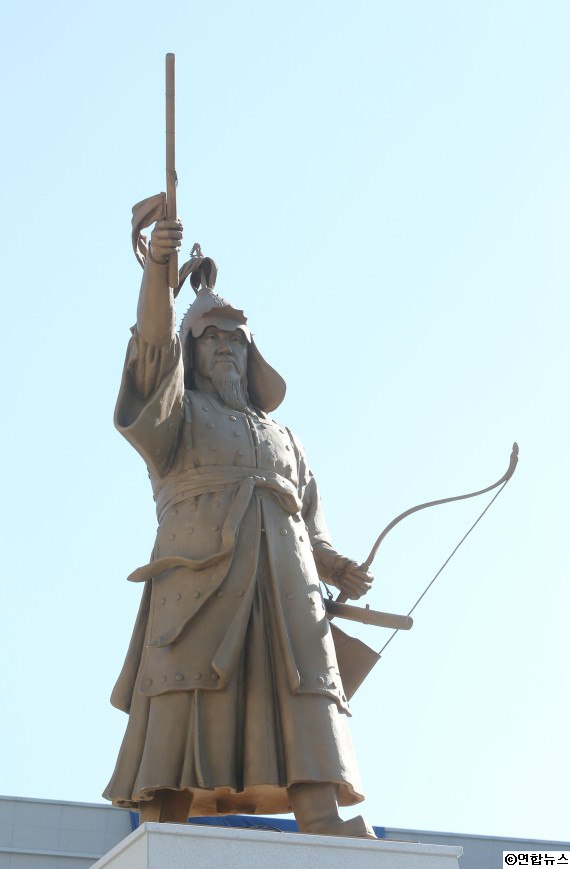
Meanwhile, through the audiobook version of “Nanjung Ilgi” (War Diary), I learned how a general lived during the Imjin War, as the situation at that time overlapped with that of South Korea in 2025. Admiral Yi Sun-sin, who was the commander of the left wing of the Joseon navy, received written reports on the results of battles, both large and small, or visited the battlefields to confirm and record the horrific circumstances that the people were facing. While he ate the same food as ordinary soldiers before consuming the meat dish granted by the king and cared for the soldiers fighting on the battlefield, Won Gyun, on the other hand, focused solely on establishing his own merits, leading to multiple defeats in battle and the loss of many soldiers and civilians. This contrast in their characters was evident in the records. Furthermore, by reading records of generals who committed corruption and indulged in women during the war, he came to understand that imposing severe punishments such as flogging under military law or even execution for those who undermined military discipline was ultimately necessary to maintain a strong army and, in turn, save the nation.
During the approximately seven-year-long Imjin War, I often wondered what would have happened if Admiral Yi Sun-sin had not been there. This led me to wonder if such a figure could exist in our modern era. President Yoon Suk-yeol, who recognized the nation’s dire crisis, declared martial law despite opposition from those around him, and risked his life; former Minister Kim Moon-soo, who demonstrated a strong and principled character by understanding and empathizing with the lives of citizens; and former Prime Minister Hwang Kyo-ahn, who sacrificed himself to prevent electoral fraud in the spirit of “Yoon Again”—these figures came to mind. The courage and resolve of former President Yoon to confront the anti-national forces that have stolen South Korea’s elections for so long, the sincerity of former Minister Kim, who despite organized obstruction and intrigue within the party, made efforts to connect with the people, and the noble sacrifice of former Prime Minister Hwang, who exposed electoral fraud during the campaign period, worked alongside volunteers and young people without any support until the day before the election, and resigned to support candidate Kim Moon-soo—all of these actions reminded me of the virtues of Admiral Yi Sun-sin.
And I realized once again that it is important to steadily build up one’s skills and keep records, just as Admiral Yi Sun-sin did during the long war, maintaining his composure and practicing archery and writing his diary every day. Over the past few months, from the state of emergency last year to this year’s presidential election, I have seen the walls crumbling in every field of South Korea, and I have come to realize that it is essential to do one’s best in one’s assigned role and develop the habit of keeping records. During the election period, I was shocked to learn that most election commission staff took leave, and their positions were filled by external personnel. Additionally, the practice of renting external servers during the election period to avoid leaving any data behind revealed what can happen when people do not stay at their posts. Furthermore, the records of the numerous crimes committed during the election period were documented by thousands of volunteer election monitors and patriotic citizens across the country. These records could serve as evidence in future international trials and, until then, could be used to awaken citizens who have been brainwashed by the media.
Last weekend, at the first offline meeting of the Bu-bangdae group in Incheon’s Yeonsu district, I had the opportunity to interact with the 3.5% of citizens who are keeping South Korean society from completely corrupting, and I was able to confirm that there are many people who possess far more information, analytical skills, and execution capabilities than I do. Amid the hybrid war already underway between anti-state forces supported by the Chinese Communist Party, I woke up early this morning to write this blog post and start the day with renewed vigor, inspired by Admiral Yi Sun-sin, who was my age during the Imjin War.
 택배기사핸디맨 블로그
댓글 남기기