The June 3 presidential election—which would determine the future of South Korea—was held amid enthusiastic participation from the entire nation, setting a record for the highest same-day voter turnout in history. However, through nationwide monitoring, numerous election observers and civil society groups observed that the real-time data flow during the vote-counting process was irregular and appeared to converge on specific figures. An abnormal stagnation—where voter turnout, which had risen sharply at one point in the afternoon, either stopped rising as time passed or appeared to deviate from statistical projections—emerged as a major point of contention among the fair election campaign movement. Among experts, strong and reasonable suspicions were raised that this trend in voter turnout might have been part of a scenario designed to conceal inconsistencies that could arise during the consolidation of early voting data, or to artificially reshape the overall election landscape by inducing vote splitting among specific candidates. At the actual vote-counting sites, suspicious boxes with unclear origins were observed being moved under police control, and there were fierce protests and video recordings by on-site observers regarding the condition of ballot bundles.
However, the voices of citizens demanding transparent verification seemed powerless in the face of the massive system. This was because they had already witnessed how reports regarding ballots raised in specific regions during the election campaign were, in fact, counterattacked by the media and framed as conspiracy theories or hoaxes. Much like the atmosphere in the classroom in the novel *Our Distorted Hero*, where students were forced to remain silent and look away in the face of Eom Seok-dae’s absolute power, a regrettable scene unfolded as many people turned a blind eye to the doubts right before them and compromised with reality. Watching the current affairs program hosted by Ok Eun-ho, CEO of Media A—who raised suspicions of large-scale vote manipulation and up to 6 million fraudulent ballots by comprehensively analyzing statistical data from early and general voting—I realized just how brazenly systemic risks can unfold when exploiting gaps in the constitutional order.
Furthermore, from a macro-geopolitical perspective, expert analyses suggesting that massive foreign capital and human influence—which have permeated our society as a whole—are deeply intervening in the entire election process by adopting the sophisticated methods of “hybrid warfare” used during Hong Kong’s past regime transition are gaining credibility. Realizing that the sincerity of candidate Kim Moon-soo—who championed fairness and a sense of national identity—and the countless patriotic citizens who supported him had been thoroughly deceived, with the complicity or tacit approval of certain constitutional amendment advocates within the mainstream political landscape and the two major parties, I was overcome with deep sorrow and indignation as a citizen. I was saddened by the fact that election administration—the very foundation of a liberal democratic nation—could be so vulnerable, and I was angered by the indifference of the public, who, brainwashed by a distorted media environment, failed to see the essence of the matter. Furthermore, as I faced the sins of spiritual decay and moral apathy that permeate the very fabric of our society, I deeply resonated with the message of Kim Seong-wook, CEO of Jesus Wave—who, as a watchman of our times, reveres God’s righteous judgment—and found myself praying with a sense of awe.
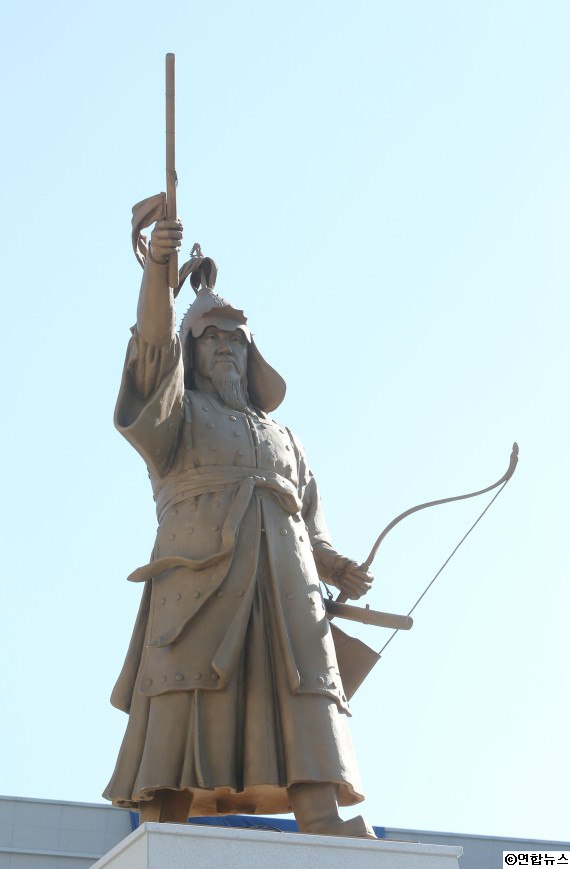
Meanwhile, the entries in *The Diary of the Imjin War*, which I have recently been meditating on through an audiobook, overlay the national crisis of 1592—during the Imjin War—exactly onto the complex crisis facing the Republic of Korea today. As the Left Naval Commander of Jeolla Province, Admiral Yi Sun-sin received detailed written reports on all battles, large and small, on the battlefield; he personally visited the sites to verify the harrowing circumstances faced by the people and meticulously documented them. With the exception of special gifts bestowed by the king, he always shared the same coarse rations as the ordinary soldiers, sharing in the hardships and joys of the front lines. In contrast, the actions of Won Gyun—who, having forgotten the essence of military leadership, was preoccupied only with his personal glory and safety, leading to repeated defeats and the squandering of national assets—clearly illustrate the stark contrast between a true leader and an unqualified holder of power. Furthermore, General Yi Sun-sin’s integrity—demonstrated by his bold execution of generals who sought personal gain or undermined military discipline even in the midst of war, thereby establishing military discipline and ultimately saving the nation—offers a valuable lesson for us today.
As I reflect on how history might have unfolded without a hero like Yi Sun-sin during those seven grueling years of war, I think of the leaders in our own time who carry on that spirit. While observing the coalition cartel—which is preoccupied solely with its own self-interest and partisan politics rather than the people’s livelihood and constitutional values—it feels as though we are facing the corrupt officials of our time; yet, there are individuals who have upheld their convictions amid national crises. President Yoon Suk-yeol’s solitary journey, in which he made decisive judgments on national security despite fierce opposition and political risks; the sincerity of former Minister Kim Moon-soo, who demonstrated an upright sense of national duty through his deep understanding of the labor scene and the lives of ordinary people; and the self-sacrificing resolve of former Prime Minister Hwang Kyo-ahn, who set aside his vested interests to campaign alongside young volunteers until the very end in pursuit of electoral reform and transparency—in all of these, we discover the virtues of leadership embodied by Admiral Yi Sun-sin.
Just as that general maintained his composure amid the prolonged turmoil of war, never missing a day of archery practice and meticulously recording the course of the battle, it is crucial for us, too, to cultivate our abilities in our respective roles and make a habit of documenting the truth of history. Watching the nationwide systems crumble—from the recent state of emergency to this presidential election—I have come to realize just how desperately we need watchmen who fulfill their respective callings. The lax practices in election administration—such as regular administrative staff being absent during this critical national period and replaced by outsourced personnel, or the use of short-term leased server systems that compromise the permanent preservation of data—vividly demonstrate the national disaster that can ensue when responsibilities are neglected. However, the countless on-site records and data collected by the thousands of Bu-bangda members and patriotic citizens who acted voluntarily at the polling stations will never disappear. These will serve as decisive evidence in future global public discourse and the judicial system, and will become a powerful tool of truth to awaken the eyes of ordinary citizens trapped within the media’s one-sided narrative.
Last weekend, I attended the first in-person gathering of the Bu-bangdae held in the Yeonsu district of Incheon. Meeting citizens who, like the 3.5% of salt that quietly adds a sacred flavor behind the scenes to prevent our society from becoming completely corrupt, I found deep comfort and hope in the fact that there are so many fellow workers with far superior analytical skills and strong execution capabilities than my own. Amid this complex hybrid war with massive foreign forces that has already escalated to full-scale conflict, I am determined to find the specific mission I can fulfill right where I stand. As someone of a similar age to Admiral Yi Sun-sin—who fought valiantly to protect the people during the Imjin War—I rise at dawn every day, arm myself with prayer, write blog posts documenting the truth, and begin each day full of hope and vigor.

 Deliveryman's Blog
Leave a comment