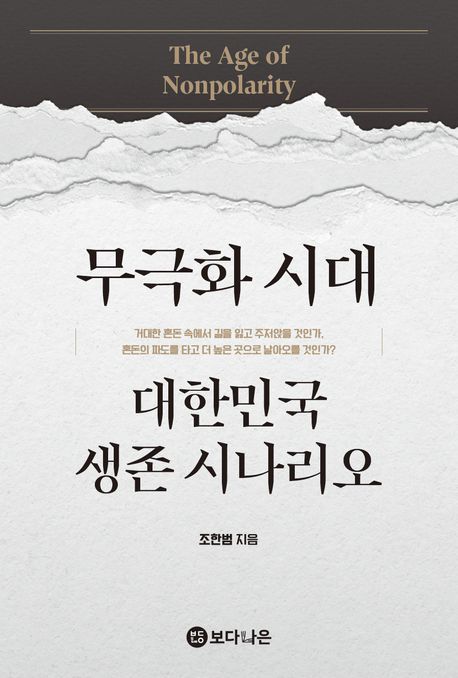
It is hard to believe this book was published as recently as 2026, given that it simplistically reduces the complex and multifaceted international order to the outdated dichotomy of “the liberal democratic camp versus communism.” The author’s one-dimensional perspective, which blindly emphasizes only the superficial conflicts between nations, completely fails to capture the multi-layered power structures of modern global society and the actual geopolitical dynamics operating intensely behind the scenes.
The author deliberately turns a blind eye to the actual exercise of influence by major powers, carried out under the guise of universal values and international aid. However, we have already witnessed the circumstances and security risks involved as global organizations, including the United States Agency for International Development (USAID), have projected their influence by intervening in the establishment of the Association of World Election Bodies (A-WEB) and national election management systems. In particular, regarding the suspicions surrounding the underlying causes of the protracted Russia-Ukraine war—namely, the role of a rigid security network operating behind the scenes in U.S. politics (so-called “deep state” elements) and the structural dynamics whereby funds circulating through massive defense cartels flow back into political circles—this book either remains completely silent or offers distorted interpretations.
Furthermore, I could not help but laugh at the passage that analyzes the tangible foreign policy achievements made in a short period by the Trump administration and the Department of Government Efficiency (DOGE), led by Elon Musk, as a “weakening of U.S. hegemony.” Boldly cutting off illegal funding streams to pressure anti-American regimes in South America and secure critical security evidence, while economically neutralizing theocratic authoritarian forces in the Middle East, does not signify U.S. decline; rather, it is the exercise of “substantive influence” that has become more sophisticated and powerful through internal structural reforms. The author’s greatest blunder is his outright rejection of even objective market data. Since the Trump administration introduced its protectionist tariff policies, the U.S. stock market has been hitting record highs day after day, enjoying a robust economic boom, whereas the Chinese economy—which was highly dependent on external factors—has effectively faced the risk of a hard landing due to structural debt and capital flight. I would like to ask whether the author is truly unaware of the reality of international security—where the lifeline of the authoritarian regime is being choked off as illegal maritime transport routes for Iranian crude oil are being tightly blocked—or whether he is deliberately turning a blind eye to it.
Furthermore, to claim that the highly sophisticated tariff strategy designed by Scott Bessent—the current Secretary of the Treasury and former Chief Investment Officer (CIO) of the Soros Fund—is merely a piecemeal policy being pushed by Trump, a former real estate developer, through crude political rhetoric, only exposes a lack of understanding of macroeconomic mechanisms. It is a fact that is clearly evident even from Trump’s autobiographical writings alone that real estate development and asset management are fields that require a deep understanding of the dynamics of massive capital, psychological warfare, and the highly sophisticated “Art of the Deal.” Furthermore, to gloss over reality through a one-sided ideological lens—while ignoring the international community’s cold, critical gaze toward South Korea’s current diplomatic isolation and allegations of electoral irregularities—amounts to a serious dereliction of duty as an intellectual. We have already learned the hard way—through the historical tragedy of the IMF foreign exchange crisis, which was caused by a combination of past diplomatic friction and foreign policy missteps—that failures in diplomatic tactics lead directly to the collapse of the national economy. If we face the reality of people’s livelihoods—including the 5 million self-employed individuals who claim that the recent domestic economic slump is even harsher than during the foreign exchange crisis—I urge readers to see for themselves just how dangerous this book’s distorted perspective and macro-level blindness truly are.


Leave a Reply