In the past, I used to listen regularly to Kim Eo-jun’s *News Factory* program. Listening to the packed broadcasts—which covered the latest news and analysis across a wide range of fields, from politics and the economy to society and sports, along with discussions and interviews with expert panels—I often felt I was gaining a great deal of knowledge about current affairs. However, I gradually began to get the impression that the program was framing the news to align with the host’s agenda. I realized there was a tendency to focus attention on specific issues rather than important matters, or to steer public opinion in a particular direction through the structure of interviews and other means. In particular, I began to have serious doubts about the media’s reporting methods and their influence, such as regarding the testimony in the National Assembly about “assassination squads being immediately activated during martial law.”
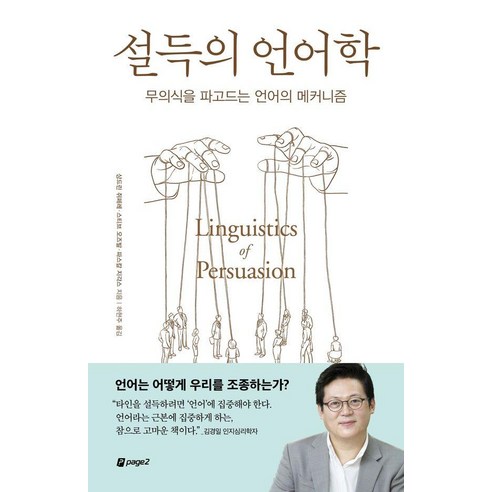
This book explains how a single word can change people’s thoughts and actions, illustrating such examples in advertising, politics, and everyday life. I learned that linguistic manipulation techniques are used for framing, presuppositions, and insinuations, and that stereotypes and biases can arise in the process. Meanwhile, after the recent election, I was struck by the sight of citizens from across the country gathering at Olympic Park to demand transparency—chanting “election fraud, re-election, same-day voting, and manual recount”—and raising their voices in civil protest. This gave me the impression that the public is making an effort not to be easily swayed by information manipulation anymore.
Language is an amazing ability bestowed upon humans from the very beginning. From naming animals to building cities and forming nations through the power of words—and continuing to advance human civilization to this day—I am struck by both the greatness and the power of language. I realized anew that language is a process of persuasion: conveying meaning to others, changing their minds, and altering their behavior. I thought that while words, when used well, can serve as a tool for spreading the gospel or bringing healing, when used with ulterior motives, they can also be a weapon that incites political action or inflicts wounds rather than offering comfort.
After all, politicians also use their words to mobilize people, propose bills, and shape the nation’s systems; yet, South Korea currently appears to be reacting sensitively to ideological logic amid this linguistic conflict. In particular, many people are concerned about the danger of ideologies that seek to dismantle the nation’s system through ideas rather than force. While watching Director Kim Chae-hwan’s broadcast, in which he explained that behind such ideologies lie false values designed to trap the public in herd mentality or cognitive dissonance, I deeply resonated with his message. I realized that this situation has now transcended the realm of individual concerns and could become a factor in a national crisis.
So, in the early morning after a heavy rain, I went to church and, together with patriotic Christian citizens praying for South Korea, prayed that our language would be transformed. I earnestly hoped that those words would come together to form a vast ocean covering the church and become a storm that would wash over this nation.


Leave a Reply