Whenever something I had believed to be the truth my whole life begins to waver, or whenever I realize I was mistaken, I’ve developed the habit of revisiting blog posts or diary entries I wrote in the past. As I process my feelings of embarrassment and regret, I return to a place of humility—acknowledging that “I knew nothing”—and vow not to neglect my learning again. This was the case when I gained a new understanding of the passage describing how God created the luminaries to shine in the firmament on the fourth day of Genesis, and it was also the case when I read the passage in the Old Testament about Tubal-Cain, who worked with iron and bronze, and began to question the evolutionary view of history that spans from the Paleolithic to the Iron Age. Upon discovering that the Catholic Ten Commandments omit the commandment against making an image of God, as well as learning of certain priests’ secret rituals and the subtly hidden traces of distorted faith, I resolved to exercise even deeper discernment. I also realized that Protestantism must be wary of theistic evolution, certain pastors biased by ideology, politicized religious leaders, and heretical cult leaders.
When I heard an interpretation from an elderly pastor who had spent his entire life studying the Bible—that the Garden of Eden was not a place name but a garden God Himself had personally tended within the barren land of Eden—I once again bowed my head in humility at my own ignorance. As I meditated on the passage describing how God breathed His breath of life into man, formed from dust, to make him a living being, it was a time for me to reflect once more on my own existence. Furthermore, through a lecture by Professor Jeong Ju-ho—who had previously served as a speaker at the Handong University Parents’ Prayer Meeting—I was reminded of the importance of the body among the spirit, soul, and body. I resolved that before I can change the world, I must first nurture my own body to be healthy. His explanation that a healthy mind stems from a healthy body was also very timely. Most importantly, I reflected on the freedom that comes from deep fellowship with God—a freedom rooted in the realization of these truths, habits that build a healthy body, and steadfast practice. As we celebrated the 81st Liberation Day, I could feel how much God loves the Republic of Korea as we sang the national anthem together on the final day of the Handong University prayer meeting. I gave thanks for the richness of my fellowship with God as I praised Him and prayed to my heart’s content.
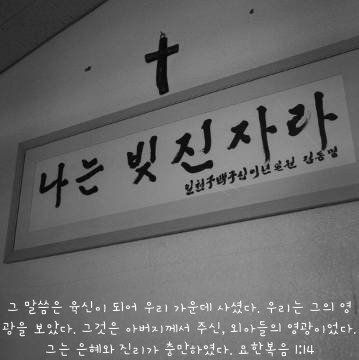
Gathering with the parents of the Incheon team in the prayer room where Handong Univ President Kim Young-gil often prayed—in front of the framed inscription that read, “I am a debtor”—I felt that God had prepared the next generation and that we were now ready to enter the spiritual land of Canaan. Just as God guided the Israelites with a pillar of cloud and a pillar of fire during their exodus from Egypt and their time in the wilderness, He was leading the Christians of South Korea in 2026 as well. The walls of Jericho before our eyes may seem strong, and those guarding them may appear formidable, but in reality, they are nothing more than a paper tiger. We believe that if we silently march around the city and then shout as we complete the final seven circuits, those walls will come crashing down. Believing that this miracle will occur at Olympic Park, Gwanghwamun, and in churches across the nation, we began today with renewed vigor.


Leave a Reply